

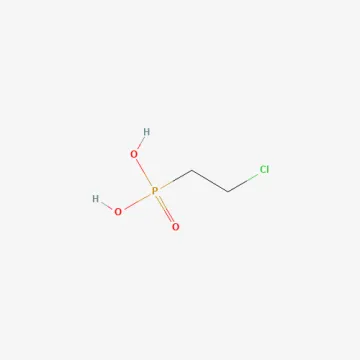
Description
Mode of action
Ethephon is a widely utilized organophosphorus compound that serves as a plant growth regulator. Its primary mode of action is the release of ethylene, a fundamental plant hormone that regulates aging, fruit ripening, and abscission processes in various crops.
Once applied to the plant, ethephon is absorbed into the tissues where it undergoes a chemical decomposition process within the cell sap. This reaction results in the steady release of ethylene gas, which is then absorbed by the plant cells to trigger desired physiological responses.
The action is based on the modulation of plant metabolism, which allows farmers to control the timing of specific development stages. By manipulating ethylene levels, growers can induce earlier maturation or change the architecture of the plant to suit harvesting requirements.
While ethephon is not a pesticide in the traditional sense, its ability to influence the life cycle of the crop makes it an essential tool for commercial farming. It provides a reliable method to synchronize harvest schedules and improve efficiency.
The effectiveness of ethephon is highly dependent on ambient environmental conditions, particularly temperature. Warm conditions facilitate a faster and more uniform breakdown of the molecule, ensuring consistent results throughout the treated area.
What it targets
In cereal crops such as wheat, barley, and rye, ethephon is extensively used to prevent lodging. By shortening and thickening the internodes of the stems, the plant gains structural stability, reducing the risk of falling over due to high winds or heavy rain.
For vegetable production, particularly tomatoes, ethephon is applied to accelerate and synchronize ripening. This process allows for a concentrated harvest, which is crucial for large-scale operations and mechanical harvesting efficiency.
In orchards, this substance is used for thinning excess fruit or regulating the drop of mature fruit. By preventing tree overload, growers can ensure consistent fruit size and quality in subsequent years, effectively managing alternate bearing.
Ethephon is also effective in cucurbit crops, such as cucumbers, to promote the development of female flowers. This technique is widely adopted in greenhouse production to increase early yield and maximize economic returns.
It is also used to facilitate the mechanical harvest of various fruits by weakening the abscission layer of the fruit stalk, making it easier for mechanical shakers to remove the produce without damaging the tree.
Rates and timing
Application rates are strictly determined by the growth stage of the crop. For cereals, treatment is usually performed during the stem elongation phase to maximize the reduction of height while avoiding interference with ear development.
For vegetable maturation, the timing is critical: application should occur once the fruit has reached its full physiological size but before natural color change begins. Improper timing can lead to stunted fruit growth or undesirable premature softening.
Careful measurement is required, as the dosage directly influences the speed and duration of ethylene release. Excessive application can cause severe phytotoxicity, leading to premature leaf drop or distorted plant growth.
Application should ideally take place when temperatures are moderate. During cooler periods, the metabolic response is delayed, necessitating careful planning to achieve the intended outcomes without over-application.
- Always follow the label instructions regarding pre-harvest intervals.
- Use professional spray equipment for uniform distribution.
- Avoid spraying under stress conditions such as drought or heat waves.
Restrictions
Application is not recommended for plants under biotic or abiotic stress, such as water deficit, extreme temperatures, or significant disease pressure. Under such conditions, the plant's response to ethylene may be unpredictable and harmful.
Compatibility with other pesticides must be verified, as ethephon often possesses an acidic pH. Mixing it with alkaline products or copper-based compounds may result in a loss of efficacy or negative chemical interactions.
Operators must adhere to strict safety protocols, including the use of personal protective equipment. Direct contact with the concentrated product can cause irritation to the skin, eyes, and respiratory system.
Storage should be handled in original, tightly sealed containers in a cool, dry place. Exposure to extreme heat or sunlight can degrade the active ingredient, reducing its effectiveness for future applications.
Following application, all spraying equipment must be thoroughly cleaned. Residual amounts of the regulator can persist in hoses and nozzles, potentially damaging non-target crops during subsequent use.
Content graph
Connections · Ethephon
Most often together:
Marketplace
Products · 24


TAVA
Hangzhou Ruijiang Chemical Co., Ltd.
Plant Growth Regulator
0
0
·
61
2 offers
7.04 €per 1 l
Buy


Shetefon, WATER-SOLUBLE CONCENTRATE
ДДЕ Фарм АГ, Тризен, Ліхтенштейн
Plant Growth Regulator
0
0
·
59
2 offers
1.06 €per 1 l
Buy


Mekva Pro 750 RK
Фадер Альянс Лтд., Великобританія (Fader Alliance Ltd., England) на заводах Нідерландів, Польщі
Plant Growth Regulator
0
0
·
54
4 offers
3.38 €per 1 l
Buy


ALPHA ETAPHON
Ф.Меатон Лімітед, Лондон, Великобританія.
Plant Growth Regulator
0
0
·
53
3 offers
1.53 €per 1 l
Buy


SENOR TOMATO, RC (Ethephon, 480g
Agrochemical Factory, LLC
Plant Growth Regulator
0
0
·
52
1 offer
6.75 €per 1 l
Buy

Alfa-Etafon
«Юнісіті Ентерпрайсіс Л.П.», Единбург, Великобританія
Plant Growth Regulator
0
0
·
52
2 offers
6.91 €per 1 l
Buy

Shetefon, RK
ДДЕ Фарм АГ, Тризен, Ліхтенштейн
Plant Growth Regulator
0
0
·
52
3 offers
5.42 €per 1 l
Buy

ALPHA ETAFON
Ф.Меатон Лімітед, Лондон, Великобританія.
Plant Growth Regulator
0
0
·
50
3 offers
1.53 €per 1 l
Buy

BINOM
«Нанджин Ессенс Файн-Кемікал Ко. Лтд» (Китай)
Plant Growth Regulator
0
0
·
50
2 offers
1.95 €per 1 l
Buy


Shetefon
ДДЕ Фарм АГ, Тризен, Ліхтенштейн
Plant Growth Regulator
0
0
·
41
3 offers
5.88 €per 1 l
Buy

