

Reference · Pests
Elateridae
Click beetles (Elateridae) are a family of beetles whose larvae, known as wireworms, are among the most destructive soil-dwelling pests of agricultural crops. Adult beetles are characterized by their ability to flip themselves into the air with a clicking sound. In agronomy, the larvae are of primary concern due to their long life cycle spent entirely within the soil profile.
170
items
What the section contains
 Click beetles
Elateridae
357 products
Click beetles
Elateridae
357 products
 Actenicerus sjaelandicus
Actenicerus
Actenicerus sjaelandicus
Actenicerus
 Adelocera
Adelocera
Adelocera
 Adelocera murina
Adelocera murina
Adelocera murina
 Adrastus click beetle
Adrastus
Adrastus click beetle
Adrastus
 Adrastus limbatus
Agriotes fuscicollis
Agriotes fuscicollis
Adrastus limbatus
Adrastus limbatus
Agriotes fuscicollis
Agriotes fuscicollis
 Agriotes gurgistanus
Agriotes gurgistanus
Agriotes gurgistanus
 Agriotes limosus
Agriotes limosus
Agriotes limosus
 Agriotes litigiosus
Agriotes litigiosus
Agriotes litigiosus
 Agriotes persimilis
Agriotes persimilis
Agriotes persimilis
 Agriotes pilosellus
Agriotes pilosellus
Agriotes pilosellus
 Agriotes pubescens
Agriotes pubescens
Agriotes pubescens
 Agrypnus variabilis
Agrypnus variabilis
Agrypnus variabilis
 Alaus click beetle
Alaus
Alaus putridus
Alaus putridus
Alaus click beetle
Alaus
Alaus putridus
Alaus putridus
 Arachnodima
Arachnodima adelaidae
Arachnodima adelaidae
Arachnodima
Arachnodima
Arachnodima adelaidae
Arachnodima adelaidae
 Athous haemorrhoidalis
Bifoveate click beetle
Conoderus bifoveatus
Athous haemorrhoidalis
Athous haemorrhoidalis
Bifoveate click beetle
Conoderus bifoveatus
 Black click beetle
Agriotes aterrimus
Black click beetle
Agriotes aterrimus
 Black click beetle
Hemicrepidius niger
Black click beetle
Melanotus niger
Black click beetle
Hemicrepidius niger
Black click beetle
Melanotus niger
 Black-collared click beetle
Ampedus nigricollis
Black-collared click beetle
Ampedus nigricollis
 Blood-red click beetle
Ampedus sanguinolentus
Blood-red click beetle
Ampedus sanguinolentus
 Blue click beetle
Hemicrepidius subcyaneus
Blue click beetle
Hemicrepidius subcyaneus
 Broad click beetle
Selatosomus latus
Broad click beetle
Selatosomus latus
 Bronze-black click beetle
Pheletes aeneoniger
Bronze-black click beetle
Pheletes aeneoniger
 Brown click beetle
Athous subfuscus
Brown click beetle
Athous subfuscus
 Brown click beetle
Conoderus lividus
Brown click beetle
Conoderus lividus
 Brown click beetle
Lacon fuliginosus
Brown click beetle
Lacon fuliginosus
 Brown click beetle
Limonius infuscatus
Brown click beetle
Limonius infuscatus
 Brown-legged click beetle
Melanotus brunnipes
Brown-legged click beetle
Melanotus brunnipes
 California click beetle
Limonius californicus
California click beetle
Limonius californicus
 Chestnut click beetle
Anostirus castaneus
Chestnut click beetle
Elatichrosis castanea
Click beetle
Agriotes
Chestnut click beetle
Anostirus castaneus
Chestnut click beetle
Elatichrosis castanea
Click beetle
Agriotes
 Click beetle
Agriotes sputator
Click beetle
Agriotes sputator
 Click beetle
Corymbites
Click beetle
Corymbites
 Click beetle
Ctenicera
Click beetle
Ctenicera
 Click beetle
Lacon
Click beetle
Limonius discoideus
Click beetle
Lacon
Click beetle
Limonius discoideus
 Click beetle
Melanotus caudex
Click beetle
Melanotus caudex
 Click beetle
Melanotus
Click beetle
Melanotus
 Click beetle
Pyrophorus noctilucus
Click beetle
Pyrophorus noctilucus
 Click beetle
Cidnopus
Click beetle
Cidnopus
 Click beetle
Selatosomus
Click beetle
Selatosomus
 Click beetle
Ludius
Click beetle
Ludius
 Click beetle
Agriotes rufipalpis
Click beetle
Agriotes rufipalpis
 Click beetle
Agriotes brevis
Click beetle
Agriotes brevis
 Click beetle (Anostirus)
Anostirus
Click beetle (Anostirus)
Anostirus
 Click beetle (genus Ectinus)
Ectinus
Click beetle (genus Ectinus)
Ectinus
 Click beetle (Melanotus erythropygus)
Melanotus erythropygus
Click beetle (Melanotus erythropygus)
Melanotus erythropygus
 Click beetle Aeolus livens
Aeolus livens
Click beetle Aeolus livens
Aeolus livens
 Click beetle Agriotes meticulosus
Agriotes meticulosus
Click beetle Agriotes sparsus
Agriotes sparsus
Click beetle Agriotes meticulosus
Agriotes meticulosus
Click beetle Agriotes sparsus
Agriotes sparsus
 Click beetle Conoderus bellus
Conoderus bellus
Click beetle Conoderus bellus
Conoderus bellus
 Click beetle Conoderus scalaris
Conoderus scalaris
Click beetle Conoderus scalaris
Conoderus scalaris
 Click beetle Conoderus varians
Conoderus varians
Click beetle Lacon assus
Lacon assus
Click beetle Conoderus varians
Conoderus varians
Click beetle Lacon assus
Lacon assus
Marketplace
Products in this section · 12




Elateridae
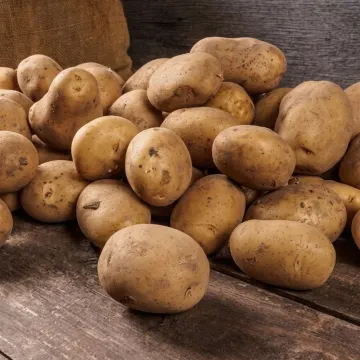
Wireworms attack a wide range of field and vegetable crops. Potatoes, corn, sugar beets, small grains, and sunflowers are particularly susceptible to infestation. Larvae cause significant damage by feeding on seeds, severing roots and underground stems, and boring deep tunnels into tubers and taproots, which often leads to secondary infections and severe degradation of crop marketability.
The life cycle of click beetles is prolonged, typically lasting between 3 and 5 years depending on the species and environmental conditions. Females deposit eggs in the soil, favoring damp areas with dense weed cover, particularly perennial grasses like couch grass. Larvae pass through several growth stages, moving vertically in the soil profile in response to moisture and temperature fluctuations throughout the seasons.
The persistence of wireworms is due to their adaptability and cryptic behavior. They exhibit peak activity in moderately moist soils with temperatures ranging from 15°C to 25°C. Outbreaks are most common in fields with a history of grass sod or severe weed infestations, which provide the essential moisture and food sources required for larvae to thrive and complete their development.
Effective management of wireworms requires an integrated approach combining cultural, chemical, and physical control tactics. Key strategies include:
- Rigorous weed management, especially targeting perennial grasses.
- Crop rotation strategies, including the use of trap crops or bio-fumigant cover crops like mustard.
- Strategic tillage practices to expose larvae to desiccation and natural predators during vulnerable life stages.
- Seed treatment with systemic insecticides prior to planting.
- Application of soil-applied granular insecticides at planting when population thresholds are exceeded.