
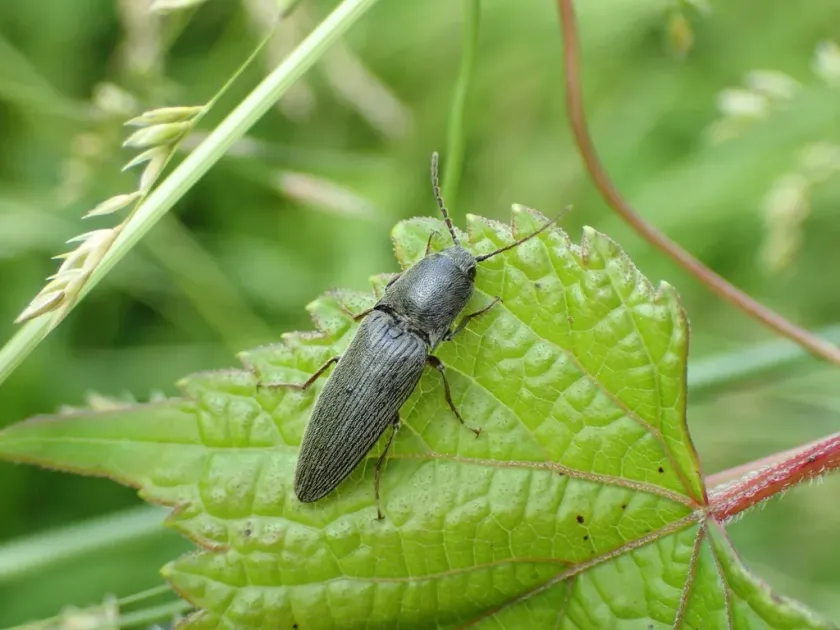
Click beetle (Melanotus erythropygus)
Melanotus erythropygus
Description
How to identify
The click beetle Melanotus erythropygus belongs to the family Elateridae, order Coleoptera. Adult beetles are typically 12–16 mm long, characterized by a dark brown or blackish color and a robust, elongated body shape that allows them to maneuver easily within the soil or ground cover.
The larval stage, commonly referred to as wireworms, is the most destructive phase of this insect. They have a hard, cylindrical, chitinous body with a distinct yellowish-brown color, which provides excellent protection and helps them burrow through soil and organic matter.
The life cycle of this species is complex and usually lasts several years, spanning from egg to adult beetle. During this development period, larvae inhabit the soil layer, where they feed on roots, seeds, and underground stems, making them difficult to detect until damage appears.
Adult beetles are nocturnal, emerging in spring when soil temperatures increase. They are often found hiding under plant debris or in the top layers of soil during the day, which complicates monitoring efforts for agricultural scouts.
The species prefers light-textured, well-drained soils that provide optimal conditions for larval movement and development. Understanding these soil preferences is key to identifying high-risk areas within a farm's crop rotation plan.
What it damages
Wireworms cause significant damage by consuming the roots and stems of young crops. They frequently sever the taproots of seedlings or bore into the bases of stalks, leading to stand reduction, patchy emergence, and sometimes total crop failure in infested areas.
Affected crops include a wide range of cereals such as wheat, barley, and maize, as well as root crops like potatoes. In potatoes, larvae tunnel into tubers, creating deep galleries that drastically reduce marketability and quality, and often lead to rot.
Damage is usually most severe during the early growing season, particularly if environmental conditions such as moisture levels are optimal for larval activity. In stressed conditions, the plants have limited capacity to recover from root system pruning.
By damaging the integrity of the root system, larvae create entry points for soil-borne pathogens. This secondary infection often manifests as root rot or vascular diseases, further weakening the plant and impacting its ability to uptake nutrients and water.
The economic impact is cumulative, as the presence of wireworms in the soil can persist for years. In heavily infested fields, even minor initial feeding can cause significant long-term yield losses across the entire production cycle.
Control measures
Integrated pest management starts with mechanical control; deep autumn tillage is highly effective as it exposes larvae to predators such as birds and to extreme weather conditions, significantly reducing the population density in the soil.
Cultural practices, including proper crop rotation and the management of grassy weeds, are essential. Removing hosts like couch grass prevents the larvae from having a stable food source and inhibits the reproduction of the click beetle population.
Chemical control is often centered on seed treatments. Applying systemic insecticides as a seed coating provides a concentrated barrier that protects the germinating plant during its most vulnerable stage against subterranean feeding.
For high-pressure situations, soil-applied granular insecticides can be utilized during planting to provide broader protection for the root zone. These should be applied according to local economic thresholds and soil analysis results.
- Monitoring soil populations using trap crops or pheromone baits before planting.
- Adjusting soil pH through liming, as many Elateridae species thrive in acidic soil environments.
Taxonomy
- Latin name
- Melanotus erythropygus
- Order
- Coleoptera (beetles)
- Family
- Elateridae
- EPPO code
- MELNER
Discussion
No discussions yet — be the first.