
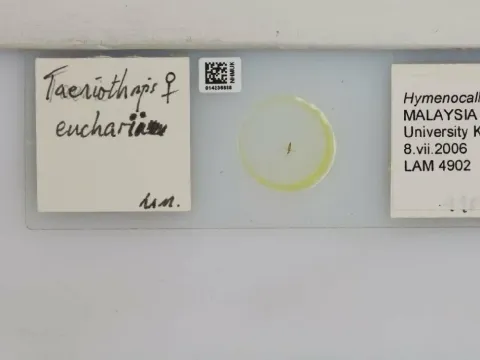
Eucharis thrips
Taeniothrips eucharii
Eucharis thrips (Taeniothrips eucharii) is a small, slender insect belonging to the order Thysanoptera and the family Thripidae, known as a serious pest of bulbous plants.
What the section contains
Eucharis thrips
Adult thrips measure approximately 1–1.5 mm in length and possess a dark brown or black body. Their wings are narrow and fringed, which is a characteristic feature of this insect group.
The larval stages are typically lighter in color, appearing white or pale yellow. They are highly mobile and tend to congregate in the protected areas of the host plant, such as leaf axils.
These pests possess piercing-sucking mouthparts. They feed by puncturing plant cells and extracting the sap, which leads to the collapse of the leaf tissue structure.
The life cycle is relatively short, allowing the population to reach damaging levels quickly, especially in indoor environments where stable temperatures favor continuous reproduction.
The primary hosts of this species include members of the Amaryllidaceae family, most notably Eucharis grandiflora (Amazon lily), Hippeastrum, and various species of Narcissus.
Feeding damage typically occurs on leaves and flower buds. The removal of cell contents causes the formation of whitish or silvery patches, which later turn brown as the tissue dies.
Severe infestations weaken the plant's ability to photosynthesize, resulting in stunted growth and a significant reduction in flower production during the blooming season.
The feeding activity often predisposes the bulbous scales to secondary infections, including fungal rots and bacterial soft rot, which can prove fatal to the plant.
In ornamental cultivation, the presence of these thrips ruins the aesthetic quality of the plants, making them unsuitable for sale or display due to visible scarring and deformation.
The most reliable sign of an infestation is the appearance of mottled, silver-colored streaks or patches on the leaves, often accompanied by tiny black fecal spots.
Plants may show signs of yellowing, curling, or abnormal wilting, even when soil moisture levels are adequate, indicating damage to the internal transport systems.
- Distorted or crinkled new leaf growth emerging from the bulb.
- Brown, necrotic streaks on the flower petals or buds that fail to open.
- The presence of tiny, pale insects moving quickly when leaf axils are inspected.
The base of the leaves, where they connect to the bulb, often serves as a primary shelter for the thrips colony, where they feed extensively on the fleshy scales.
In advanced cases, the foliage may drop prematurely, and the plant will appear generally sickly with little to no new growth occurring over several months.
Managing Eucharis thrips requires an integrated approach starting with strict sanitation, including the removal and destruction of heavily infested plant parts.
Yellow sticky cards should be placed near the plants to monitor adult population levels and provide a physical barrier that reduces the number of flying insects.
Systemic insecticides are the most effective chemical control, as they are absorbed by the plant and kill the thrips when they ingest the sap during feeding.
It is essential to repeat treatments every 7 to 10 days, as systemic chemicals often have limited effect on eggs hidden deep within the bulb or leaf tissue.
Environmental management, such as maintaining higher humidity levels and regular washing of foliage, can deter thrips, as they generally thrive in drier and warmer conditions.