
Onion bulb fly
Eumerus figurans
Description
How to identify
The onion bulb fly (Eumerus figurans) is a dipteran insect belonging to the hoverfly family (Syrphidae), which has become a significant pest for various bulbous plants.
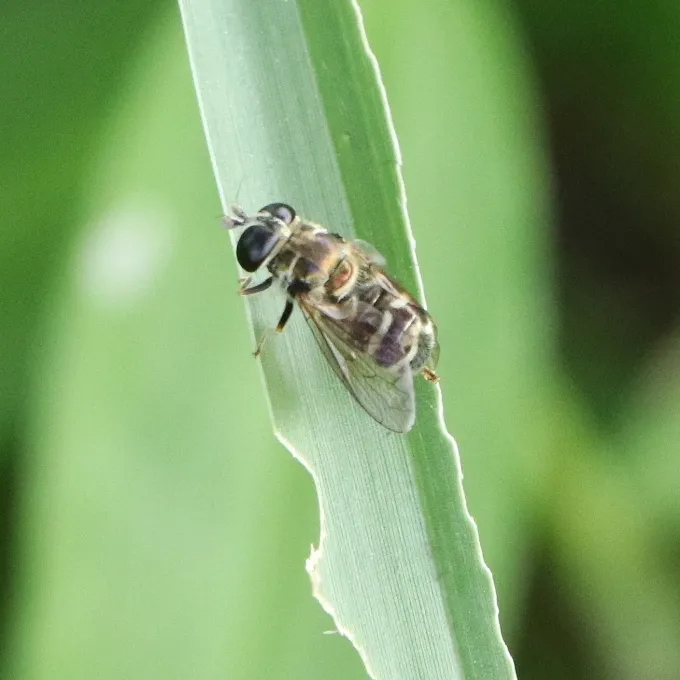
Adult flies are relatively small, typically measuring 6–9 mm in length, and are easily recognized by their dark, metallic-looking bodies and the white spots present on their abdomen.
Their life cycle consists of complete metamorphosis: egg, larva, pupa, and adult. The flies are active during warm weather and are often seen hovering around host plants.
Larvae are the damaging stage; they are legless, wrinkled, and yellowish-grey in color, reaching about 10 mm in length when mature, with a distinct posterior process.
In most regions, this pest completes two generations per year, with the larvae of the second generation being responsible for the most severe damage to late-season crops.
What it damages
The primary host plants include onions, garlic, shallots, and leeks, though they can also infest ornamental bulbs like tulips, daffodils, and irises in gardens.
The larvae burrow into the base of the bulb, consuming the internal tissues and significantly weakening the plant's structural integrity from the bottom up.
Feeding by the larvae causes the foliage to lose its vigor, turn yellow, and eventually wilt, often leading to the complete death of the infested plant.
In addition to direct feeding, the damage caused by larvae facilitates the entry of various bacteria and fungi, leading to severe bulb rot that spreads rapidly.
A single bulb can harbor dozens of larvae, making them highly efficient at destroying entire rows of crops if left unmanaged during the peak development season.
Signs of infestation
Early symptoms of an infestation include the yellowing and wilting of the leaves, which start to show signs of distress even before the bulb is fully destroyed.
Infested plants become loose in the soil because their root systems are consumed, making it possible to pull them out with very little effort during inspection.
The basal plate of the bulb becomes soft and develops a distinct foul, putrid odor due to the decaying tissue associated with larval infestation.
During the day, adult flies can be observed near the onion patches, especially during calm and sunny weather, which is when they typically lay their eggs.
Patches of dying plants or missing gaps in a row are common visual cues that suggest a local population of onion bulb flies has established itself.
Control measures
Effective management begins with strict crop rotation, ensuring that onions or garlic are not planted in the same soil more than once every four years.
Cultural practices such as planting as early as possible allow the bulbs to develop enough strength and size to withstand minor pest pressure later in the season.
Sanitation is crucial; removing and destroying infested bulbs, as well as clearing plant debris, reduces the available habitat for overwintering larvae.
In cases of heavy infestation, timely application of registered insecticides during the adult flight period can significantly reduce the number of eggs laid.
- Use only clean, certified bulb stock for planting to avoid introducing pests.
- Deep autumn plowing of the soil to expose overwintering pupae to predators and frost.
- Frequent weeding and loosening of soil to disrupt the egg-laying environment.
Taxonomy
- Latin name
- Eumerus figurans
- Order
- Diptera (flies)
- Family
- Syrphidae
- EPPO code
- EUMEFI
Discussion
No discussions yet — be the first.