
Allograpta obliqua
Allograpta obliqua
Description
How to identify
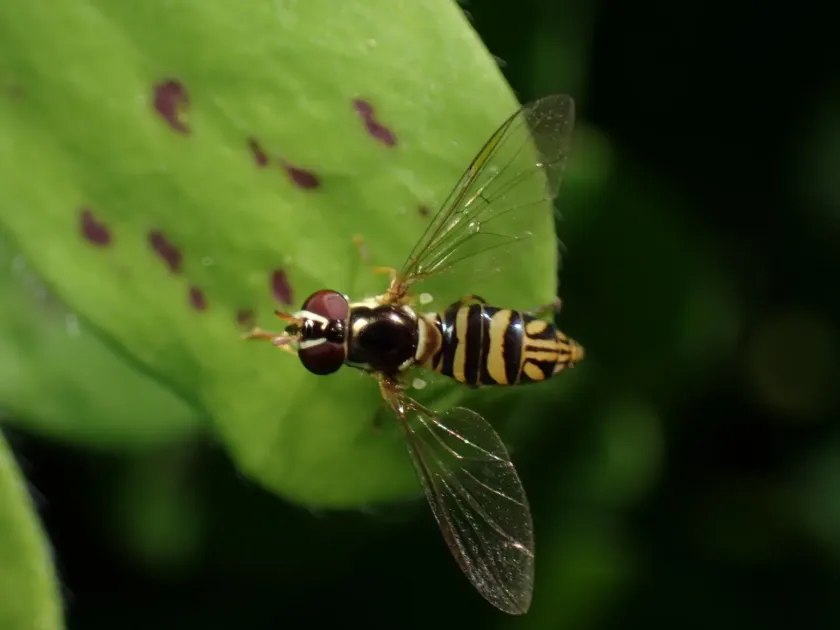
Allograpta obliqua, commonly known as the oblique syrphid, is a member of the hoverfly family (Syrphidae) within the order Diptera.
Adult flies are easily identified by the distinct oblique yellow stripes on their abdomen against a black background, which distinguishes them from similar species.
The larvae are typically slender and pale green or yellowish, adapting their body color to blend into the foliage of host plants during development.
The pupal stage occurs within a pear-shaped puparium, which is usually found attached to the underside of leaves or on stems near the feeding site.
Adult hoverflies are famous for their remarkable ability to hover in place, which is a key behavioral trait useful for field identification by agronomists.
What it damages
Although often beneficial due to their predatory larvae feeding on aphids, under specific conditions, Allograpta obliqua can turn to feeding on plant tissues.
Direct damage includes chewing injuries on young leaves, resulting in structural deformities and stunted growth of the host plant during early developmental stages.
High population densities in greenhouses or nurseries can lead to significant economic losses when larvae consume tender plant parts due to limited aphid availability.
Feeding marks are often characterized by irregular tissue removal, which can weaken the overall health of the plant and reduce its photosynthetic capacity.
- Cruciferous vegetables (cabbage, broccoli).
- Leguminous crops (peas, beans).
- Cucurbits (squash, cucumbers).
When it appears
The active season for Allograpta obliqua begins in late spring when temperatures rise, allowing adult flies to emerge from overwintering sites.
They are most prevalent during the warmer months, as the lifecycle accelerates with higher temperatures, leading to multiple generations per year.
Egg-laying activity is closely synchronized with the presence of aphid colonies, as these provide the initial protein-rich diet for developing larvae.
Summer population peaks often coincide with the flowering stage of various crops, where adults gather to feed on nectar and pollen.
As autumn temperatures drop, larvae and pupae enter a dormant state, seeking shelter in soil or plant debris to survive the upcoming winter months.
Signs of infestation
The primary sign of their presence is the characteristic flight pattern of adults, hovering above plants before quickly darting to another location.
Small, oblong, white eggs can be found on leaves, often deposited singly near clusters of aphids or on the underside of foliage.
Visible feeding damage on leaf tissue, such as shallow pits or ragged edges, indicates that larvae have shifted their diet to the host plant.
The presence of pear-shaped puparia fixed firmly to stems or leaves is a strong indicator of an active and potentially growing population in the field.
General plant stress, yellowing of leaves, or noticeable growth inhibition in young seedlings should prompt a thorough inspection for this species.
Control measures
Integrated pest management (IPM) is the most effective approach, focusing on maintaining ecological balance rather than total eradication.
Mechanical control involves the removal of crop residues and weeds, which eliminates critical overwintering sites and reduces the next generation's survival rate.
Avoid excessive use of broad-spectrum insecticides, as these chemicals harm beneficial predatory populations that keep Allograpta obliqua numbers in check.
Biological control methods, such as utilizing specific fungal pathogens, can be implemented if the population exceeds economic injury levels in sensitive crops.
Regular field scouting is essential to distinguish between purely beneficial predatory behavior and harmful feeding activity, ensuring appropriate decision-making.
Taxonomy
- Latin name
- Allograpta obliqua
- Order
- Diptera (flies)
- Family
- Syrphidae
- EPPO code
- ALLGOB
Discussion
No discussions yet — be the first.