
Allograpta javana
Allograpta javana
Description
How to identify
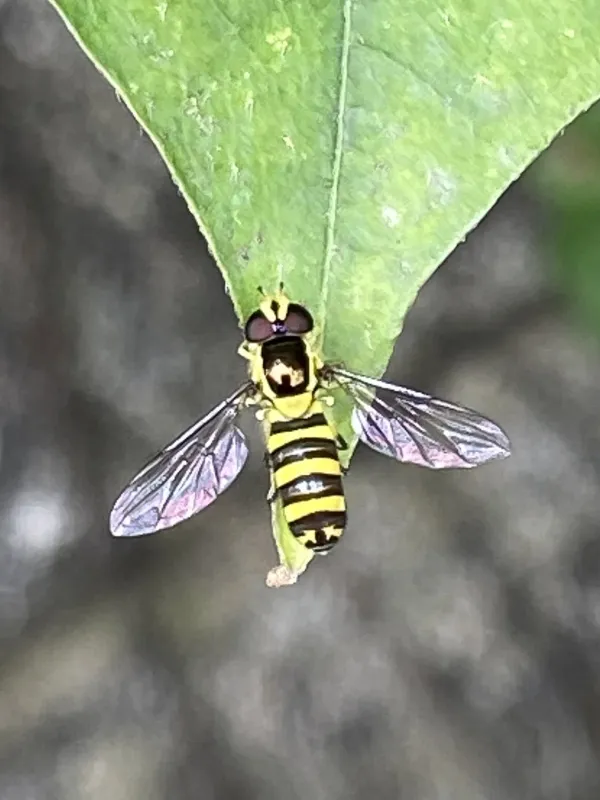
Allograpta javana is a member of the hoverfly family (Syrphidae). Adults are characterized by distinct yellow and black bands on their abdomen, often mimicking the appearance of wasps or bees to deter predators.
The insect body is slender, typically measuring 7 to 9 millimeters in length. The head features large compound eyes and short antennae, which are typical for many syrphid flies.
Larvae are legless and worm-like, usually appearing pale green or translucent. This cryptic coloration allows them to blend in seamlessly with the foliage of host plants.
The life cycle encompasses four main stages: egg, larva, pupa, and adult. The duration of each stage is highly dependent on ambient temperature and available food resources.
Understanding the developmental cycle is essential for agricultural timing, as generations can overlap significantly under favorable tropical and subtropical climates.
What it damages
While many syrphid larvae are beneficial predators of aphids, Allograpta javana can occasionally shift to feeding on plant tissues, acting as a minor pest on specific crops.
Primary target crops include various vegetables such as cucumbers, eggplants, tomatoes, and leafy greens like cabbage. Damage is typically caused by larvae feeding on young, tender tissues.
Injury manifests as irregular patches on the leaves, leading to chlorosis, stunted growth, and in severe cases, the deformation of new shoots and leaves.
The damage caused by feeding often leads to secondary infections by bacteria or fungi, which can compromise the overall health and vigor of the plant.
Extensive feeding activity can lead to significant economic losses by reducing both the quality and quantity of the harvest, especially during the early developmental stages of the crops.
Signs of infestation
The most visible sign of infestation is the presence of deformed, curled leaves at the plant apex, providing shelter for the developing larvae.
Look for small, whitish, or necrotic spots on the leaves, which indicate areas where the larvae have been feeding. These spots often grow as the tissue continues to die.
The presence of larvae themselves on the undersides of leaves or within plant crevices is a definitive sign, though they can be difficult to spot due to their camouflage.
A reduction in the plant's growth rate, despite adequate fertilization and irrigation, often indicates that a hidden pest population is impacting the plant's resources.
Farmers should conduct regular manual inspections of the canopy, especially during early morning hours, to identify the presence of eggs and early larval stages.
Control measures
Integrated Pest Management (IPM) is the most effective approach. This includes proper field sanitation to remove weed hosts that might harbor the pest between seasons.
Biological control involves the use of beneficial microorganisms, such as specific fungi, to naturally suppress population numbers without harming the environment.
Chemical control should be reserved as a last resort. Use selective insecticides that target larvae while minimizing impact on non-target, beneficial pollinators and natural enemies.
Crop rotation and intercropping with repellent plants can disrupt the life cycle of the pest, making the field less attractive for egg-laying adults.
Regular monitoring through visual inspections and the use of sticky traps helps in calculating the economic threshold, ensuring that interventions are both timely and necessary.
Taxonomy
- Latin name
- Allograpta javana
- Order
- Diptera (flies)
- Family
- Syrphidae
- EPPO code
- ALLGJA
Discussion
No discussions yet — be the first.