

Pest · Hemiptera (bugs, aphids, leafhoppers)
Rose leafhopper
Zygina flammigera
Description
How to identify
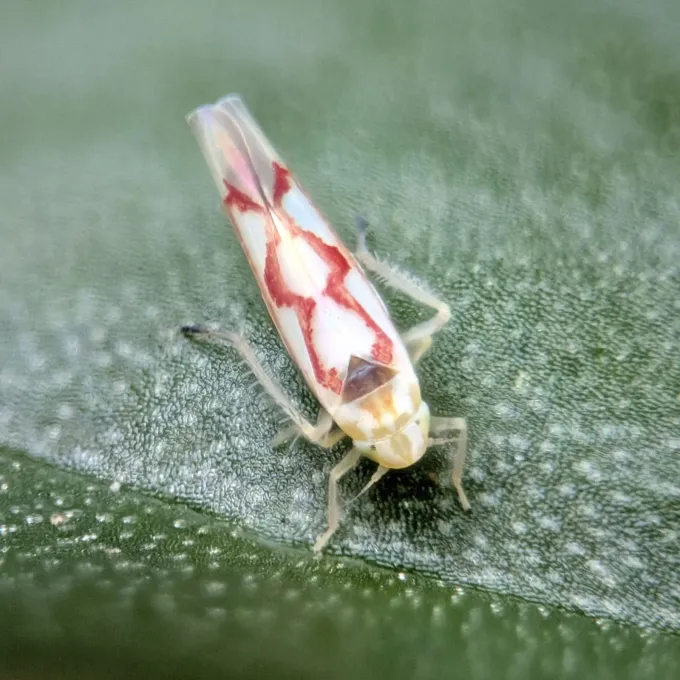
The rose leafhopper (Zygina flammigera) is a small insect belonging to the order Hemiptera and the family Cicadellidae, commonly found on various garden plants.
Adult insects are typically 3-4 mm long and feature a yellowish-white or pale green coloration with distinctive flame-like markings on their wings.
Nymphs resemble smaller versions of the adults but lack wings. They are highly mobile and possess strong hind legs for jumping when disturbed.
The lifecycle consists of eggs laid under the bark of young shoots, several nymphal stages, and the adult stage. In temperate regions, two generations occur annually.
These pests prefer to live on the underside of leaves, making them difficult to detect until significant damage has already occurred on the foliage.
What it damages
The primary hosts of the rose leafhopper include roses, hawthorn, and apple trees, all of which are members of the Rosaceae botanical family.
Feeding occurs through piercing-sucking mouthparts, which extract cell sap, causing a disruption in the plant's photosynthetic process and overall vigor.
Heavily infested plants show significant foliage discoloration, leading to reduced aesthetics, stunted growth, and potential premature leaf drop.
Apart from direct damage, the leafhopper can act as a vector for phytoplasmas and viruses, increasing the risk of secondary plant diseases.
The constant drain on nutrients leaves the plants more susceptible to environmental stress, powdery mildew, and other common horticultural pathogens.
When it appears
The first generation of nymphs appears in late spring (April to May), coinciding with the emergence of new leaves and flower buds on rose bushes.
The second generation, which is usually more abundant and damaging, peaks during the warmer summer months of June and July.
Adult leafhoppers are most active during warm, sunny days, frequently jumping and flying between foliage when the plants are disturbed or shaken.
As autumn approaches, activity decreases as adults prepare to lay overwintering eggs within the woody tissue of one-year-old plant shoots.
Environmental factors, particularly hot and dry weather, significantly accelerate the developmental cycle, leading to rapid population growth during summer.
Signs of infestation
The most visible symptom is the appearance of tiny white or pale speckles on the upper surface of leaves, creating a characteristic stippled or mottled effect.
Large populations result in widespread leaf chlorosis, causing the foliage to turn pale yellow or silvery, often leading to early senescence.
Close inspection of the leaf underside reveals numerous white, cast-off skins (exuviae), which are left behind after the nymphs molt into their next stage.
When shaking a rose bush, a cloud of small, jumping insects will quickly rise, which is a classic indicator of a severe leafhopper infestation.
Honeydew secretion may also occur, which can promote the growth of sooty mold, further complicating the plant's health and ability to perform photosynthesis.
Control measures
Effective management includes good sanitation practices, such as pruning and destroying shoots containing overwintering eggs during the winter months.
Organic control methods involve using insecticidal soaps or neem oil, which are effective against young nymphs while being safer for beneficial insects.
If infestations are severe, systemic insecticides may be necessary to ensure the chemical reaches the sap on which the leafhoppers feed.
- Apply treatments thoroughly to the undersides of leaves.
- Avoid spraying during peak bee activity hours.
- Rotate insecticides to prevent the development of resistance.
Promoting a healthy garden ecosystem by encouraging natural predators, such as lady beetles and lacewings, is key to sustainable long-term control.
Content graph
Connections · Rose leafhopper
Most often together:
Marketplace
Products · 1
Biology
Taxonomy
- Latin name
- Zygina flammigera
- Order
- Hemiptera (bugs, aphids, leafhoppers)
- Family
- Cicadellidae
- EPPO code
- ERYTFL
Community
Discussion
No discussions yet — be the first.