

Description
How to identify
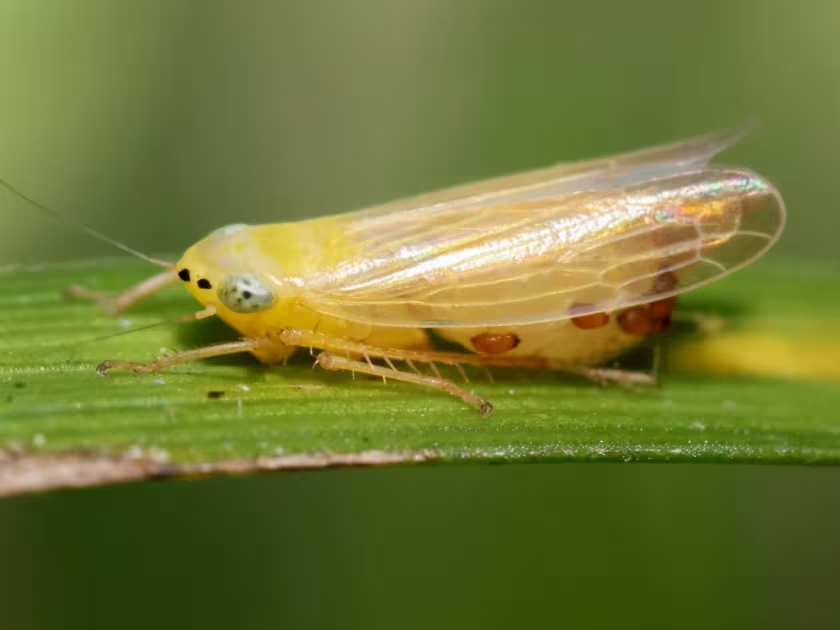
Leafhoppers (genus Cicadula) are small, agile insects belonging to the order Hemiptera and the family Cicadellidae.
Adult insects typically measure between 3 and 5 mm in length, possessing a streamlined, elongated body often colored in shades of green, yellow, or brown.
They are well-known for their powerful hind legs, which allow them to jump great distances when disturbed, making them difficult to capture.
Their mouthparts are adapted for piercing plant tissues and sucking sap, which is the primary mode of feeding for both nymphs and adults.
Nymphs resemble smaller, wingless versions of the adults, developing through several molts while feeding on the underside of plant leaves.
What it damages
Leafhoppers are polyphagous pests that feed on a wide array of crops, including cereals (wheat, barley, oats), corn, vegetables, and ornamental plants.
The primary damage is caused by the extraction of large quantities of plant sap, which leads to wilting, stunted growth, and a reduction in overall plant vigor.
Beyond direct feeding, leafhoppers are significant vectors for various plant viruses and phytoplasmas, which cause systemic diseases such as yellows.
Infestations often result in chlorosis, where leaves develop mottled or yellowed spots, significantly reducing the plant's photosynthetic efficiency.
In severe cases, entire crops can suffer from reduced grain yields and poor quality, especially if the infestation occurs during the early growth stages.
When it appears
Leafhoppers typically overwinter as adults or eggs in crop residues, wild grasses, or protected areas near agricultural fields.
Their activity begins in early spring when temperatures rise, triggering the migration of overwintered populations to emerging crop seedlings.
Throughout the growing season, these pests can produce multiple generations, with population peaks often occurring during warm summer months.
They are particularly attracted to young, lush vegetation, making fields of small grains and corn prime targets for colonization during the vegetative phase.
As autumn approaches, leafhoppers migrate back to perennial grasses or winter crops to find shelter, completing their seasonal reproductive cycle.
Signs of infestation
The earliest signs of a leafhopper infestation include white or yellow stippling on the leaves, caused by the insects piercing the plant cells.
Affected plants may show signs of leaf curling, bronzing, or overall yellowing, which are often accompanied by a noticeable decline in growth rates.
The presence of insect exuviae (cast-off skins) on the undersides of leaves is a clear indicator of nymphal development and activity within the field.
If the leafhoppers are carrying diseases, you may observe stunted growth patterns and systemic symptoms like mosaic patterns or severe foliage distortion.
- Small white dots or stippling on leaf surfaces.
- Jumpers visible when disturbing the plant canopy.
- Yellowing or chlorotic patches across the field.
- Reduced plant height and delayed development.
Control measures
Effective management begins with strict weed control, as wild grasses serve as primary reservoirs for both the pests and the viruses they transmit.
Adjusting planting dates to avoid the peak periods of leafhopper migration can significantly reduce the risk of infestation in vulnerable seedlings.
Biological control via the preservation of natural predators, such as lady beetles and lacewings, plays a crucial role in maintaining population balance.
Chemical control using systemic insecticides is recommended when population thresholds are exceeded, ensuring protection during critical growth stages.
Monitoring using yellow sticky traps is a standard practice to detect initial population increases and time the application of defensive measures effectively.
Content graph
Connections · Leafhopper
Most often together:
Marketplace
Products · 1
Biology
Taxonomy
- Latin name
- Cicadula
- Order
- Hemiptera (bugs, aphids, leafhoppers)
- Family
- Cicadellidae
- EPPO code
- CICASP
Community
Discussion
No discussions yet — be the first.