
California leafhopper
Aceratagallia californica
Description
How to identify
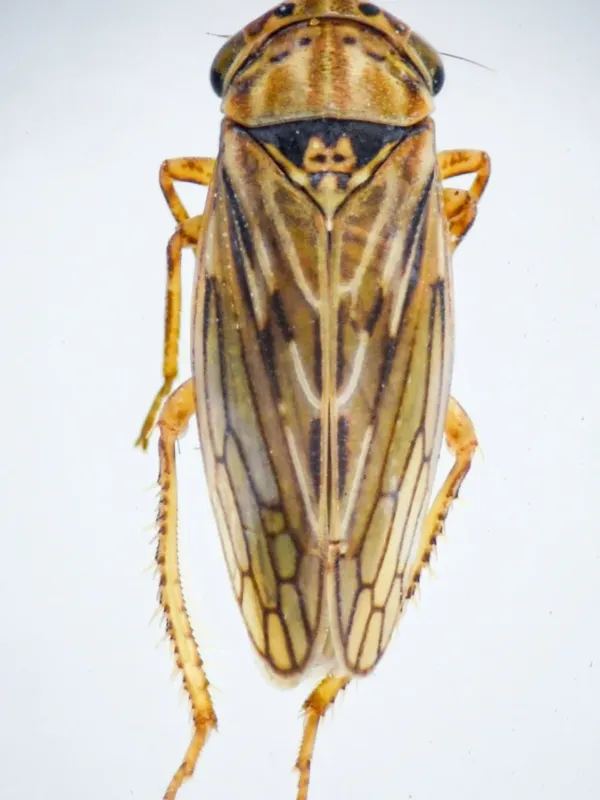
The California leafhopper, scientifically known as Aceratagallia californica, is a member of the Cicadellidae family. These insects are small, highly mobile, and well-adapted to surviving on a variety of herbaceous plants.
Adult specimens typically measure between 3 and 4 millimeters in length. Their coloration is often a blend of greyish-brown or tan hues, providing natural camouflage against soil and dry foliage.
They possess a wide head with prominent eyes and mouthparts specifically designed for piercing and sucking plant juices. Their wings are held in a roof-like position over their bodies when at rest.
Nymphs go through several instars, appearing as wingless miniatures of the adults. Despite lacking wings, they are incredibly agile and can jump away quickly if disturbed.
Entomologists identify this species by examining specific morphological characteristics of the genitalia and head structure, though field recognition relies mostly on their size, jumping behavior, and host plant association.
What it damages
This pest is known for its wide range of hosts, frequently impacting vegetables like tomatoes, potatoes, and legumes. It thrives in both commercial fields and home gardens.
The primary damage occurs when these insects pierce plant tissues to feed on phloem sap. This constant feeding stresses the plant, reducing its vigor and overall growth potential.
Beyond direct feeding damage, the California leafhopper serves as a vector for various plant pathogens. They can transmit viruses and phytoplasmas while feeding, leading to severe systemic infections.
Signs of heavy infestation include chlorosis (yellowing of leaves), stunted growth, and in severe cases, the death of individual shoots or even entire plants if left untreated.
The economic impact of this pest is often magnified by the secondary diseases it spreads, which can result in significant yield losses for agricultural producers worldwide.
When it appears
The lifecycle of Aceratagallia californica is heavily influenced by climate. They overwinter as adults or eggs in protected areas, including weeds and crop debris, waiting for warmer conditions.
As spring progresses, the population emerges and begins to colonize young, tender crops. The reproductive cycle is relatively fast, allowing for multiple generations within a single growing season.
Mid-summer is typically the peak period for activity. High temperatures accelerate their metabolism and population growth, increasing the risk of widespread crop infestation during these months.
As autumn temperatures drop, the leafhoppers seek out shelter to survive the winter. Their ability to survive on weeds during the off-season makes them persistent pests in many areas.
Tracking the timing of their emergence is critical for pest management, as interventions are most effective when timed against the peak of the first generation's nymph stage.
Signs of infestation
Early symptoms appear as tiny, white stippling marks on the foliage, created by the insect's probing and feeding. This is often the first visible indicator of their presence.
As feeding continues, leaves may start to curl or develop necrotic spots. Yellowing spreads across the leaf surface, significantly impacting the plant's photosynthetic capacity.
Close inspection of the underside of the leaves often reveals the presence of both nymphs and adults. A sudden, synchronized jumping of insects when foliage is brushed is a classic giveaway.
If the plants display sudden mosaic patterns, leaf curling, or unusual dwarfism, it is highly likely that the leafhoppers have introduced a viral pathogen into the crop.
The presence of sticky honeydew on the lower leaves is another strong sign. This sugary secretion often attracts secondary infections, such as black sooty mold, further damaging the foliage.
Control measures
Integrated Pest Management (IPM) is the most effective approach for controlling this pest. Sanitation, such as removing weeds and crop residues, is a foundational step in limiting their habitats.
Monitoring populations using yellow sticky cards is essential for determining when treatment thresholds have been reached. This allows for precision application of control measures.
Biological control agents, including various predatory bugs and parasitoid wasps, play a key role in keeping populations under control in balanced ecological systems.
When chemical intervention is required, systemic insecticides are generally effective. It is vital to rotate different classes of chemistry to prevent the development of resistance within the leafhopper population.
- Remove alternative host weeds from field borders.
- Use yellow sticky traps for population monitoring.
- Apply insecticides only when necessary based on threshold counts.
Taxonomy
- Latin name
- Aceratagallia californica
- Order
- Hemiptera (bugs, aphids, leafhoppers)
- Family
- Cicadellidae
- EPPO code
- ACEACF
Discussion
No discussions yet — be the first.