
Coffee borer moth
Zeuzera coffeae
Description
How to identify
The coffee borer moth (Zeuzera coffeae) is a significant wood-boring pest belonging to the Cossidae family, known for its destructive impact on various woody plants.
The adult moth is recognizable by its slender body and translucent wings adorned with distinctive dark spots, which aid in camouflage against tree bark.
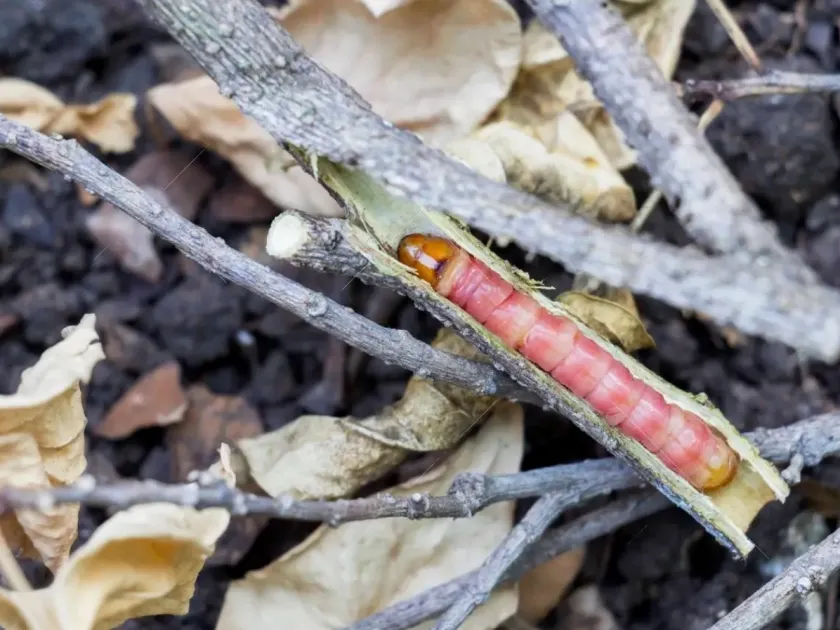
Larvae are the primary agents of damage; they are typically pale or pinkish in color and possess strong mandibles capable of boring into solid wood.
The lifecycle of this moth involves several stages, with the larval stage being the most prolonged and hazardous for the structural integrity of the host plant.
Monitoring the adult population is crucial for pest management, as they are nocturnal insects and are most active during the night hours.
What it damages
This pest affects a wide range of hosts, including coffee, tea, cocoa, citrus fruits, and numerous ornamental shade trees common in tropical climates.
Larvae bore deep into the stem and branches, creating extensive galleries that disrupt the transportation of water and nutrients throughout the plant.
Small trees and young seedlings are especially susceptible, often dying after the moth larvae destroy their main stems or taproots.
Larger trees suffer from weakened branches that are prone to breakage during heavy winds or under the weight of the harvest, significantly reducing yields.
The internal damage caused by the tunnels invites secondary pests and pathogenic fungi, leading to severe branch dieback and eventual tree decline.
When it appears
Activity cycles are closely linked to rainfall patterns, with peak egg-laying usually occurring at the beginning of the wet season.
The larval phase can persist for several months, with development speed being heavily influenced by temperature and plant sap availability.
In tropical regions, generations may overlap throughout the year, making it challenging to pinpoint a single window for control measures.
Pupation occurs within the tunnels inside the wood, providing the developing insect with protection from predators and external environmental fluctuations.
Field observation of moth flight patterns helps agronomic professionals time their preventive interventions to avoid mass infestations.
Signs of infestation
Frass, which consists of wood shavings and larval excrement, accumulating at the base of the tree or on leaf axils is a primary indicator of infestation.
Small, circular entry holes on the bark, sometimes surrounded by webbing, indicate where the larvae have successfully penetrated the stem.
Wilting of foliage on individual branches is a classic symptom of internal blockage caused by the feeding tunnels, even when soil moisture is adequate.
Bark discoloration or depressions on the stem may reveal the location of older, deeper tunnels that have already caused structural damage.
Early morning inspections are recommended to spot the fresh accumulation of debris, which is the most reliable sign that a larva is currently active.
Control measures
Sanitation through the careful pruning and burning of infested branches is the most effective way to eliminate larvae and prevent further spread.
Mechanical control involves probing tunnels with thin wire to kill the larvae followed by applying systemic insecticide pastes into the entry points.
Integrated Pest Management (IPM) strategies often utilize pheromone traps to monitor adult flights and suppress population growth through mating disruption.
Biological control agents, including entomopathogenic fungi and beneficial nematodes, can be used to naturally lower larval survival rates.
Systemic insecticides are generally applied during periods of active sap flow to ensure the chemical reaches the hidden larvae effectively.
Taxonomy
- Latin name
- Zeuzera coffeae
- Order
- Lepidoptera (butterflies)
- Family
- Cossidae
- EPPO code
- ZEUZCO
Discussion
No discussions yet — be the first.