
Poplar borer
Acossus populi
Description
How to identify
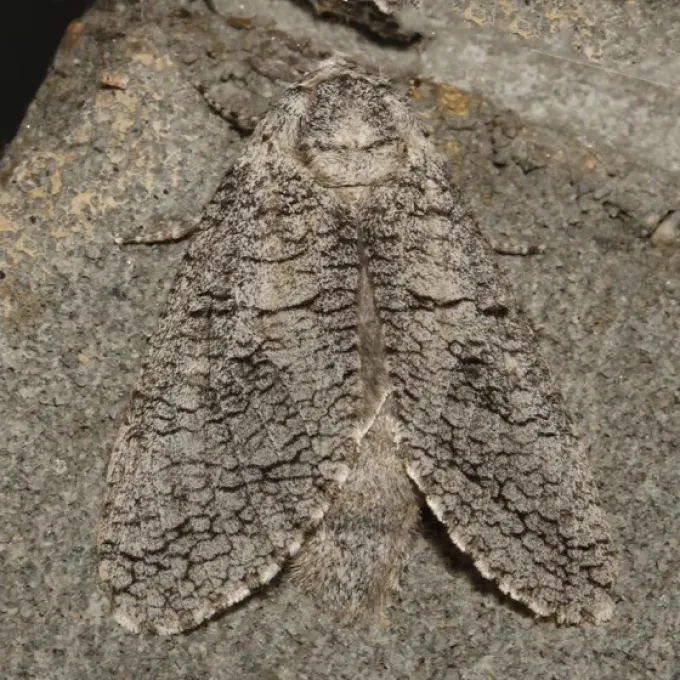
The poplar borer (Acossus populi) belongs to the order Lepidoptera and the family Cossidae. These moths are relatively large, with a wingspan ranging from 60 to 90 mm.
The wings exhibit a grayish-brown mottled pattern that provides excellent camouflage against tree bark. The body of the moth is densely covered with fine hairs.
The larvae, or caterpillars, can grow up to 100 mm in length. They are cylindrical, yellowish-white in color, and possess a dark brown head with powerful, wood-chewing mandibles.
The life cycle of this insect is long, typically spanning 2 to 3 years. This prolonged larval stage allows the pest to remain hidden inside the wood for years.
Pupation occurs within the galleries the larvae have bored into the wood. Before pupating, the larva creates a channel leading to the surface to allow the adult moth to exit.
What it damages
The primary hosts of the poplar borer are various species of poplar and willow trees, which are often found in urban landscapes, parks, and shelterbelts.
Larvae bore extensive galleries deep into the trunks and thick branches. This destructive behavior disrupts the flow of water and nutrients, eventually leading to crown dieback.
Wood structural integrity is severely compromised by these tunnels. Consequently, infested trees become brittle and are prone to breaking during high winds or storms.
The entrance and exit holes created by the borers act as entry points for pathogens, such as wood-decay fungi and bacteria, which further degrade the health of the tree.
Young trees can be completely girdled and killed within a few seasons if the infestation is heavy, posing a significant risk to nursery stocks and young plantations.
When it appears
The flight period for adult moths typically occurs during the summer months, specifically June and July. They are primarily nocturnal and rarely seen during the day.
Females lay eggs in small clusters within bark crevices or near existing wounds on the tree trunk. A single female can produce several hundred eggs.
Upon hatching, young larvae begin feeding under the bark before moving deeper into the sapwood and heartwood to continue their development.
The larvae overwinter inside the tunnels within the tree trunk. They remain inactive during the cold season and resume feeding once temperatures rise in the spring.
The most intense damage occurs during the warmer months when the larvae are actively expanding their galleries and consuming wood tissues at a high rate.
Signs of infestation
The most prominent sign of an infestation is the presence of frass (a mixture of chewed wood and excrement) accumulating at the base of the tree or in branch crotches.
Visible boreholes on the trunk, often 5–10 mm in diameter, are a clear indication of activity. During the growing season, sap may ooze from these holes, leaving dark streaks.
Premature yellowing of leaves or the death of individual branches is a strong indicator that the internal conductive tissues have been significantly damaged.
Bark in the infested areas may crack, peel, or show signs of deformation. These wounds are often susceptible to secondary infections and opportunistic pests.
Finding empty pupal cases protruding from the trunk is a definitive sign that the insect has completed its development and the adults have emerged.
Control measures
The most effective management strategy is the early detection and removal of heavily infested trees, which otherwise act as breeding grounds for the population.
Preventive trunk sprays using contact insecticides during the adult flight period can help reduce the number of eggs laid on the host trees.
For high-value specimens, injecting systemic insecticides directly into the larval galleries, followed by sealing the holes, can effectively eliminate the pests.
Promoting tree health through proper irrigation, fertilization, and preventing mechanical bark injuries increases the tree's natural resilience to borer attacks.
Utilizing pheromone traps in urban areas helps monitor population levels and allows for targeted interventions before an infestation reaches critical levels.
Taxonomy
- Latin name
- Acossus populi
- Order
- Lepidoptera (butterflies)
- Family
- Cossidae
- EPPO code
- COSSPO
Discussion
No discussions yet — be the first.