
Goat Moth (Aspen Wood Leopard Moth)
Acossus terebra
Description
How to identify
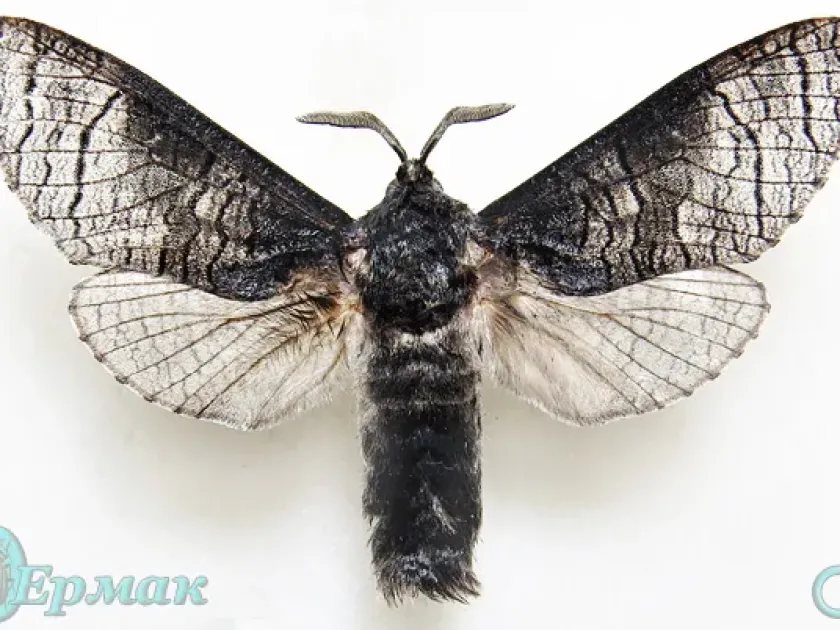
Acossus terebra, commonly known as a type of goat moth or aspen-boring moth, is a large lepidopteran belonging to the Cossidae family. The adult moth has a wingspan of 70–90 mm, with wings typically exhibiting a greyish-brown marbled pattern that provides excellent camouflage against tree bark.
The larvae, or caterpillars, are large and striking in appearance, often displaying vibrant orange or red coloration. They spend the vast majority of their life cycle tunneling through the woody tissue of host trees.
As a nocturnal species, these moths are rarely seen in daylight, making their detection dependent on identifying indirect signs of their presence in the environment or on the bark surface.
The life cycle of this insect usually spans two years, with larvae undergoing multiple developmental stages within the wood before they finally emerge to pupate and complete their transformation.
This species is well-adapted to cooler climates, as the protection afforded by the tree trunks allows them to survive through winter months protected from extreme temperature drops.
What it damages
The primary hosts of Acossus terebra are deciduous trees, with a strong preference for poplars and aspens. Occasionally, they may also target willow species, especially in environments where these trees are planted in dense groups.
By excavating long and intricate galleries inside the trunk, the larvae severely disrupt the vascular system of the tree, impeding the flow of essential water and nutrients from the roots to the canopy.
This internal damage creates significant structural weakness, leading to an increased risk of breakage due to wind or snow accumulation. Trees weakened by larval tunneling are often rendered useless for commercial timber production.
In addition to structural damage, the tunnels serve as entry points for various pathogens, including fungi and bacteria, which can cause internal decay and eventually lead to the rapid death of the host tree.
In young plantations, the presence of just a few larvae can be lethal to a tree, as they can effectively ring-bark or hollow out the center of the stem, causing irreversible damage.
Signs of infestation
One of the earliest and most reliable indicators of an infestation is the accumulation of frass, or wood-boring dust, and larval excrement near the base of the tree or caught in bark crevices.
Distinctive entrance and exit holes in the bark are clear indicators of the insect's activity. These holes are often found on the lower sections of the trunk and may weep sap during the warmer months.
A noticeable decline in canopy health, such as premature leaf drop, yellowing foliage, or the dieback of specific branches, often points to an underlying infestation that is compromising the tree's health.
During the pupation phase, empty pupal cases might be found protruding from the exit holes, signaling that an adult moth has emerged and the breeding cycle has successfully continued.
When tapping the trunk in areas showing signs of entry, a hollow or muffled sound may indicate that the internal structure of the wood has been heavily compromised by tunneling activity.
Control measures
The most effective management strategy is the sanitary removal and destruction of heavily infested trees. By eliminating these brood trees, the overall population pressure in a given area can be significantly reduced.
Systemic insecticides can be injected directly into the active larval galleries. This targeted approach is highly effective at killing larvae while minimizing exposure to beneficial insects and the surrounding environment.
Pheromone traps, used during the adult flight season, provide an excellent tool for monitoring populations and determining the exact timing for implementing chemical or biological control interventions.
Maintaining high tree vigor through proper irrigation and soil nutrition is essential, as healthy trees are better equipped to withstand and recover from light infestations of stem-boring insects.
- Regular forest health surveys and monitoring
- Removal and burning of heavily infested logs
- Protection of tree trunks from physical damage during maintenance
Taxonomy
- Latin name
- Acossus terebra
- Order
- Lepidoptera (butterflies)
- Family
- Cossidae
- EPPO code
- LAMETE
Discussion
No discussions yet — be the first.