
Chilecomadia valdiviana
Chilecomadia valdiviana
Description
How to identify
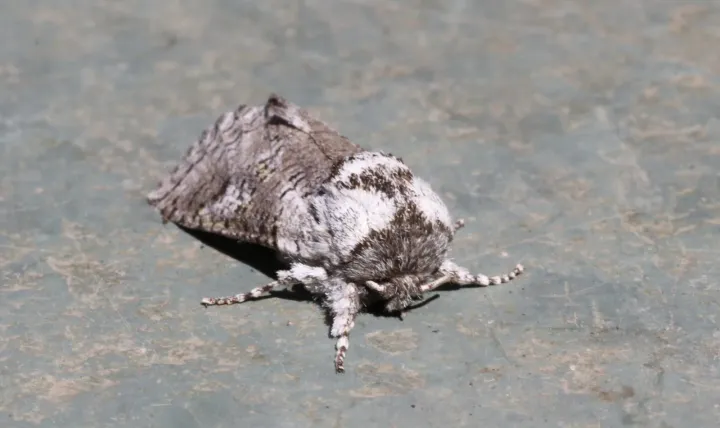
Chilecomadia valdiviana is a moth species belonging to the Cossidae family, known as wood-boring moths. The adult moth has a cryptic coloration designed for camouflage against bark surfaces.
The larval stage is the primary cause of concern for agronomists, as these caterpillars bore deep into the woody tissues of host plants. They possess robust mandibles for chewing through bark and xylem.
The life cycle involves a complete metamorphosis. Adults are relatively short-lived and focus mainly on reproductive activities, while the larvae spend an extended period inside the host plant.
Identification of the species is often based on the observation of specific frass and exit holes, as direct observation of the adults or larvae is rarely successful without invasive methods.
This species is endemic to parts of South America, where it has evolved to exploit local forest trees and subsequently migrated to commercial orchards.
What it damages
This pest is a significant threat to various fruit trees, including apples, pears, and stone fruits. It can cause long-term structural damage to the plant anatomy.
Larvae create extensive galleries within the trunk and main branches. These galleries disrupt the xylem and phloem, severely impeding the transport of nutrients and water.
The cumulative damage leads to reduced tree vigor, foliage yellowing, and significant crop yield losses. Over time, the affected parts become susceptible to breakage.
If not managed, heavy infestations can kill a tree, as the structural integrity of the wood is compromised and the tree becomes unable to withstand environmental stresses.
Secondary infections, such as fungal pathogens or wood-decaying organisms, frequently enter the tree through the openings created by the larvae, further accelerating decline.
When it appears
Adult flight usually occurs during the warmer months, corresponding with the peak growth season of the host plants, which facilitates egg-laying on favorable bark surfaces.
Larval activity is constant throughout the year as they remain protected inside the wood, where they are shielded from temperature fluctuations and most environmental hazards.
The generation time can be quite long, resulting in overlapping generations. This means that larvae of various developmental stages can be present in a single tree at the same time.
New infestations usually begin shortly after the hatching of eggs laid by the adult moths. The newly hatched larvae are the most mobile stage and seek immediate entry points.
Understanding the synchronization between adult activity and seasonal tree development is critical for scheduling effective intervention strategies.
Signs of infestation
The most reliable sign of an infestation is the presence of frass (larval excrement), which accumulates at the base of the tree or in branch forks as the larvae clear their galleries.
Exudation of sap or gum from the bark is another common response by the tree to the mechanical injury caused by the boring caterpillars.
Small, circular or oval entry holes on the bark are indicators of larval activity. These holes may sometimes be covered by silk webs produced by the young larvae.
Visible decline in the canopy, including chlorotic leaves and branches that wither or fail to flush properly, often suggests that internal wood damage is severe.
Branches may become brittle and show signs of localized thickening or malformation where the larvae have been feeding for prolonged periods.
Control measures
Orchard monitoring using pheromone traps is the primary method to detect adult moth presence and timing, allowing for the precise application of protective measures.
Sanitation practices, such as the systematic removal and destruction of heavily infested limbs, are essential to reduce the population density within the orchard.
The use of systemic insecticides during the peak of egg-laying or early larval emergence can help prevent the successful establishment of larvae beneath the bark.
Improving general orchard hygiene and tree health, through proper irrigation and balanced fertilization, increases the tree's natural defense and recovery capacity.
In cases where manual intervention is required, localized applications of authorized insecticides directly into the larval galleries can be an effective control technique.
Taxonomy
- Latin name
- Chilecomadia valdiviana
- Order
- Lepidoptera (butterflies)
- Family
- Cossidae
- EPPO code
- CHCOVA
Discussion
No discussions yet — be the first.