
Poplar carpenter moth
Acossus centerensis
Description
How to identify
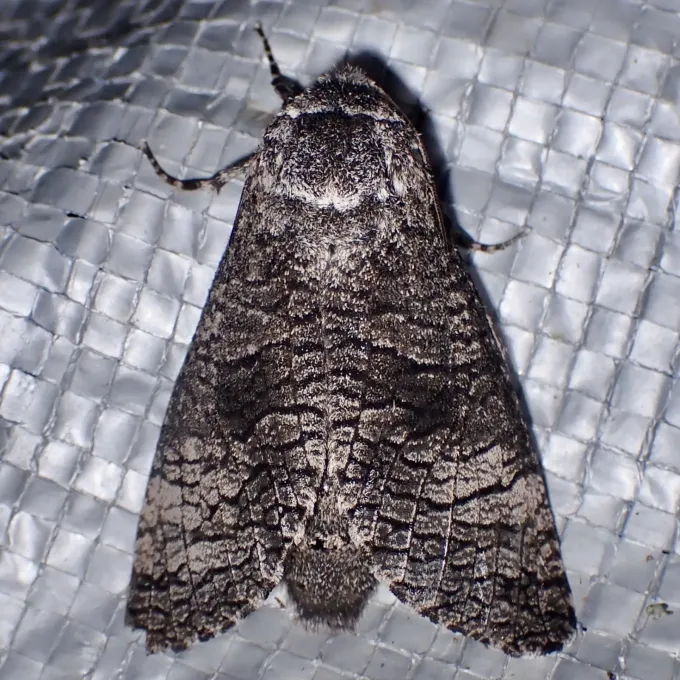
The poplar carpenter moth (Acossus centerensis) is a member of the family Cossidae (order Lepidoptera). The adult is a large moth with a wingspan of 70-90 mm, characterized by mottled, greyish-brown wings that provide excellent camouflage against tree bark.
The larvae are heavy-bodied, reaching up to 80 mm in length, with a pale yellowish color and a dark, sclerotized head capsule. These larvae are the stage responsible for the extensive damage caused to host trees.
The biology of this species involves a prolonged developmental cycle. Most of the insect's life is spent inside the trunks of host trees, making it a classic wood-boring pest that is difficult to detect until infestation is advanced.
Unlike some other borers, the poplar carpenter moth is frequently attracted to trees that are already stressed or wounded. This vulnerability allows the larvae to enter the cambium layer more easily.
The life cycle can span two to three years, depending on environmental factors and the nutritional quality of the wood. This extended period within the tree allows for significant structural damage to the host.
What it damages
The primary hosts for this pest include various poplar species (Populus), such as black poplar and aspen. Occasionally, the pest may infest willows when they are planted in proximity to high-density poplar stands.
The primary damage is caused by the larvae creating extensive gallery systems within the sapwood and heartwood. This activity disrupts the transport of water and nutrients throughout the tree, leading to decline.
The structural integrity of the tree is significantly compromised by the tunnels. This often leads to windbreakage, where the trunks snap at the points of heaviest infestation during severe weather events.
In urban landscapes and park settings, the presence of the moth leads to aesthetic degradation, branch dieback, and the potential hazard of falling limbs, often necessitating the removal of the tree.
The tunnels also serve as entry points for various decay fungi and secondary insect invaders, which can further accelerate the death of the tree after the initial attack by the moth.
Signs of infestation
The most prominent sign of infestation is the presence of "frass"—a mixture of wood shavings and larval excrement—pushed out from entry holes located near the base of the trunk or at branch junctions.
Visible holes in the bark, typically 5-8 mm in diameter, are characteristic of this pest. Sap flows or dark, stained bark around these openings are frequently observed due to the tree's reaction to the tunneling.
During peak years of emergence, adult moths may be found resting on the bark during daylight hours, though their cryptic coloration makes them difficult to distinguish from the tree surface.
Premature yellowing or wilting of the foliage on specific branches is a strong indicator of internal vascular disruption caused by larval feeding inside the associated woody tissues.
A hollow sound produced when the trunk is tapped can suggest the presence of significant internal galleries, indicating that the wood has been heavily compromised by the larvae.
Control measures
The primary management strategy is the removal and disposal of heavily infested trees. Sanitation felling should be conducted before the adults emerge to prevent the spread of the population to neighboring trees.
Promoting tree health is the best prophylactic measure. Proper irrigation, fertilization, and protection from mechanical injuries help trees maintain natural defenses against wood-boring insect attacks.
Chemical control can be difficult given the larvae's protected status. However, timing the application of systemic insecticides to coincide with the period when neonate larvae are moving over the bark is essential.
For high-value specimen trees, localized treatment involves injecting registered insecticides directly into the larval galleries and sealing the entry points to prevent further infection.
- Monitoring adult populations using pheromone-baited traps to determine the best timing for preventative measures.
- Encouraging natural predators, such as woodpeckers, which can significantly reduce larval populations in the field.
- Applying lime-based trunk washes to deter female moths from laying eggs on the bark surface during the flight period.
Taxonomy
- Latin name
- Acossus centerensis
- Order
- Lepidoptera (butterflies)
- Family
- Cossidae
- EPPO code
- COSSCE
Discussion
No discussions yet — be the first.