
Woodland jumping mouse
Zapus hudsonius
Description
How to identify
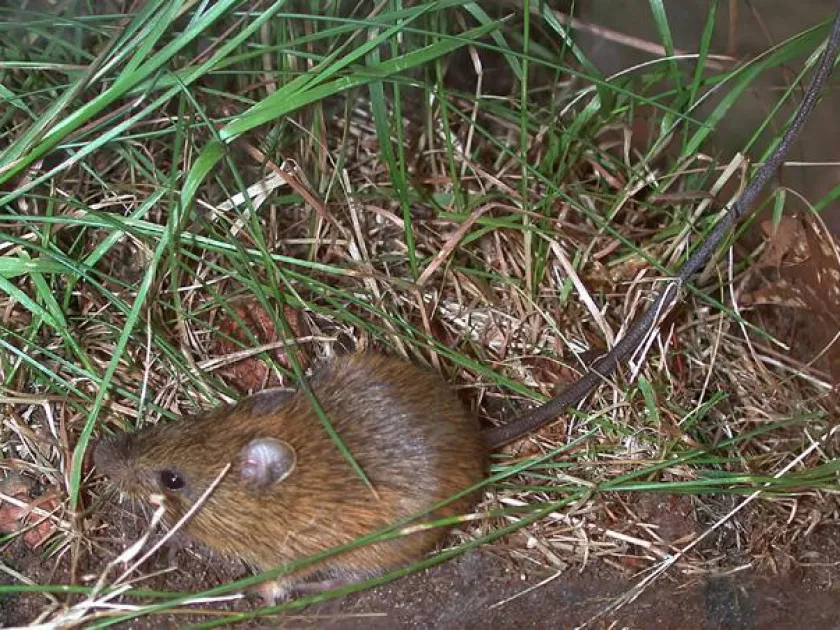
The Woodland jumping mouse (Zapus hudsonius) is a small rodent belonging to the Dipodidae family, characterized by an exceptionally long tail, which can be up to one and a half times the length of its body. It resembles a miniature jerboa with an ochre-brown back and a white belly.
This rodent possesses powerful hind legs adapted for making long jumps when threatened, which inspired its common name. Its ears are small and sparsely covered with hair, and its teeth are specifically adapted for grinding seeds and cereal crops.
Unlike common field mice, jumping mice lead a more elusive lifestyle and rarely form high-density colonies in open areas, preferring dense vegetation and tall grasses. Adult specimens weigh only about 15-20 grams.
Biologically, the species is characterized by distinct seasonal activity. Jumping mice enter deep hibernation as temperatures drop, constructing nests deep within the soil or beneath dense vegetation cover to protect themselves from freezing.
Identification is complicated by their nocturnal habits and high mobility; however, the presence of characteristic jumping tracks on moist soil near field boundaries can indicate their presence in an agroecosystem.
What it damages
From an agronomic perspective, this species can damage a wide range of field crops, including wheat, oats, barley, and corn during early growth stages. The primary damage occurs during the germination and seedling emergence periods.
Rodents actively consume planted seeds, digging them out of shallow furrows, which leads to sparse stands and the necessity for reseeding, significantly increasing production costs for agricultural enterprises.
In addition to seeds, adults chew on the stems of young plants, causing premature wilting or stunted growth. Fields bordering shelterbelts or uncultivated meadows are particularly vulnerable to infestations.
The damage is usually localized but can affect significant areas if the jumping mouse population exceeds economic injury levels. Unlike mass-infesting mouse species, they rarely destroy the entire crop but reduce the plant density.
Beyond direct feeding damage, the presence of rodents in fields facilitates the development of secondary fungal infections due to mechanical injury to seedling tissues, making plants more susceptible to environmental stressors.
When it appears
The activity period of the Woodland jumping mouse covers the warmer seasons, starting in early spring when rodents emerge from hibernation to forage, and ending in late autumn before they enter winter dormancy.
The highest threat to crops occurs during the early developmental phases of agricultural plants. May and June are critical months when young seedlings are most attractive to rodents due to their high moisture and nutrient content.
Summer activity decreases slightly as wild grasses mature and the natural food supply expands. During this time, jumping mice prefer to move to less cultivated zones, such as field edges, margins, or roadside strips.
The autumn period is characterized by intensive foraging to accumulate fat reserves for prolonged hibernation. During this time, they may cause secondary damage by gnawing on grain heads if the crops have not yet been harvested.
The life cycle of this species is strictly tied to climatic conditions, so sudden spring temperature fluctuations can delay their emergence from burrows, indirectly reducing risks for early-season crops.
Signs of infestation
The first sign of infestation is the appearance of "bald patches" in fields where seeds have been eaten or seedlings have been destroyed near the ground level. Close inspection may reveal characteristic small holes in the soil.
On the soil surface near damaged areas, one can often find tracks consisting of two deep hind-foot impressions placed parallel to each other, with a thin line from the long tail visible between them.
The presence of droppings in the form of small, dark capsules around damaged sites is also a reliable indicator of rodent activity. The presence of plant debris shredded by incisors confirms the pest's identity.
Damaged cereal stems typically feature a characteristic "jagged" cut made by small teeth, which visually differs from the work of larger rodents that leave broader, coarser signs of damage.
Observation at dusk with a flashlight allows for visual confirmation of individuals in the crops. They are most frequently detected in areas where cultivated plants grow in close proximity to weeds.
Control measures
Effective management is based on a combination of agronomic and organizational measures. Deep tillage is an essential step, as it destroys rodent burrows and limits their habitat during spring and autumn.
It is necessary to maintain field sanitation by removing weeds from margins, as the Woodland jumping mouse prefers settling in areas with dense vegetation that provides cover and supplementary food sources.
The use of poisoned baits must be strictly compliant with environmental regulations to avoid harming beneficial birds of prey, which naturally regulate rodent populations in fields.
Creating nesting conditions for predators (such as installing perches for owls and hawks) is a biologically sound method of control that allows for population suppression without the use of excessive chemicals.
Annual spring population monitoring should be conducted. If threshold levels are reached, barrier treatments at field edges using approved insecticides or rodenticides are recommended to prevent the migration of pests into the crop.
Taxonomy
- Latin name
- Zapus hudsonius
- Order
- Rodents
- Family
- Dipodidae
- EPPO code
- ZAPUHU
Discussion
No discussions yet — be the first.