
Jerboa
Jaculus
Description
How to identify
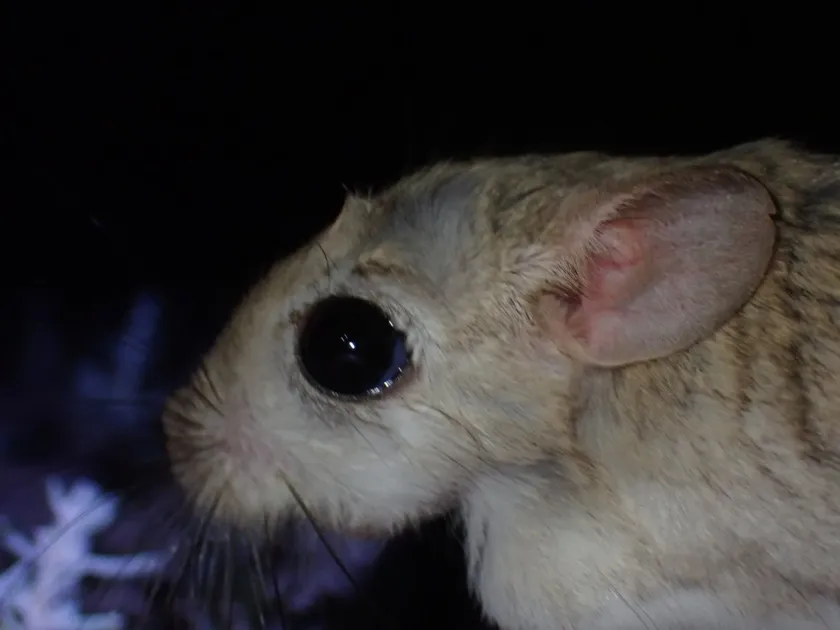
Jerboas (genus Jaculus) are specialized rodents adapted to desert and semi-desert environments. They are easily identified by their extremely elongated hind legs, used for hopping, and a long tail with a tufted tip that serves as a balancer during movement.
They possess a large head with prominent eyes and ears, reflecting their nocturnal nature. The fur color ranges from sandy to ocher, providing excellent camouflage in open, arid landscapes.
While sizes vary by species, the characteristic morphology of long hind limbs and a compact body remains consistent. Because they are strictly nocturnal, they are rarely spotted during daytime field inspections.
Systematically, jerboas belong to the family Dipodidae, order Rodentia. In agricultural settings, they often inhabit field margins that border on uncultivated, wild, or desert lands.
The population density of jerboas depends heavily on available food sources and seasonal weather patterns. Favorable moisture conditions can lead to population spikes, increasing the potential impact on adjacent crops.
What it damages
The primary damage caused by jerboas involves the destruction of cereal and melon crops. They gnaw on young wheat, barley, and millet shoots during the early stages of vegetation, leading to thinning of the stands.
These rodents also cause significant harm as crops ripen by consuming seeds directly from the spikes and digging up sown seeds from the soil. Occasionally, they can also damage vegetable fruits.
Beyond direct feeding, jerboas cause structural damage through their burrowing activities. An abundance of burrows within fields complicates mechanical operations such as tillage and fertilizer application.
In irrigated areas, jerboas can damage water management infrastructure, including canals and irrigation systems, by expanding their burrows into the soft soil of embankments.
Damage often manifests in patches, particularly near their natural habitats, creating bare spots in the field that reduce overall crop yield.
When it appears
Jerboa activity is closely linked to the crop growing cycle. In spring, following hibernation, they exhibit a high demand for green fodder, coinciding with the germination phase of cereal crops.
The summer period is characterized by breeding and intensive energy storage. During this time, rodent activity is at its peak, and the damage to late-season crops increases significantly.
Autumn activity decreases as the animals prepare for winter. However, they continue to feed intensively on leftover grain or crops still standing in the field during this transition.
In winter, jerboas enter a state of hibernation, the depth of which depends on the climate zone. During this time, agricultural impact is virtually non-existent until the following season.
The start of the spring activity cycle is directly correlated with soil temperatures. A warm, early spring triggers an earlier emergence from burrows, extending the period of potential crop exposure.
Signs of infestation
The main sign of jerboa presence is the distinct footprint pattern: parallel tracks from the long hind feet with a groove left by the tail in between.
The presence of numerous burrow entrances, ranging from 5 to 10 centimeters in diameter, typically found along field borders or ridges, is a reliable indicator of infestation.
Visually, damaged plants appear as though they have been sheared, with ragged edges on the stems. Debris such as grain husks and cleaned seeds can often be found surrounding damaged plants.
Nocturnal activity is confirmed by squeaking sounds in the twilight, and they can occasionally be spotted by their eye-shine when illuminated by vehicle lights at night.
Their activity also manifests as small piles of excavated soil near burrow openings, which creates uneven ground and interferes with consistent seed emergence.
Control measures
The most important control measure is the implementation of proper agronomic practices, including deep plowing, which destroys burrow systems and restricts the movement of jerboas.
Maintaining weed-free buffer strips around field edges is an effective preventative method, as it makes the area less attractive to burrowing rodents.
In cases of high infestation, poisoned baits may be used, placed directly into burrows with the opening subsequently sealed to minimize the risk to non-target wildlife.
Ultrasonic repellents may offer short-term relief on small plots, but their effectiveness is limited when applied to large-scale open agricultural fields.
It is crucial to maintain biological balance by protecting the natural predators of jerboas, such as owls, hawks, and small carnivorous mammals, which naturally help to regulate population growth.
Taxonomy
- Latin name
- Jaculus
- Order
- Rodents
- Family
- Dipodidae
- EPPO code
- JACUSP
Discussion
No discussions yet — be the first.