
Southern birch mouse
Sicista subtilis
Description
How to identify
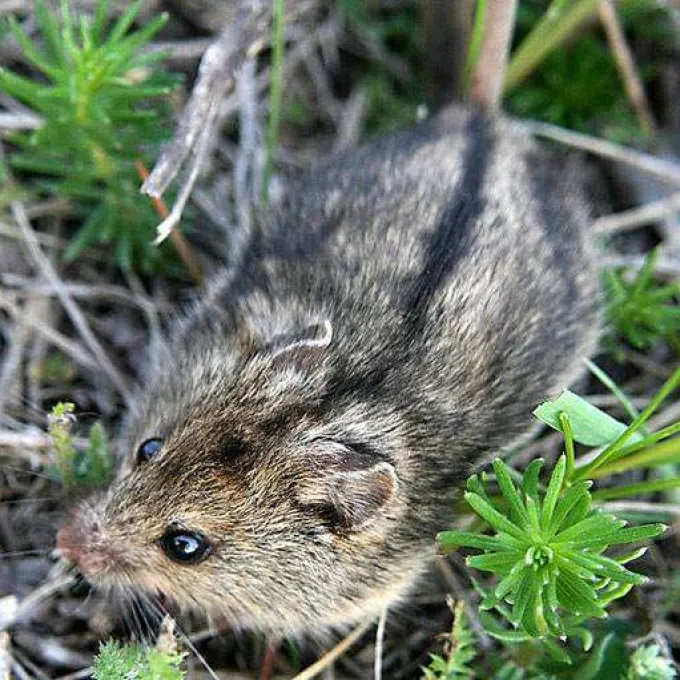
The Southern birch mouse (Sicista subtilis) is a small rodent belonging to the Dipodidae family. It is easily identified by its slender body, a distinctive dark stripe running along the center of its back, and an exceptionally long, semi-prehensile tail.
The total body length varies between 5 and 8 centimeters, with the tail often significantly longer, reaching up to 10 centimeters. Their agility allows them to climb stalks and navigate vegetation with ease, which is a key behavioral trait.
These rodents are primarily nocturnal and crepuscular, spending daylight hours in concealed burrows or sheltered areas within thick vegetation. They are generally solitary creatures and do not form large, dense colonies like common field voles.
One of the most notable biological characteristics of this species is its ability to hibernate during the cold winter months. This dormancy period differentiates them from many other agricultural rodents that remain active throughout the year.
Reproduction is seasonal, typically producing one litter per year. The relatively small litter size contributes to a slower population growth rate, which allows farmers more time to detect and respond to local infestations.
What it damages
The Southern birch mouse causes damage to grain crops by consuming seeds during the milk-ripe stage. They also feed on young shoots and leaves, which can cause significant stunted growth in fields.
The damage is most severe in crops located near natural habitats such as steppe meadows, field borders, and overgrown hedgerows. These areas act as reservoirs from which the rodents move into cultivated fields.
Beyond direct consumption, their activity can cause physical damage to plants as they climb and feed, making stalks prone to breakage. This leads to uneven crop stands and potential harvesting difficulties.
In addition, their burrowing activities in field margins can lead to soil disturbance and seed loss. While they do not destroy entire harvests in a single season, cumulative damage can be substantial in localized spots.
The economic impact of this species is usually localized, but if left unmanaged, the population can spread from field edges into the main planting areas, requiring prompt intervention to protect yields.
Control measures
Effective management begins with strict agricultural practices. Deep autumn plowing is the most efficient method to destroy burrows and prevent the rodents from successfully hibernating in the fields.
Sanitation of field margins is crucial. Keeping areas around fields, fences, and irrigation ditches free of weeds and tall grass removes the shelter and nesting sites that these mice depend on for survival.
When infestation levels exceed economic thresholds, the use of targeted rodenticides is advised. Baiting should be conducted using protective stations to ensure safety for beneficial species and domestic animals.
Encouraging biological predators, such as raptors and owls, is a highly sustainable strategy. Installing poles or perches in fields helps these predators survey the area, effectively reducing the rodent population.
Regular monitoring of field edges during the early growing season is vital. Early detection allows for pinpointing localized infestations, which prevents the necessity of large-scale chemical applications across the entire crop area.
Taxonomy
- Latin name
- Sicista subtilis
- Order
- Rodents
- Family
- Dipodidae
- EPPO code
- SICISU
Discussion
No discussions yet — be the first.