
Jerboas
Zapus
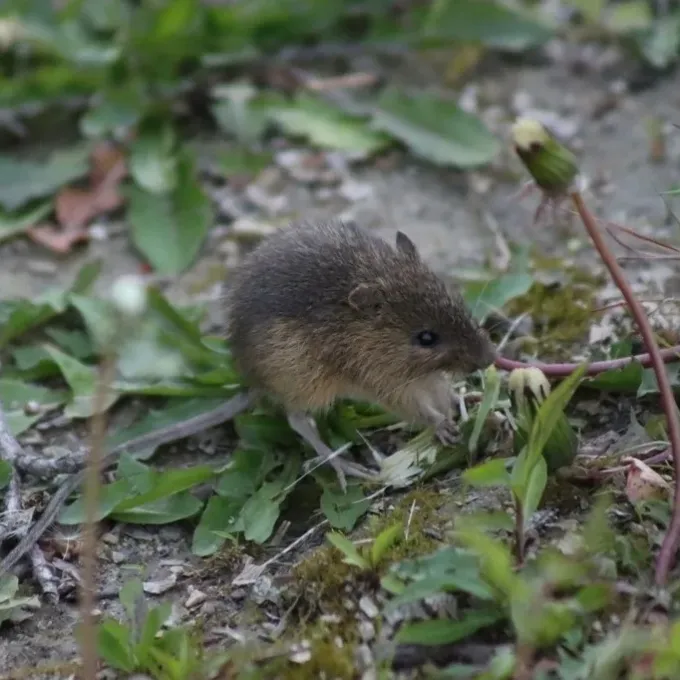
Description
How to identify
Jerboas (family Dipodidae, order Rodentia) are specialized terrestrial mammals adapted for rapid movement by jumping. They possess highly developed hind limbs, a long tail with a tuft that acts as a balancer, and large pinnae.
The size of adult individuals varies by species, but in agroecosystems, they are often secretive and primarily nocturnal, making them difficult to detect visually in the field.
Their coat color is typically sandy or brownish, providing excellent camouflage on the soil. Their jaw structure is characterized by powerful incisors designed for gnawing through tough plant stems and seeds.
These animals prefer open landscapes, making agricultural fields, especially those located near uncultivated areas, attractive sources of food for them.
Unlike small murid rodents, jerboas construct complex burrows with "escape exits," which makes them resilient to environmental factors and complicates direct trapping efforts.
What it damages
The primary damage caused by jerboas manifests in their feeding on grain crops such as wheat, barley, and millet. The rodents actively consume ripening kernels, damaging the ears even at the milk-wax stage of maturity.
In addition to grains, they can cause damage to melons and root vegetables. In search of moisture and nutrients, the pests gnaw on young shoots, leading to plant mortality and thinning of crops.
Their burrows pose a particular danger, as they disrupt soil structure and damage the root systems of perennial grasses or young saplings in shelterbelts adjacent to farmland.
During periods of mass reproduction, jerboas are capable of destroying a significant portion of the harvest on the edges of fields, resulting in substantial economic losses for farming operations.
Beyond direct plant consumption, they contribute to the contamination of the harvest with their excrement, which reduces the market quality of the grain and increases the risk of fungal diseases in storage areas.
When it appears
Jerboa activity is directly linked to climatic seasons. In spring, after emerging from hibernation, there is a breeding period when the demand for fresh green vegetation increases sharply.
The highest level of pest damage occurs during the summer months when major agricultural crops are ripening. At this time, the rodents feed intensively in preparation for winter.
In autumn, activity decreases, but the pests continue to feed on winter crops. During this time, they begin actively preparing their burrows for the winter period, stockpiling seeds and rhizomes.
In winter, jerboas hibernate, so there is no threat to crops during the cold season, unless unusually warm winters occur that interrupt their sleep.
The cyclicity of pest outbreaks also depends on the weather conditions of the year: drought periods often provoke the migration of rodents from steppe zones directly into irrigated agricultural fields.
Signs of infestation
One of the main signs of jerboa presence is the specific tracks left on the soil: long jumps with characteristic imprints of the hind feet, which differ significantly from those of mice or rats.
Entrances to deep burrows, appearing as inclined tunnels, are often found in fields. Piles of excavated earth (sand or loam) may be visible around the entrance.
On damaged grain ears, traces of large incisors are observable, and remnants of uneaten stems or damaged seed husks often lie on the ground.
Thinning of crops along shelterbelts and field edges often indicates localized infestation, as jerboas rarely stray far from their shelter sites.
At night, using flashlights or thermal imaging, one can spot the individuals themselves, which take sudden leaps toward their burrows upon the approach of a human.
Control measures
The basis of control is maintaining cleanliness in areas adjacent to fields. Eliminating weed vegetation around the fields deprives the pests of food sources and places to construct shelters.
The use of deep autumn plowing helps destroy jerboa burrows, forcing them to abandon the occupied territory or perish from low temperatures during the winter period.
Chemical control measures include the use of rodenticides in the form of poisoned baits placed directly into the burrows. It is important to follow safety regulations to avoid harming local wildlife.
- Regular monitoring of field edge conditions.
- Timely harvesting of grain crops to reduce the availability of food.
- The use of mechanical barriers on small plots of land.
Biological methods, such as attracting birds of prey (owls, hawks), can be effective if special perches are provided in the fields for birds to hunt during the evening hours.
Taxonomy
- Latin name
- Zapus
- Order
- Rodents
- Family
- Dipodidae
- EPPO code
- ZAPUSP
Discussion
No discussions yet — be the first.