
African fig fly
Zaprionus tuberculatus
Description
How to identify
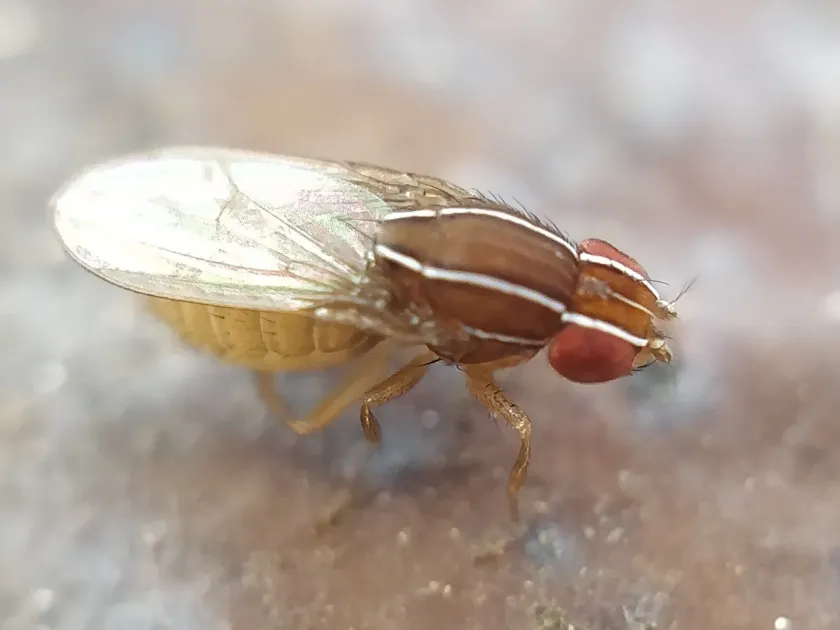
The African fig fly belongs to the Drosophilidae family. The adult insect is characterized by a yellowish-brown body approximately 3 mm long, featuring two distinct white stripes bordered with black that run along the head and thorax.
This pest is highly adaptable and capable of rapid reproduction. Its larvae are creamy-white, cylindrical in shape, and reach a length of about 3.5–4 mm before pupation.
Systematically, it is a member of the Diptera order. Unlike many other drosophilids, this species has the ability to pierce the skin of even relatively firm fruits, which significantly expands the range of its potential hosts.
The life cycle is heavily dependent on ambient temperature. Optimal conditions for rapid development are 25–30 degrees Celsius, allowing for a complete generation cycle in less than two weeks.
This invasive species is spreading rapidly across warm regions of the world, facilitated primarily by the global trade and transport of agricultural commodities.
What it damages
The primary damage is caused by larvae developing inside the fruits of various agricultural crops. The list of host plants is extensive, including figs, grapes, peaches, tomatoes, strawberries, and citrus.
The insect prefers ripe and overripe fruits with high sugar content, but under high population pressure, it attacks healthy, undamaged fruit directly in the field or orchard.
Damage renders fruits unsuitable for consumption or market sale due to rapid decay, tissue softening, and the development of secondary pathogenic infections.
Beyond physical damage, the fly acts as a vector for various fungal and bacterial pathogens that accelerate fruit rotting both pre-harvest and in storage.
Significant economic losses are reported in both commercial orchards and home gardens, particularly where harvest timing is delayed or sanitation is neglected.
When it appears
Pest activity begins with the arrival of warm weather in the spring and persists until late autumn. In mild climates, the flies are capable of year-round reproduction.
Population density peaks during the fruit maturation period, which coincides with the most critical phase for crop protection.
Multiple generations occur within a single season, with each successive generation potentially increasing in number if control measures are not implemented.
Fly migration and infestation rates increase during periods of warm and humid weather, making ripening fruit highly vulnerable to oviposition.
Adult flies overwinter in sheltered areas protected from cold temperatures, such as plant debris, bark crevices, or fruit storage facilities.
Signs of infestation
The first sign of infestation is the presence of tiny puncture wounds on the fruit surface, which are often overlooked in the early stages of the attack.
As the larvae develop within the fruit, soft patches appear, followed by dark, discolored areas that indicate the start of tissue rot.
- Presence of sunken, soft spots on the surface of the fruit.
- Exudation of juice from puncture sites, which attracts other insects.
- Rapid decay of fruit accompanied by a distinct fermentation odor.
- Presence of small white larvae visible within the fruit flesh upon cutting.
- Noticeable increase in the number of small flies around fallen or decaying fruits.
Control measures
Effective management begins with strict sanitation: the prompt collection and destruction of fallen or overripe fruits is crucial to deprive the pest of food sources and breeding grounds.
Chemical control is often limited because larvae are protected inside the fruit, so strategies focus on using food-based attractants and sticky traps for monitoring and trapping adult flies.
The use of fine-mesh exclusion netting on trees and shrubs can provide a physical barrier, preventing females from reaching the fruit to lay eggs.
Regular monitoring using pheromone or food lures is highly recommended to detect the arrival of the pest early and implement targeted control measures.
Biological control options, including the use of natural predators or organic insecticides, can be integrated into management programs to minimize chemical residues on produce.
Taxonomy
- Latin name
- Zaprionus tuberculatus
- Order
- Diptera (flies)
- Family
- Drosophilidae
- EPPO code
- ZAPRTU
Discussion
No discussions yet — be the first.