
Drosophila biarmipes
Drosophila biarmipes
Description
How to identify
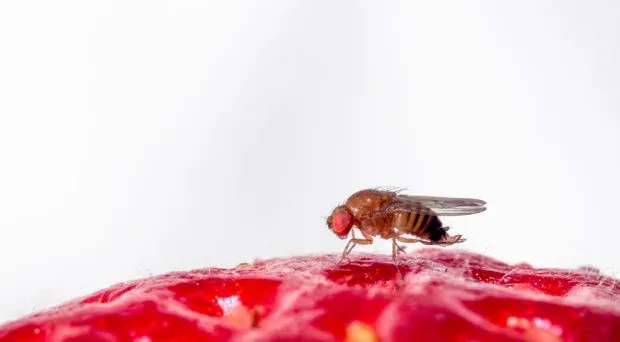
Drosophila biarmipes is a species of fruit fly that acts as a significant agricultural pest. Adult flies are typically small, measuring about 2 to 3 millimeters in length, with a light yellowish-brown body.
The most distinctive feature of the males is the presence of a dark spot at the tip of each wing, which is a key diagnostic character used by entomologists for species identification.
The flies possess prominent red eyes and a body covered in fine hairs, standard characteristics for the Drosophilidae family. Larvae appear as small, white, cylindrical maggots, usually growing up to 3-4 millimeters in length.
Their rapid development cycle allows populations to flourish quickly under optimal environmental conditions, posing a continuous threat to various fruit and vegetable crops.
Monitoring efforts often rely on bait traps and careful visual inspection of ripening fruits, especially during the peak summer months when activity is highest.
What it damages
The damage is primarily caused by larvae that feed internally on ripening or overripe fruits, rendering the produce unmarketable and unsuitable for human consumption.
This species is known to infest a wide variety of crops, including strawberries, raspberries, grapes, cherries, and various stone fruits like peaches and plums.
Feeding larvae destroy the structural integrity of the fruit, causing tissue to break down and creating soft, discolored spots that are prone to fungal and bacterial infections.
Severe infestations can lead to substantial yield losses, as entire clusters of berries or fruit can rot on the vine if not managed properly.
Furthermore, the physical damage inflicted by females during oviposition creates entry points for secondary pathogens, significantly accelerating the rate of decay.
When it appears
Drosophila biarmipes activity is highly temperature-dependent, with reproduction rates peaking during warm weather, typically between 20°C and 28°C.
The first generation usually emerges in late spring or early summer, coinciding with the maturation of early-season fruits which provide the necessary food source.
Mid-to-late summer sees the highest population density, as the abundance of ripening and fallen fruit provides an ideal substrate for massive egg-laying events.
With a life cycle that can be as short as two weeks, multiple generations can occur within a single growing season, maintaining high pressure on the orchard.
Activity tapers off as temperatures drop in the autumn, though the flies may persist in sheltered environments or storage facilities where fruit is kept.
Signs of infestation
The most visible sign of infestation is the presence of tiny oviposition punctures on the skin of the fruit, often accompanied by localized tissue softening.
Infected areas often exhibit a sunken appearance, followed by rapid decay and an acidic, fermented odor characteristic of damaged, rotting produce.
Upon dissecting the fruit, small white larvae can be found moving within the pulp, as they consume the fruit tissues from the inside out.
Orchards under attack often show increased activity of adult flies buzzing around ripening fruit, particularly during the cooler parts of the day, such as early morning.
Premature fruit drop is another indicator, as damaged fruit cannot withstand the normal stresses of development and falls to the ground prematurely.
Control measures
The primary control strategy is strict orchard hygiene, which involves the frequent and thorough removal of fallen, overripe, or damaged fruit to break the life cycle.
Traps baited with attractants, such as vinegar or specific synthetic pheromones, are effective for monitoring and suppressing adult fly populations in the field.
Insecticide applications should be used sparingly and only when necessary, strictly adhering to pre-harvest intervals to ensure safety for consumers.
- Pruning trees and bushes regularly to increase airflow and sunlight penetration.
- Deploying fine-mesh netting over berry plants to provide a physical barrier against egg-laying.
- Keeping orchard floors clean and mowed to reduce humidity and potential breeding sites.
Implement quarantine measures when introducing new plants to the area to prevent the unintentional spread of the pest to previously unaffected locations.
Taxonomy
- Latin name
- Drosophila biarmipes
- Order
- Diptera (flies)
- Family
- Drosophilidae
- EPPO code
- DROSBI
Discussion
No discussions yet — be the first.