
Chymomyza
Chymomyza
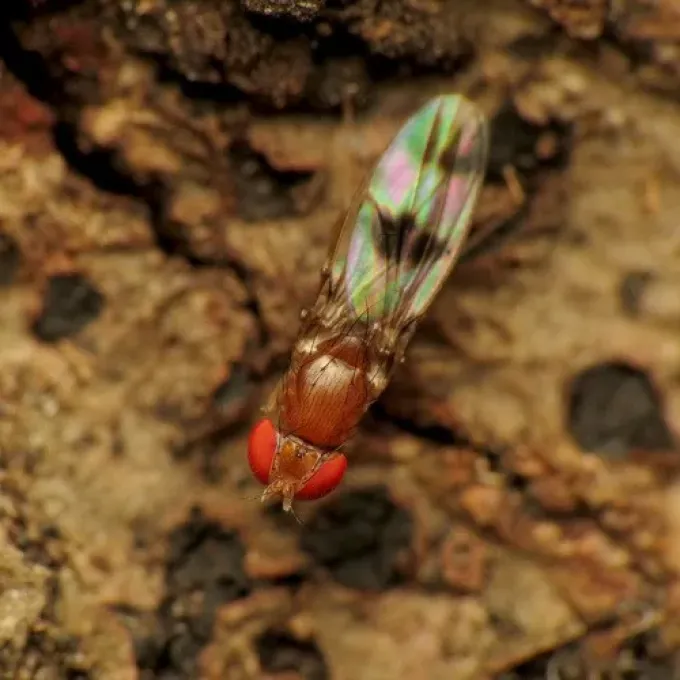
Description
How to identify
Chymomyza is a genus of small flies belonging to the Drosophilidae family. Often referred to as fruit flies, they are closely related to the well-known Drosophila species but possess distinct anatomical characteristics that distinguish them within the family.
Adult flies are typically 3 to 4 millimeters in length. Their body coloration ranges from yellowish-brown to dark brown, which provides effective camouflage on tree bark or foliage. Their wings are transparent with a specific venation pattern consistent with the family.
Larvae are worm-like, legless, and creamy-white in color, usually reaching about 5-6 mm at maturity. They are primarily found inside rotting fruit or beneath the bark of wounded trees, making them difficult to detect during the early stages of infestation.
Correct identification to the species level often requires microscopic examination of male genitalia, as many species within the Chymomyza genus are morphologically similar and difficult to differentiate with the naked eye.
These insects are highly adaptable, capable of thriving in diverse environments ranging from wild forests and woodlands to commercial orchards and home gardens.
What it damages
Chymomyza species are known to cause damage to various pome and stone fruits, including apples, pears, plums, and cherries, as well as berries like raspberries and blackberries.
The larvae feed on the fruit pulp, which leads to rapid softening, decay, and the development of secondary fungal and bacterial infections. This not only ruins the fruit's quality but can also cause it to drop prematurely from the tree.
Beyond fruit damage, certain species of Chymomyza are specialized in exploiting damaged tree bark. They invade areas affected by frost cracks, sunburn, or previous pest damage, creating galleries that hinder the tree's natural healing process.
The damage caused by these larvae can lead to significant economic losses, especially in orchards where fruit skin integrity has been compromised by weather conditions or other primary pests.
Infested fruits become focal points for further contamination in the orchard, attracting more flies and spreading pathogens that can jeopardize the entire harvest if not managed properly.
When it appears
The activity of Chymomyza begins in late spring once temperatures become sufficiently warm for the emergence of overwintering adults. As the season progresses, they undergo multiple generations.
Peak fly activity generally occurs in mid-to-late summer, aligning with the ripening stages of most fruit crops, which provide an ideal medium for egg-laying and larval development.
Environmental factors, particularly temperature and humidity, play a crucial role in the lifecycle speed of the fly. Warm and wet conditions during the summer can lead to population explosions.
As autumn approaches and temperatures drop, the flies transition into a diapause state. They overwinter in various stages of development, protected under leaf litter, within bark crevices, or in the upper layers of the soil.
Prolonged mild autumns significantly enhance the survival rate of the overwintering population, which often results in higher infestation levels the following spring.
Signs of infestation
The earliest sign of Chymomyza infestation is the presence of minute punctures on the fruit surface, made by the female's ovipositor during egg-laying, often surrounded by small dark spots.
Internally, larvae excavate tunnels through the fruit, which become filled with larval frass. This leads to internal browning, a soggy texture, and a characteristic fermented odor indicative of rot.
External signs include localized patches of discoloration or soft, depressed areas on the fruit. In some cases, the fruit may appear healthy but feels hollow upon slight pressure.
On tree trunks, signs of activity include sap oozing from wounds or cracks, where the larvae feed on the flowing sap or damaged phloem tissue.
Premature fruit drop is a strong indicator of an established larval population within the orchard, particularly when fallen fruit shows rapid decay and larval exit holes.
Control measures
Effective management of Chymomyza requires a holistic integrated pest management (IPM) strategy focused on sanitation and habitat modification.
- Strict sanitation protocols, including the immediate collection and disposal of fallen or rotten fruit, are essential to remove larval breeding grounds.
- Proper orchard maintenance, such as regular pruning, improves canopy airflow and reduces humidity, making conditions less favorable for fly reproduction.
- Protecting tree trunks from mechanical injury and treating existing wounds with disinfectant paste helps prevent infestation under the bark.
- Monitoring adult fly activity using yellow sticky traps or pheromone-based lures to determine the timing for necessary interventions.
- Utilization of biological controls, such as entomopathogenic fungi, which can reduce adult populations without leaving toxic chemical residues on ripening fruit.
Taxonomy
- Latin name
- Chymomyza
- Order
- Diptera (flies)
- Family
- Drosophilidae
- EPPO code
- CHYMSP
Discussion
No discussions yet — be the first.