
Drosophila ananassae
Drosophila ananassae
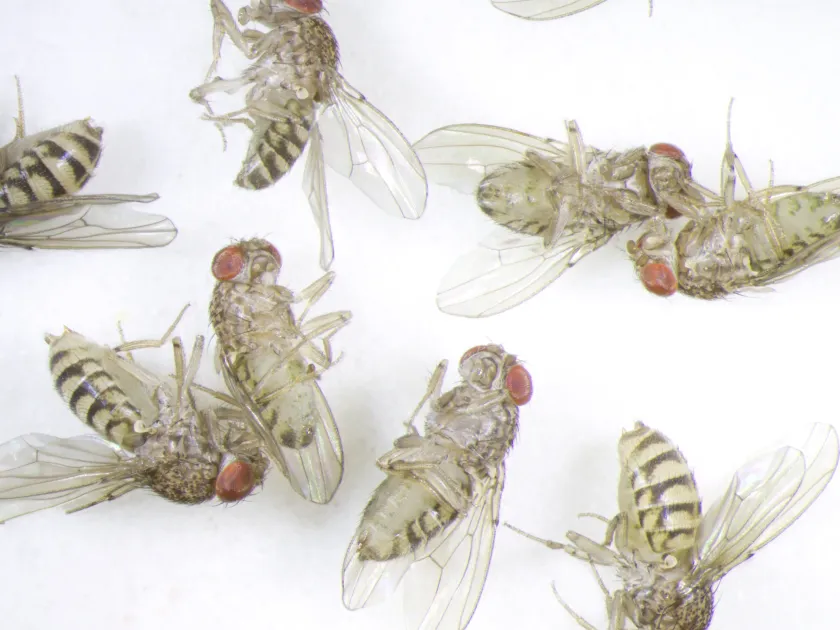
Description
How to identify
Drosophila ananassae is a small insect belonging to the order Diptera and the family Drosophilidae. These fruit flies measure approximately 2–3 mm in length and possess a light brown or yellowish body with prominent, bright red compound eyes.
Identifying this species in the field is challenging because it closely resembles other cosmopolitan Drosophila species. Accurate classification usually requires specialized entomological examination, specifically of the male genitalia, to distinguish it from related fruit flies.
The life cycle is highly dependent on environmental temperature. Under optimal conditions near 25°C, the species can complete its development from egg to adult in approximately 7 to 10 days, facilitating rapid population growth in favorable environments.
Females typically lay their eggs in damaged or fermenting fruit tissues. The larvae, which are cream-colored and cylindrical, progress through three developmental stages while consuming microorganisms and fermenting plant material.
Pupation generally occurs within the fruit substrate or in nearby dry areas. The pupae feature specific morphological characteristics, such as respiratory horns, which are used by researchers to identify the species during agricultural surveys.
What it damages
This species is considered a secondary pest that attacks a wide variety of fruit and berry crops. It primarily targets ripening or overripe fruits, particularly those with thin skins, including grapes, strawberries, peaches, and various tropical fruits.
Drosophila ananassae is an opportunistic feeder that frequently exploits fruits previously damaged by other pests, birds, or mechanical harvesting. These wounds serve as primary sites for oviposition and larval development.
While the flies do not typically penetrate the sound skin of healthy fruit, their presence accelerates decay significantly. They act as vectors for various yeasts, bacteria, and molds, which quickly initiate rotting and turn the fruit pulp into an unmarketable liquid mass.
Economic damage is substantial, as even a small infestation renders produce unsuitable for the fresh market. Once a fruit is colonized, the associated microbial activity causes rapid spoilage, often leading to total loss of the affected batch.
In processing facilities, these flies represent a major sanitation issue. Their ability to breed in fermenting waste materials can lead to massive infestations that disrupt operations and necessitate rigorous cleaning protocols to maintain food safety standards.
Signs of infestation
The most immediate sign of an infestation is the presence of numerous small flies swarming around fruit containers or orchard trees. They are strongly attracted to the odors of fermentation, which indicate that fruits are beginning to overripen.
Visible signs on the fruit include small entry holes and localized tissue breakdown. These points of entry are often surrounded by patches of mold or clear liquid discharge, indicating the ongoing degradation of the interior fruit tissue.
Internally, infested fruits become soft, mushy, and emit a strong acidic or vinegary odor. A close inspection of the damaged area will often reveal the presence of multiple larvae feeding within the liquefied fruit pulp.
As the infestation progresses, the fruit darkens and loses its physical integrity. These symptoms are strictly limited to the fruit itself, as the vegetative parts of the plant, such as leaves and stems, remain unaffected by this specific pest.
Continuous monitoring of fruit orchards is crucial, as the first sightings of Drosophila ananassae serve as a warning that sanitation measures are required to protect the remaining crop from secondary fungal infections.
Control measures
Effective management begins with strict orchard and facility hygiene. Removing all fallen fruit, decaying plant material, and culls is the most critical step to eliminate breeding sites and curb population expansion.
Mechanical traps containing attractants such as apple cider vinegar or fermented wine are highly effective for monitoring and controlling adult fly populations. These simple devices can significantly reduce fly pressure without the need for chemical pesticides.
- Prompt harvesting of mature fruits to prevent overripening.
- Protection of crops using bird netting to minimize mechanical damage.
- Storage of produce at temperatures below 15°C to inhibit development.
- Regular sanitation of picking equipment and storage containers.
The use of chemical insecticides during the harvest period is generally avoided due to safety regulations and residue concerns. Preventive agricultural practices, such as maintaining healthy plant immunity and rapid produce cooling, remain the best defense.
Furthermore, maintaining dry and clean conditions in processing areas prevents the formation of fermentation sites. By minimizing residual fruit juices on machinery and floors, producers can significantly limit the breeding potential of Drosophila ananassae.
Taxonomy
- Latin name
- Drosophila ananassae
- Order
- Diptera (flies)
- Family
- Drosophilidae
- EPPO code
- DROSAN
Discussion
No discussions yet — be the first.