
Fruit fly
Drosophila
Description
How to identify
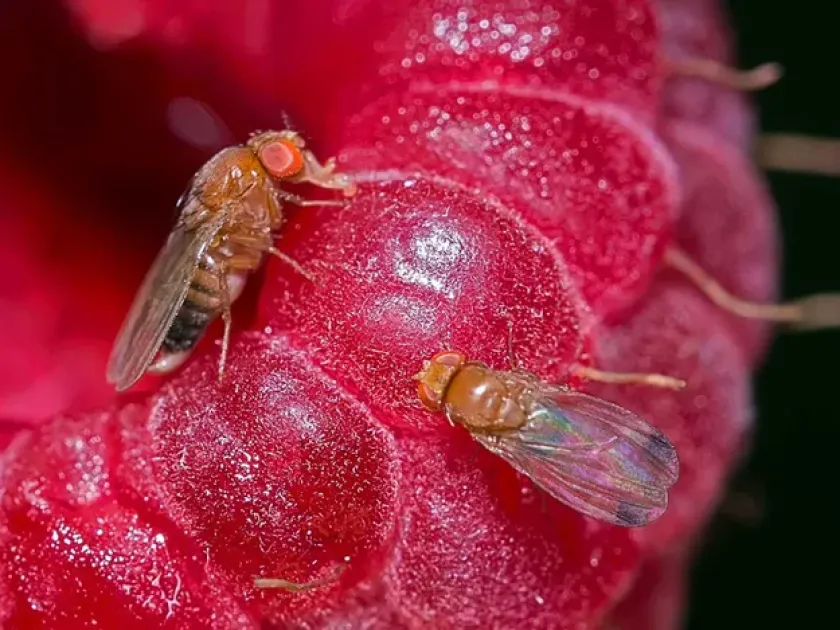
The fruit fly, scientifically known as Drosophila melanogaster, belongs to the order Diptera and the family Drosophilidae. These small insects are typically 2–3 mm long with distinct red eyes and yellowish-brown bodies.
The life cycle of the fruit fly is extremely rapid, allowing the population to explode under favorable conditions. Females lay eggs directly into the skin of overripe or damaged fruit.
The larvae are whitish, legless, and worm-like, growing up to 3–4 mm in length. This larval stage is responsible for the rapid consumption of fruit tissue.
Pupae develop either inside the decaying fruit or in the soil beneath the plant. The entire life cycle can be completed in as little as 8–10 days at 25°C.
Due to their high adaptability, these flies have become a global pest, frequently appearing in gardens, orchards, and food storage areas worldwide.
What it damages
Fruit flies primarily infest horticultural crops, including apples, pears, peaches, grapes, and various berries like strawberries and raspberries, especially when the fruit is damaged or overripe.
Beyond feeding on fruit juices, they act as vectors for various microorganisms, including yeast and bacteria, which trigger and accelerate the fermentation and rotting process.
Severe damage occurs late in the season when fruits mature and fall to the ground, creating a high-density environment for fly reproduction and infestation.
Infested produce loses its marketability, becoming soft and mushy with a characteristic acidic or vinegary smell, rendering it unsuitable for fresh consumption.
In greenhouses or food storage facilities, an uncontrolled fruit fly population can lead to total loss of stored harvest if strict hygiene is not maintained.
When it appears
Fruit fly activity typically begins with the arrival of warm spring weather and intensifies as fruits start to form and mature in the summer months.
Population peaks usually occur during late summer and early autumn, coinciding with the peak harvest season and the presence of rotting fruit on the ground.
The optimal temperature for rapid reproduction ranges from +20°C to +30°C. In hot summer climates, they can produce numerous successive generations.
While outdoor activity decreases with the onset of cold weather, flies often persist year-round in heated greenhouses, basements, and food storage warehouses.
They overwinter in sheltered locations, including leaf litter, tree bark crevices, and outbuildings where organic waste or stored produce may be present.
Signs of infestation
The first indication of an infestation is the presence of small, swarming insects around fruit trees, berry patches, or indoor storage containers.
Microscopic puncture marks on the fruit skin are visible where females have deposited eggs. Soft, discolored spots quickly form around these entry points.
Infested fruit darkens rapidly, loses structural integrity, and emits a strong fermented or vinegary scent that serves as a beacon for more flies.
Slicing open an affected fruit usually reveals small larvae actively feeding within the pulp, causing visible breakdown of the fruit's texture.
A persistent presence of these flies in fruit storage areas indicates an ongoing cycle of decay, requiring immediate sorting and disposal of contaminated produce.
Control measures
The most effective management strategy is strict sanitation: removing fallen fruit from the orchard floor and harvesting crops promptly as they ripen.
Maintaining a clean garden environment by removing damaged fruit from trees and properly composting or disposing of waste is essential to disrupt their life cycle.
- Setting up homemade traps using apple cider vinegar, wine, or yeast solutions.
- Using fine-mesh netting to protect berry crops during the maturation phase.
- Regular disinfection of storage crates, bins, and cooling facilities.
- Processing harvested fruit immediately to prevent fermentation.
Chemical control is rarely effective or recommended close to harvest due to safety restrictions; therefore, cultural and physical control methods remain the gold standard.
In indoor growing environments, ensuring excellent ventilation and eliminating organic debris is critical to preventing fruit fly outbreaks.
Taxonomy
- Latin name
- Drosophila
- Order
- Diptera (flies)
- Family
- Drosophilidae
- EPPO code
- DROSSP
Discussion
No discussions yet — be the first.