
African fig fly
Zaprionus indianus
Description
How to identify
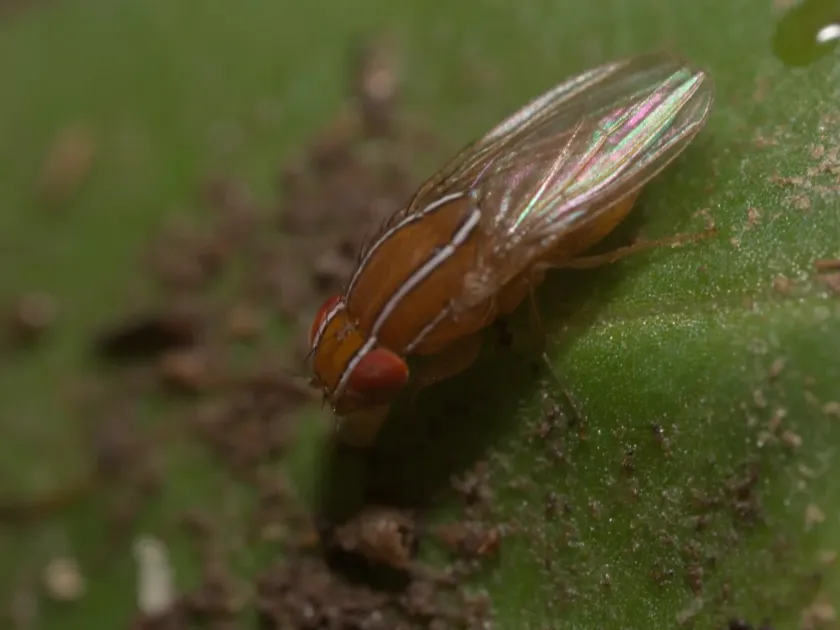
The African fig fly (Zaprionus indianus) belongs to the order Diptera, family Drosophilidae. It is characterized by two prominent white longitudinal stripes on its thorax, edged with black lines, which distinguishes it from common fruit flies.
Adult flies are small, measuring approximately 2.5–3.0 mm in length, with a yellowish-brown body coloration that allows them to blend into the skin of maturing fruit.
The larvae are minute, white, and legless, developing deep within the fruit tissue. They possess specialized mouthparts used to consume the fruit flesh, causing internal degradation.
Eggs are small and elliptical, deposited by the female beneath the fruit epidermis using a sclerotized ovipositor, which can penetrate the skin of various fruit species.
Identification often requires careful inspection under magnification to confirm the presence of the specific thoracic pattern, as the fly can be mistaken for other drosophilids.
What it damages
This species is a highly polyphagous pest, attacking over 70 host plant species, most notably figs, grapes, peaches, citrus, and tomatoes.
Damage is inflicted primarily by larvae feeding on the interior of the fruit, leading to rapid decay and the loss of structural integrity.
The wounds created by ovipositing females and feeding larvae provide entry points for opportunistic fungi and bacteria, which exacerbate the rotting process.
In severe infestations, the fruit becomes a mushy, inedible mess, resulting in significant yield losses that can reach up to 90% in susceptible crops.
Due to the pest's ability to attack fruit before it is harvested, it poses a major threat to both commercial orchards and home garden production.
When it appears
The development and activity of the African fig fly are heavily influenced by temperature and humidity levels, with warm climates being most favorable.
Under optimal conditions (25-28°C), the lifecycle can be completed in as little as 7 to 10 days, leading to multiple generations per season.
The pest is most active during the fruiting season when the produce becomes sweet and soft, making it an easy target for egg-laying.
As temperatures decline in autumn, adult activity slows, but the flies can survive in sheltered environments or stored produce until conditions improve.
In tropical or subtropical regions, the pest can remain active throughout the year as long as there is a continuous supply of host fruit.
Signs of infestation
The most common sign of infestation is the presence of small, puncture-like marks on the fruit skin, which often lead to localized soft spots.
Internal symptoms include the presence of tiny white larvae moving through the fruit flesh, often associated with a sour or vinegary fermentation odor.
Premature ripening and dropping of fruit from the tree are frequent indicators that a larval population has developed within the host fruit.
Visible decay, leakage of fruit juices, and a softened texture are late-stage signs that confirm the fruit is no longer harvestable.
An increased number of adult flies congregating near ripening or decaying fruit is a clear warning sign of a growing infestation in the orchard.
Control measures
Sanitation is the most critical component of control; all fallen and overripe fruit must be collected and removed from the orchard regularly to disrupt the life cycle.
Trapping with vinegar-based baits or wine-sugar mixtures is highly effective for monitoring fly populations and reducing adult numbers in small areas.
- Installing fine-mesh netting to protect fruit crops from fly access.
- Harvesting fruit as early as possible to minimize exposure time.
- Applying recommended insecticides during periods of peak infestation, following label safety intervals.
Discarded infested fruit should be disposed of by burying deeply, burning, or placing in sealed containers to prevent larvae from completing their pupation.
Continuous monitoring programs and community-wide sanitation efforts are essential to suppress the impact of this invasive pest in affected regions.
Taxonomy
- Latin name
- Zaprionus indianus
- Order
- Diptera (flies)
- Family
- Drosophilidae
- EPPO code
- ZAPRIN
Discussion
No discussions yet — be the first.