
Ground beetle (Zabrus)
Zabrus
Description
How to identify
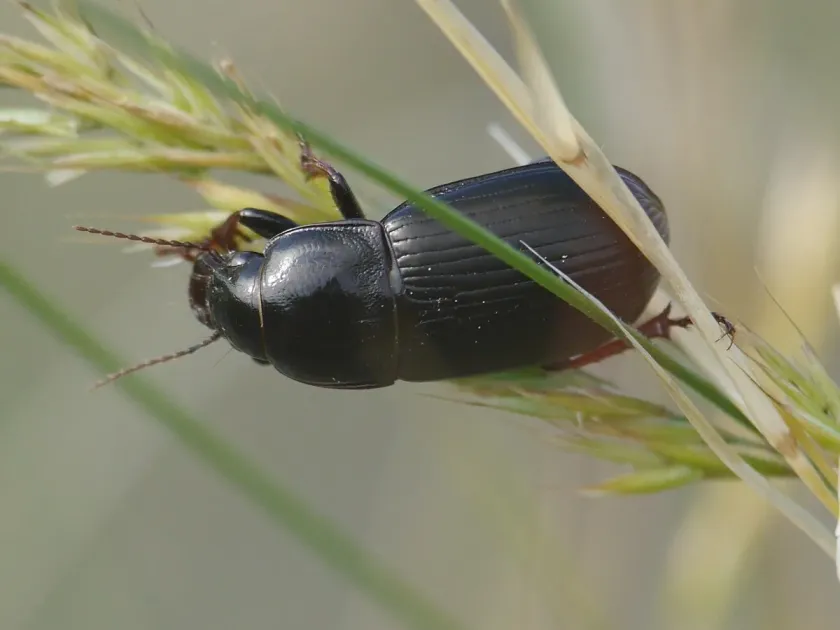
The ground beetle (Zabrus tenebrioides), also known as the corn ground beetle, is a significant agricultural pest of the Coleoptera order. Adult beetles measure 12-16 mm in length and are characterized by a dark, metallic-black color. The larvae can grow up to 30 mm long and possess a robust, brownish head with functional thoracic legs.
The life cycle typically spans one year, though it is highly dependent on environmental factors. Eggs are laid in the soil, from which larvae emerge to begin their feeding cycle. Development progresses through three larval stages before pupation occurs in soil chambers during late spring.
Adult beetles are nocturnal and predominantly ground-dwelling. They emerge in early summer, feeding on ripening grain and moving between fields. Their activity is highly influenced by moisture levels; dry, hot weather can drive them to seek shelter deep within the soil profile.
The reproduction rate is high, with females capable of laying several hundred eggs in favorable soil conditions. The presence of loose, moisture-retentive soil and grain stubble is essential for their successful proliferation and larval survival.
Monitoring the population involves regular soil sampling and nighttime inspections. Understanding the phenology of the beetle is crucial for timely implementation of protective measures during the early establishment of winter crops.
What it damages
The primary hosts of the ground beetle are winter wheat, barley, and rye. In some cases, oats can also be infested if sown in proximity to highly infested fields, particularly after cereal predecessors.
Larval damage is most severe during the autumn months. The larvae feed on the young leaves of winter cereals, often shredding the leaf tissue and leaving only the veins. This severely weakens the plants and leads to significant thinning of the stands.
Adult beetles pose a different threat by feeding on the grains of developing crops. They chew on the ears of wheat and barley during the milk-to-dough stage, causing empty or damaged kernels, which significantly reduces yield quality and quantity.
Economic damage is most pronounced in regions with monoculture cropping systems. Where wheat is grown consecutively, the ground beetle population builds up rapidly, often resulting in complete crop loss if left unchecked.
The impact of this pest extends beyond direct consumption. Thinning of crop stands creates conditions for increased weed pressure and reduces the overall competitive capacity of the cereal crops against environmental stressors.
Signs of infestation
Initial signs of infestation in autumn include withered, curled leaves found near the base of the plant. These leaves are often dragged into the larvae's soil burrows, which serves as a definitive indicator of their presence.
In spring, observing fields will reveal bare patches or "bald spots." Plants in these areas appear stunted or sickly, and their root systems are often partially severed or consumed by the overwintered larvae.
During the harvest season, the presence of damaged, empty spikes is a key diagnostic feature. Closer inspection of the crop canopy during the night may reveal the adult beetles actively feeding on the ears of the grain.
Finding a high concentration of larvae in the soil around dead or dying seedlings confirms an infestation. Digging around the base of damaged plants typically uncovers the larvae resting in their underground tunnels.
- Curled, shredded leaves near soil burrows
- Bare patches in winter cereal fields
- Empty or chewed grain spikes at harvest
- Larvae detected during soil sampling
Control measures
The most effective strategy is the implementation of a diverse crop rotation. Avoiding wheat-on-wheat planting is essential, as rotating with non-cereal crops effectively starves the pest population.
Deep tillage or plowing with moldboard inversion is a critical mechanical control method. This process destroys larval burrows and buries larvae and pupae deep in the soil, significantly increasing mortality rates.
Seed treatment with systemic insecticides provides excellent early-season protection. This ensures that the crop is shielded against larval feeding during the vulnerable stage of establishment, reducing the need for post-emergence sprays.
Chemical intervention is warranted when the population exceeds the economic threshold of damage. Growers should prioritize the application of approved insecticides during the periods of peak larval or adult activity.
Post-harvest management, specifically the destruction of grain stubble and volunteer crops, is vital. Eliminating these food sources prevents the larvae of the first instar from surviving the late summer and early autumn period.
Taxonomy
- Latin name
- Zabrus
- Order
- Coleoptera (beetles)
- Family
- Carabidae
- EPPO code
- ZABUSP
Discussion
No discussions yet — be the first.