
Agonoderus
Agonoderus
Description
How to identify
Agonoderus is a genus of ground beetles (family Carabidae, order Coleoptera). While most ground beetles are beneficial predators, certain species within this genus are known to be pests of field crops, specifically feeding on seeds and seedlings.
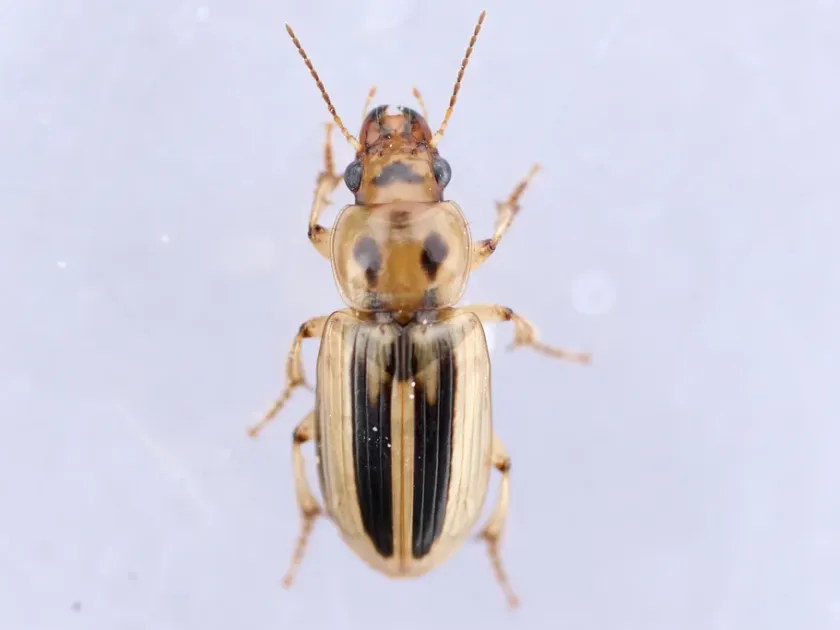
Adult beetles typically range from 6 to 10 millimeters in length. They possess an elongated, somewhat flattened body, often with a pale yellowish to brown coloration, sometimes featuring dark stripes on the elytra. Their legs are adapted for swift movement through soil cracks and litter.
The larvae are slender, worm-like, and cream-colored with a sclerotized, darker head capsule. They live beneath the soil surface, primarily feeding on organic matter, but will turn to crop seeds if other food sources are scarce or during adverse germination conditions.
These insects undergo complete metamorphosis (egg, larva, pupa, and adult). Adults typically overwinter in the soil or under surface debris, emerging in early spring as temperatures rise, coinciding with the typical planting window for many crops.
Monitoring involves excavating soil samples near poorly emerged crop areas. Finding adult beetles or larvae in close proximity to damaged seeds confirms their presence as a potential pest factor in the field.
What it damages
The most significant damage caused by Agonoderus occurs during the germination stage of corn (maize) seeds. The beetles target seeds that are slow to germinate, particularly when soil temperatures are low or moisture levels are suboptimal.
The pests penetrate the seed coat and consume the endosperm and embryo, resulting in stand thinning or complete failure of the crop in specific areas. If the beetles feed after germination, they may sever the developing radicle or mesocotyl.
Besides corn, Agonoderus species can cause damage to other cereals and some vegetable crops. The likelihood of economic damage increases in fields with heavy surface residue, which provides harborages for the beetles.
Economic damage is most severe when environmental conditions delay the plant's emergence, extending the period of vulnerability for the seed. Fields with low seed quality and low vigor are at a higher risk of significant population pressure.
In many cases, the damage is localized but can be widespread in years with a prolonged, cold, and wet spring. Producers may observe patchy stands that require replanting if the beetle population is high enough.
Signs of infestation
A primary sign of infestation is poor field emergence or "gaps" in crop rows. When digging in these areas, one often finds hollowed-out seeds with visible mechanical damage, distinct from the rotting caused by seed-borne pathogens.
Seedlings that are attacked after germination exhibit sudden wilting and discoloration. Upon closer inspection, you may see feeding scars at the transition point between the root and the shoot, indicating larval or adult feeding activity.
Adult beetles are nocturnal and often hide in soil crevices or under clods during the day. Digging around the base of struggling plants often reveals the beetles if the infestation is active.
Evidence of mechanical chewing on the cotyledons or seed remnants is the most reliable indicator that Agonoderus is the culprit behind stand loss, rather than environmental stress or soil-borne diseases.
The distribution of damaged plants is often uneven, reflecting the beetle's preference for certain soil pockets or moisture conditions during the spring planting season.
Control measures
The most effective management strategy is the use of insecticidal seed treatments. Systemic insecticides applied to the seeds provide a protective zone that repels or kills beetles before they can cause significant damage to the embryo.
Agronomic practices that favor rapid germination are crucial for mitigating risk. Planting into well-drained, properly warmed soil reduces the time the seed remains susceptible to beetle feeding.
- Utilize high-vigor, certified seeds to ensure quick emergence.
- Manage surface residues through appropriate tillage where appropriate.
- Maintain optimal planting depth to ensure uniform crop establishment.
- Implement crop rotation to avoid buildup of soil-dwelling pest populations.
While tillage can disrupt beetle habitats, it is not always a viable sole solution due to conservation tillage requirements. Therefore, integrated pest management emphasizes seed protection as the primary defense mechanism.
Foliar insecticides are generally ineffective against Agonoderus, as the damage occurs underground and before the crop reaches a growth stage where sprays would be beneficial. Preventive seed treatment remains the industry standard.
Taxonomy
- Latin name
- Agonoderus
- Order
- Coleoptera (beetles)
- Family
- Carabidae
- EPPO code
- AGNOSP
Discussion
No discussions yet — be the first.