
Southern ground beetle
Acupalpus meridianus
Description
How to identify
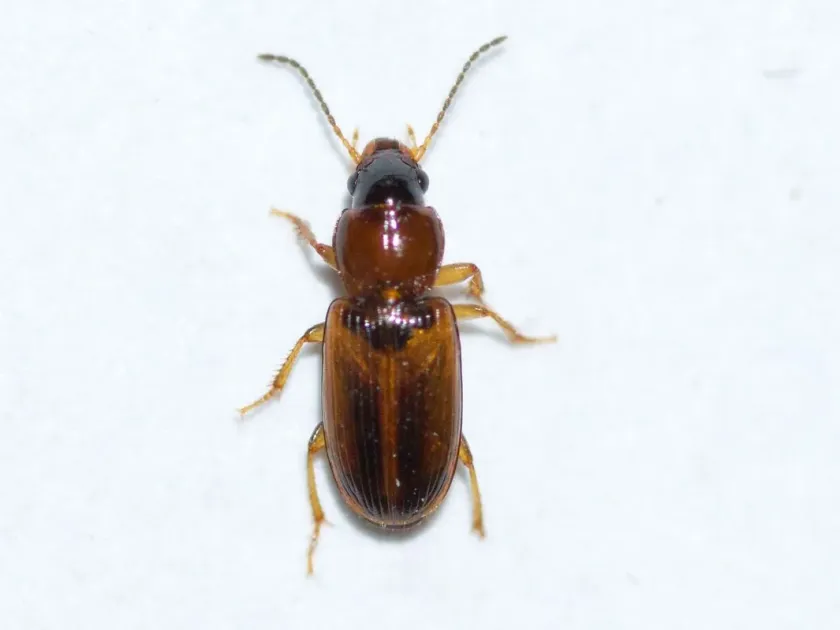
Acupalpus meridianus is a species of ground beetle belonging to the family Carabidae, order Coleoptera. It is a small insect, typically measuring 3 to 4 millimeters in length.
The body is characterized by a dark coloration, often featuring a subtle bronze or metallic sheen on the elytra, which helps in camouflaging within the soil.
Like many other Carabidae, this beetle has a streamlined body structure, which facilitates rapid movement through soil crevices and plant debris.
Larvae are typically whitish or yellowish, vermiform in shape, and possess developed mandibles adapted for feeding in soil environments.
Professional identification requires careful examination of the pronotum shape and the specific punctation patterns on the elytra under a microscope.
What it damages
This beetle is primarily considered a potential pest of cereals, such as winter wheat and barley, particularly during the seedling germination stage.
Damage is caused by both adults and larvae feeding on the seeds within the soil, as well as gnawing on the radicles and hypocotyls of young sprouts.
Severe infestations can lead to significant thinning of the crop stand, reducing plant density and eventually causing yield losses in heavily affected areas.
Plants struggling with adverse environmental conditions or delayed development are significantly more susceptible to the damage caused by this insect.
The mechanical damage to the seeds often serves as an entry point for soil-borne pathogens, which can exacerbate the impact on plant health.
When it appears
The activity of Acupalpus meridianus typically begins in early spring as soil temperatures rise, triggering the emergence of adults from overwintering sites.
The peak population activity usually coincides with the germination phase of spring and winter cereals, making these periods critical for crop protection.
The life cycle involves an egg stage, three larval instars, a pupal stage, and the adult phase, with adults often serving as the overwintering stage.
Oviposition occurs in damp, organic-rich soil during the spring, which provides the necessary humidity for the survival of the early larval stages.
Activity gradually declines towards the end of the growing season as the beetles seek refuge in the soil for the winter dormancy period.
Signs of infestation
The most visible sign of infestation is the emergence of gaps in the crop rows, where plants fail to emerge or appear stunted and weakened.
Examining the soil around affected plants often reveals damaged seeds with characteristic gnawed cavities caused by the beetles or their larvae.
Small, irregular tunnels near the base of the stems in the surface layer of the soil may also be indicative of the presence of this insect.
Wilting of young plants without clear signs of fungal stem rot can sometimes be traced back to the pruning of the main root system by larvae.
- Thinning or missing sections of crop rows.
- Gnawed or partially consumed seeds found in the soil.
- Presence of small adult beetles in the topsoil near seedlings.
Control measures
Effective control strategies start with proper soil cultivation, which disrupts the beetle's habitat and exposes larvae and adults to predators.
Crop rotation is a fundamental practice that prevents the buildup of pest populations, as it reduces the available food source in consecutive seasons.
Seed treatment with systemic insecticides is the most effective proactive measure to protect young plants during the vulnerable germination phase.
Weed management is essential, as dense weed cover provides shelter and alternative food resources for the beetles throughout the growing season.
Chemical applications on established crops should be reserved for cases where population densities exceed economic thresholds, preferably timed for evening.
Taxonomy
- Latin name
- Acupalpus meridianus
- Order
- Coleoptera (beetles)
- Family
- Carabidae
- EPPO code
- ACPPME
Discussion
No discussions yet — be the first.