
Acupalpus
Acupalpus
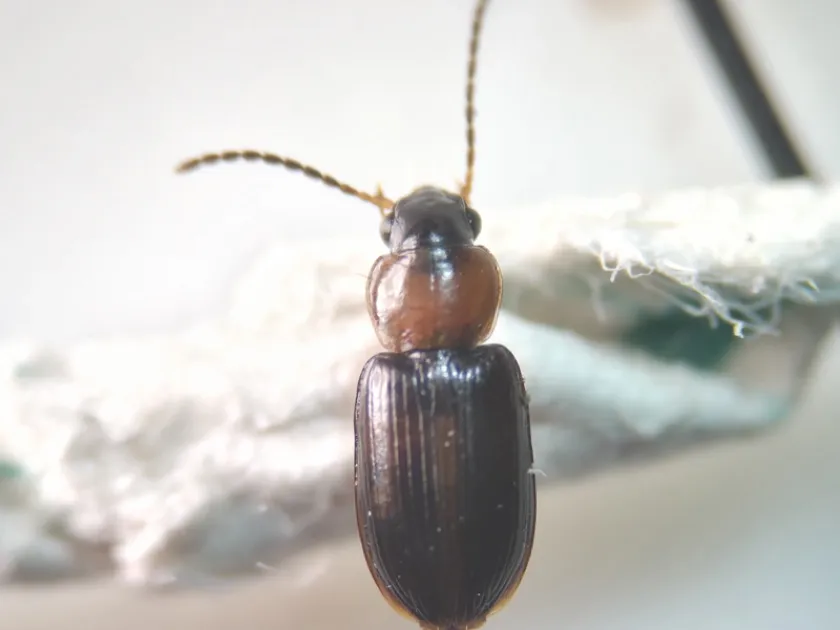
Description
How to identify
The genus Acupalpus belongs to the ground beetle family (Carabidae) of the order Coleoptera. These are small beetles, typically measuring between 3 to 5 mm in length. Their bodies are flattened, often possessing a dark or brownish coloration with a subtle metallic luster, common to many carabids.
These beetles are highly mobile, characteristic of the Carabidae family, and possess well-developed mandibles. Their larvae are secretive, residing in the top layer of the soil or beneath organic debris, making them difficult to detect during standard field assessments.
Species-level identification within the genus Acupalpus is challenging and requires microscopic examination of the pronotum and male genitalia. Most species share similar morphological features, making field identification based on visual appearance alone unreliable.
Adult beetles are often attracted to artificial light sources at night. They thrive in environments with sufficient moisture and loose soil, which provide necessary protection from direct sunlight and desiccation.
While many ground beetles are considered beneficial predators, members of the Acupalpus genus can display mixophagy, feeding on small soil organisms as well as plant seeds and emerging seedlings under certain conditions.
What it damages
Acupalpus beetles pose a risk to cereal crops, including wheat, barley, and rye. The most critical period of damage occurs during seed germination and the early seedling stage, when beetles attack the embryonic tissues of the germinating grains.
Damage can also extend to perennial grasses and seed production fields. By feeding on seeds buried in the soil, the larvae and adults can cause sparse germination and reduced stand density, leading to significant yield losses in affected patches.
In years with prolonged wet weather, the damage intensity can increase significantly. However, these beetles are often classified as opportunistic pests whose impact is highly dependent on the availability of alternative food sources within the field.
Beyond direct seed consumption, the pest may damage the root systems of weakened seedlings, which can create entry points for secondary fungal infections, further compromising the health and vitality of the young crop.
The economic significance of this genus is frequently overlooked, as the symptoms of their damage are often misdiagnosed as being caused by environmental factors or other, more common soil-borne pests.
When it appears
Adult activity begins in early spring as soon as soil temperatures increase. Beetles emerge from overwintering sites, such as crop residues, field margins, and shelterbelts, to seek food and mating opportunities.
Population peaks typically occur in May and June, coinciding with the active growth phases of cereal crops. This period provides optimal moisture levels in the soil, which are essential for larval development and beetle survival.
The lifecycle of Acupalpus is closely linked to soil moisture levels; during dry periods, beetles retreat deeper into the soil profile to avoid dehydration, thereby reducing their immediate impact on the crop surface.
Autumn marks the transition toward overwintering. Beetles move to protected areas, including field edges and uncultivated ground, where they remain until the next spring cycle begins.
Regular monitoring using soil traps or by inspecting soil samples at a depth of 5–10 cm during early spring is recommended to identify the onset of beetle activity before significant damage occurs.
Signs of infestation
The primary sign of an Acupalpus infestation is uneven seedling emergence, often resulting in bare patches within the field rows. Examination of ungerminated seeds often reveals distinct, irregular damage caused by the beetles' mandibles.
Early-stage seedlings may exhibit small holes or ragged edges on the leaves if adults are active at night. However, these symptoms are often subtler and easily confused with the feeding patterns of other agricultural insects.
Searching the soil around the base of the plants, particularly in the morning, may yield specimens of the beetles or their larvae, confirming their presence as the cause of the poor crop stand.
- Poor and patchy germination of cereal crops.
- Visible damage and consumption of seed embryos in the soil.
- Reduced seedling density during the initial stage of growth.
- Presence of small 3–5 mm beetles near the root zone during inspections.
Distinguishing Acupalpus damage from that of wireworms or other root-feeding pests is essential, as the scale and nature of the damage differ significantly.
Control measures
Effective control starts with proper tillage practices. Deep plowing and thorough incorporation of crop residues help disrupt the beetles' overwintering habitat, significantly reducing their population density for the next season.
Adherence to crop rotation strategies is essential to break the lifecycle of the pest. Additionally, maintaining clean field margins and controlling weeds prevents the accumulation of beetles during off-season periods.
Seed treatment with systemic insecticides is the most effective approach for protecting grains from soil-dwelling pests during the critical germination phase. These treatments provide long-lasting protection against various soil-borne threats.
If population densities exceed the economic threshold, localized nocturnal application of contact-stomach insecticides may be warranted. Timing should be based on monitoring data to ensure maximum effectiveness.
Integrated monitoring using pheromone or light traps allows agronomists to predict population spikes, enabling timely and targeted interventions before widespread crop damage occurs.
Taxonomy
- Latin name
- Acupalpus
- Order
- Coleoptera (beetles)
- Family
- Carabidae
- EPPO code
- ACPPSP
Discussion
No discussions yet — be the first.