
Oak hook-tip
Watsonalla binaria
Description
How to identify
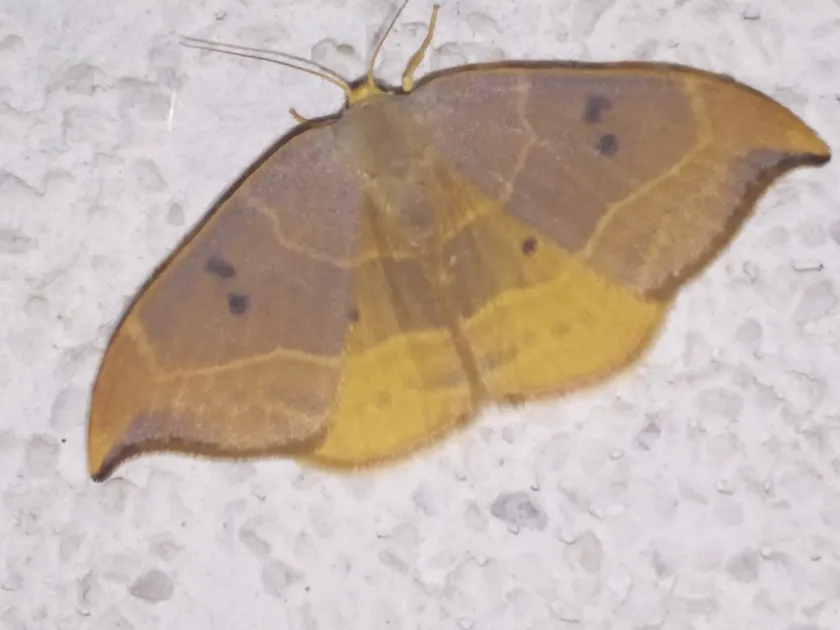
The Oak hook-tip (Watsonalla binaria) is a moth belonging to the family Drepanidae (hook-tip moths). The adult moth has a wingspan of approximately 30–35 mm.
The wings exhibit a distinct ochre-yellow coloration crossed by dark transverse lines, giving them a camouflage appearance against dry or aging foliage.
The common name is derived from the hooked tips of the forewings, which is a characteristic feature of this genus, along with two central dark-ringed spots.
The larvae, or caterpillars, are uniquely shaped, featuring fleshy humps on their dorsal segments and a swollen posterior end, distinguishing them from other forest pests.
Pupation typically occurs within a silk cocoon skillfully spun inside a folded leaf, providing a secure shelter for the moth to undergo metamorphosis.
What it damages
The primary hosts for the Oak hook-tip larvae are various deciduous trees, with a strong preference for the genus Quercus (oak).
The caterpillars feed on the leaves, causing tissue loss that can be significant during years of high population density.
Although they prefer oaks, they may occasionally utilize beech trees, affecting the aesthetic value of urban plantings and forest health.
Heavy feeding can lead to partial or total defoliation of branches, which stresses the tree and makes it more susceptible to secondary pathogens.
In nursery settings, damage can lead to stunted growth and loss of vigor in young saplings, necessitating active intervention.
When it appears
The lifecycle of Watsonalla binaria usually involves two distinct generations per year in temperate regions.
Adult moths of the first generation emerge in late spring, around May and June, coinciding with the rapid growth phase of host leaves.
The second generation of moths completes its development during mid-to-late summer, ensuring the survival of the species through the season.
Winter is spent in the pupal stage, with the cocoons hidden in leaf litter or crevices within the tree bark, protected from extreme frosts.
The larval activity is most intense during warm summer months, as they need sufficient nutrients to reach the pupal stage before autumn.
Signs of infestation
Evidence of infestation includes irregular bite marks along the edges of leaves and the skeletonization of the leaf blades by younger larvae.
A classic sign of the Oak hook-tip is the presence of leaves that have been folded or curled and secured with silk threads to form a nest.
Frass (caterpillar droppings) accumulating on the leaves below the feeding sites serves as a clear indicator of a larval presence in the canopy.
Observing the canopy for uneven leaf margins or nests is an essential diagnostic step for arborists and forest managers.
- Silk-bound leaf rolls containing larvae.
- Characteristic bite patterns on oak and beech leaves.
- Presence of distinctive larvae with dorsal humps.
Control measures
Natural control is often achieved through the presence of predatory wasps and birds that prey on the larvae, keeping population numbers in balance.
When chemical treatment is required, biological insecticides such as Bacillus thuringiensis are highly recommended due to their specificity and low environmental impact.
Cultural control practices, such as removing and destroying fallen leaf litter in autumn, can significantly reduce the number of overwintering pupae.
In forest nurseries, synthetic pyrethroids may be applied as a last resort if significant damage to young saplings is observed.
Effective monitoring using light traps during the peak adult flight periods helps in predicting population outbreaks and timing control efforts correctly.
Taxonomy
- Latin name
- Watsonalla binaria
- Order
- Lepidoptera (butterflies)
- Family
- Drepanidae
- EPPO code
- WATSBI
Discussion
No discussions yet — be the first.