
Hook-tip moths
Drepana
Description
How to identify
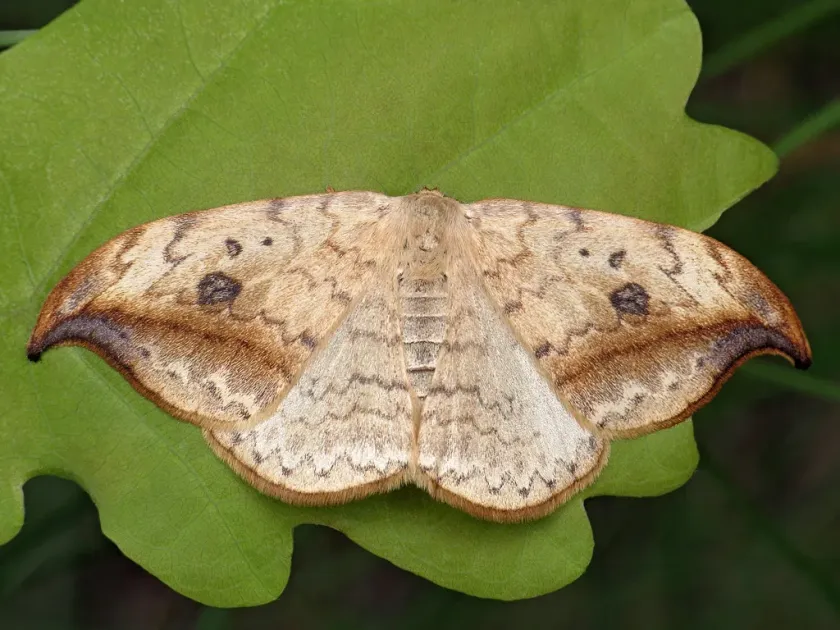
Hook-tip moths (Drepana) belong to the family Drepanidae of the order Lepidoptera. These medium-sized moths are characterized by the pointed, falcate (hooked) tips of their forewings, which is the defining feature of the entire family.
Adult moths typically possess yellowish-brown or tan coloration, providing excellent camouflage against dried leaves. The wingspan usually ranges from 30 to 45 mm, depending on the specific Drepana species.
The larvae (caterpillars) of these moths are highly distinct: the end of the abdomen lacks standard prolegs and is instead extended into a long, thin tail-like process, making them easily identifiable upon inspection.
Pupae develop within folded leaves that the caterpillar secures with silk threads, forming a protective chamber known as a cocoon for metamorphosis.
The life cycle involves four stages: egg, larva, pupa, and adult. In temperate climates, most species complete one or two generations per year, which directly determines the extent of seasonal plant damage.
What it damages
The primary host plants for Drepana species are deciduous trees and shrubs. Birch, alder, willow, and oak are the most commonly affected species, though fruit trees near woodland areas may also suffer damage.
The larvae are the primary pests, as they actively feed on foliage for a prolonged period, causing significant damage to the plant's vegetative parts.
Mass infestations can lead to extensive or complete defoliation, disrupting photosynthesis and weakening the tree, making it more susceptible to secondary pests and various diseases.
In nurseries and young plantations, hook-tip moth activity can significantly slow biomass accumulation and decrease the ornamental quality of the trees.
While the pest rarely causes the death of healthy mature trees, persistent crown damage over several seasons lowers the overall vitality and resilience of the host plants.
Signs of infestation
The most prominent sign of a hook-tip moth infestation is the presence of curled or tightly tied leaves on the branches. Larvae use silk to fold leaves along the midrib to create a protected feeding environment.
Visual inspection of the lower canopy often reveals skeletonized leaf patches or large, irregular holes along the leaf edges, which are characteristic of larval feeding patterns.
Frass (larval droppings) found on leaves below the feeding sites serves as a strong indicator of active infestation in the upper canopy layers.
Locating the unique caterpillars with their distinct long tail processes on the underside of leaves confirms the presence of Drepana species.
By late season, dried, curled leaves housing empty pupal casings become visible, allowing foresters or gardeners to identify infestation hotspots even after the leaves have fallen.
Control measures
Mechanical control is highly effective for small gardens: hand-picking and destroying curled leaves containing larvae can significantly reduce local populations.
Biological insecticides based on Bacillus thuringiensis are highly effective against young instar caterpillars while remaining safe for beneficial insects and the surrounding ecosystem.
In commercial or forest settings where infestation levels are critical, application of contact-stomach insecticides registered for Lepidoptera control is recommended.
Using light traps during the adult moth flight period can help monitor population levels and reduce the number of eggs laid for the subsequent season.
- Early spring treatments to eliminate overwintering life stages.
- Encouraging natural predators such as insectivorous birds in the area.
- Maintaining tree health through proper irrigation and fertilization to support recovery.
Taxonomy
- Latin name
- Drepana
- Order
- Lepidoptera (butterflies)
- Family
- Drepanidae
- EPPO code
- DRPNSP
Discussion
No discussions yet — be the first.