
Kit fox
Vulpes macrotis
Description
How to identify
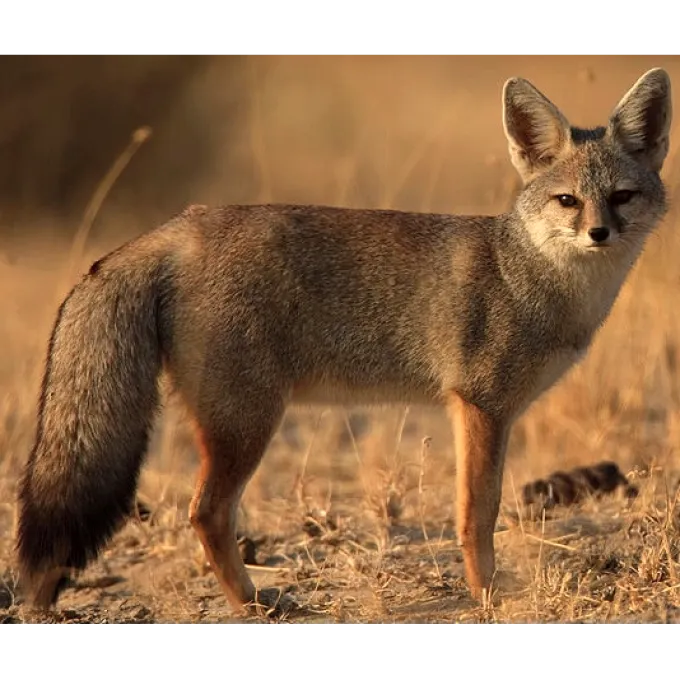
The kit fox (Vulpes macrotis) is a small, elusive canine species known for its exceptionally large ears, which are an evolutionary adaptation to desert environments.
They are primarily nocturnal animals, which makes them difficult to observe and monitor in agricultural landscapes during standard working hours.
Adult kit foxes weigh between 2 to 3 kilograms and possess a slender build that allows them to move quickly through dense vegetation or arid terrain.
Their coat is light gray to brownish, providing excellent camouflage against sandy soil and dry grasses, making them masters of blending into their surroundings.
While they are predators, their habit of burrowing in agricultural fields can occasionally cause disturbances that require professional management by farmers.
What it damages
The primary agricultural issue caused by kit foxes involves the excavation of dens in or near irrigated fields and cultivated land plots.
These dens physically damage the root systems of crops and destabilize the soil, which can lead to erosion and operational difficulties during harvest time.
Although not primary herbivores, kit foxes may consume fruit from melons or berry crops, leading to direct losses and damaged produce that is unsuitable for market.
They are known to interfere with irrigation lines and drainage infrastructure, often chewing on pipes or digging around them, which results in costly system failures.
- Damage to crop root systems due to burrowing activities.
- Interruption of drip irrigation and water delivery systems.
- Consumption and damage to melon and berry fruit harvests.
- Soil destabilization and increased risk of irrigation flooding.
When it appears
Activity levels for the kit fox peak during the spring and summer months, which coincides with their breeding season and the rearing of pups.
During these periods, there is an increased need for den space, leading to more frequent site disturbance on active farmland or field margins.
In the autumn, while activity may seem to decline, they continue to patrol agricultural areas as they seek abundant food sources created by human activity.
Winter months see reduced activity, though the foxes remain present in the vicinity of farms, often utilizing existing structures for shelter.
Farmers should implement scouting programs throughout the growing season to identify potential denning sites before they cause structural damage to fields.
Signs of infestation
The most reliable sign of a kit fox presence is the discovery of burrow entrances, typically ranging from 15 to 25 centimeters in diameter.
Small, canine-like tracks found in mud or loose soil after irrigation are strong indicators that foxes are frequently traversing the field area.
Physical evidence of consumed fruit or damaged plant stalks near burrow entrances provides confirmation that the animals are interacting with the crop.
Scat and scent markings along field edges are common indicators that the fox has established a territory within the boundaries of the agricultural plot.
Unexplained leaks in irrigation networks, especially those associated with bite marks or soil displacement, point to wildlife interference.
Control measures
Installing underground fencing is the most effective deterrent, as it physically prevents foxes from burrowing into critical crop areas.
The use of ultrasonic repellers can create a high-frequency environment that is uncomfortable for foxes, encouraging them to relocate to non-productive land.
Managing the local rodent population reduces the primary food source for kit foxes, making the field a less attractive habitat for them to colonize.
Scent-based repellents, which are safe for the ecosystem, can be applied around the perimeter of fields to discourage these predators from settling.
If colonization persists, farmers should use humane live-trapping methods to relocate the animals safely, adhering to local wildlife conservation regulations.
Taxonomy
- Latin name
- Vulpes macrotis
- Family
- Canidae
- EPPO code
- VULPMA
Discussion
No discussions yet — be the first.