
Coyote
Canis latrans
Description
How to identify
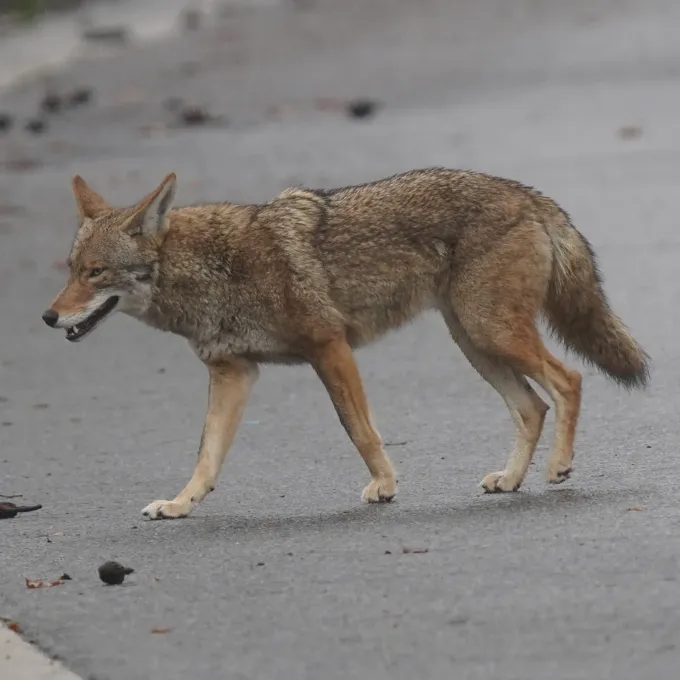
The coyote (Canis latrans) is a member of the Canidae family in the order Carnivora. It resembles a small wolf or dog, characterized by a lean build, pointed muzzle, and a bushy tail usually carried low while running.
Their coat varies from gray to tawny-brown with reddish highlights, providing excellent camouflage within agricultural landscapes, brush, and prairie environments.
Adult coyotes typically weigh between 8 and 20 kilograms, making them highly agile and capable of traversing large areas of farmland quickly and silently.
Coyotes are known for their high intelligence and behavioral flexibility, allowing them to adapt seamlessly to environments near human settlements and agricultural zones.
They exhibit varying social behaviors, ranging from solitary hunting to organized family groups, which directly influences their pattern of activity on farm premises.
What it damages
Although primary carnivores, coyotes are opportunistic omnivores that can inflict damage on various crops, including watermelons, cantaloupes, grapes, and other fruit crops.
They pose a significant threat to livestock operations by preying on newborn lambs, calves, and poultry, resulting in substantial financial losses for farmers.
Crop damage often manifests as trampling of fields and consumption of ripe fruit, which reduces both the yield volume and the market quality of the produce.
Coyote activity near feed storage areas can attract rodents and scavenging animals, creating sanitation issues and increasing the risk of disease transmission among livestock.
In orchard settings, coyotes may damage young saplings by gnawing on bark or digging at the base while pursuing small mammals hidden under the mulch or vegetation.
When it appears
Peak activity and damage levels typically occur during the spring and summer months when coyotes are raising their pups and require a high volume of food.
During the autumn harvest season, coyotes frequently visit agricultural fields to supplement their diet with available fruits and vegetables as they prepare for winter.
In winter, as natural food sources become scarce, coyotes often become more bold, frequently approaching farm infrastructure and livestock holding areas in search of food.
The late winter dispersal of young coyotes searching for new territories leads to increased movement and presence of these animals in agricultural sectors.
Ongoing monitoring throughout the year is crucial for farmers to identify shifts in coyote behavior and potential spikes in predation risk.
Signs of infestation
A primary indicator of presence is the discovery of characteristic tracks in soft soil, which are oval-shaped with prominent claw marks located ahead of the toe pads.
Scat containing undigested seeds of crops, remnants of small mammal fur, or bird feathers serves as a clear indication that coyotes have been traversing the area.
Acoustic indicators, such as distinctive howling, yipping, and barking sounds heard during the night, are definitive proof of a group's presence near the farm.
Evidence of fence tampering or livestock carcasses showing typical bite wounds on the neck or throat area confirms that a coyote has targeted the farm animals.
Feeding damage on crops in the field, accompanied by distinctive tooth marks, provides physical evidence of coyotes utilizing the farm as a foraging ground.
Control measures
The most effective strategy involves installing sturdy fencing, ideally with an apron buried in the ground to prevent coyotes from digging underneath.
Utilizing a combination of visual and auditory deterrents, such as motion-activated lights, sirens, or recorded predator sounds, can effectively discourage coyotes from entering.
Guardian dogs, specifically bred and trained for livestock protection, are highly effective in deterring coyote attacks and maintaining the security of the flock or herd.
Regular maintenance of fields, including the removal of dense brush and tall weeds, eliminates coyote cover and makes the area less attractive for hiding or hunting.
In areas with high coyote populations, it is advised to coordinate with local wildlife agencies to implement legal and humane population control methods or professional trapping programs.
Taxonomy
- Latin name
- Canis latrans
- Family
- Canidae
- EPPO code
- CANILA
Discussion
No discussions yet — be the first.