
Dingo
Canis lupus
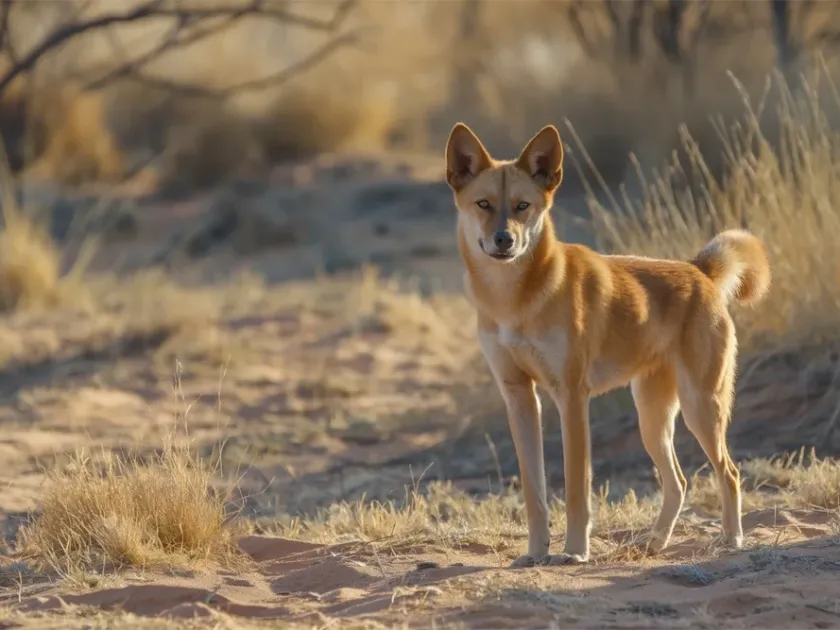
Description
How to identify
The dingo is a feral dog subspecies scientifically classified as Canis lupus dingo. It is an apex predator native to the Australian continent and certain parts of Southeast Asia.
Taxonomically, it belongs to the order Carnivora and the family Canidae. As a strictly carnivorous mammal, it does not interact with plants as a food source.
The biology of the dingo is focused on hunting and scavenging. It lacks the physiological capability to digest plant matter, which is why it is never classified as an agricultural pest of plants.
Morphologically, dingos are lean, medium-sized canids adapted for high-speed pursuit in various terrains, including grasslands and open forest fringes.
Agricultural professionals often misidentify the dingo as a pest due to its presence on farmlands, but it holds no classification in plant pathology or entomology.
What it damages
The dingo does not cause any direct damage to crops. It does not feed on leaves, roots, stems, or fruits of any agricultural plant species.
Incidental damage may occur solely through physical movement, such as trampling when the animals cross through cultivated areas while tracking prey.
In areas where dingos establish dens, soil compaction may be localized, which has no significant impact on the overall health of agricultural production.
There are no characteristic symptoms of dingo damage on crops, such as necrotic spots, wilting, or vegetative mass destruction attributed to feeding.
The perceived pest status is exclusively limited to livestock management, where dingos may threaten sheep or young cattle, but this does not extend to plant cultivation.
Control measures
No plant-focused control measures are required for dingos, as they are not pests of agricultural flora.
Fencing used in agricultural settings is typically implemented to safeguard livestock, which concurrently prevents physical disturbance of crop rows.
Management of prey populations, such as rabbits or small rodents within or near fields, is the most effective strategy to discourage dingo presence.
Agricultural protection programs do not include dingos, as they are ecologically protected in many regions and perform a regulatory role in maintaining the food web.
If physical presence becomes an issue in specific farming zones, non-lethal deterrents such as motion-activated lights or sound emitters are commonly used.
Taxonomy
- Latin name
- Canis lupus
- Family
- Canidae
- EPPO code
- CANIDI
Discussion
No discussions yet — be the first.