
Indian fox
Vulpes bengalensis
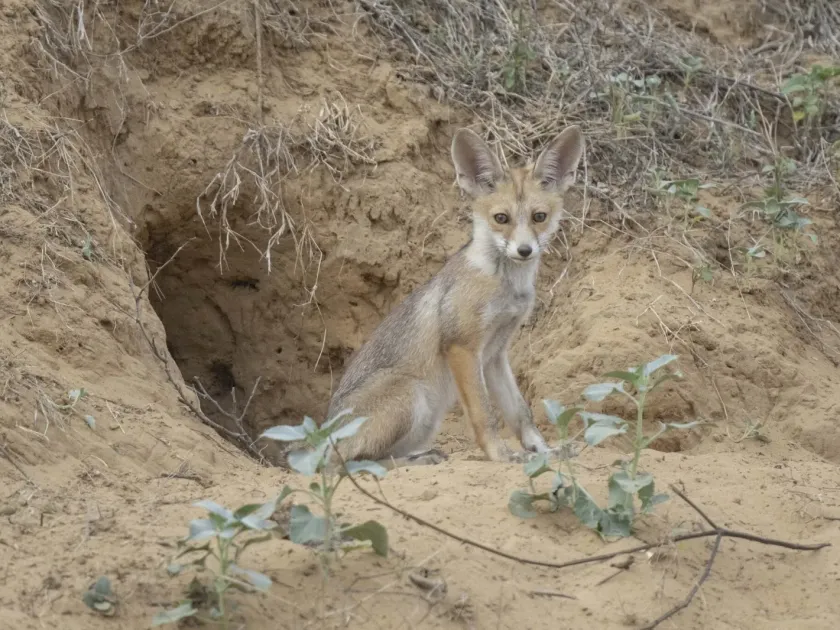
Description
How to identify
The Indian fox (lat. Vulpes bengalensis) belongs to the order Carnivora and the family Canidae. It is a relatively small fox species characterized by a sandy-gray or reddish-brown coat.
A distinctive feature of the species is its long, bushy tail with a prominent black tip, which accounts for about half of its body length.
This animal is primarily nocturnal and crepuscular, preferring open landscapes, semi-arid plains, and agricultural lands with loose soil.
Adult individuals weigh between 2 and 4 kilograms, making them highly mobile and capable of traveling long distances in search of food.
The species is endemic to the Indian subcontinent and has adapted well to intense human-modified environments, often living in close proximity to farming communities.
What it damages
While biologically a predator, the Indian fox is opportunistic and omnivorous, often causing significant damage to agricultural crops.
Considerable losses occur in melon and gourd plantations, as foxes frequently damage watermelons and melons to satisfy their thirst during hot, dry seasons.
The diet may also include various cereal crops, corn, and fruits grown near the edges of agricultural fields and windbreaks.
Beyond consuming produce, foxes cause mechanical damage by trampling crops while establishing paths to water sources or foraging grounds.
Additionally, foxes dig extensive burrows near fields, which can damage plant root systems and accelerate soil erosion in the affected areas.
When it appears
The peak activity of the Indian fox often aligns with the maturation phase of agricultural crops, which provide a reliable food source.
The highest level of damage is observed during pre-seasonal droughts, when wild water sources dry up, forcing animals to migrate toward irrigated farmlands.
During summer months, when foxes are raising their pups, the nutritional demand increases, leading to higher pressure on cultivated fields.
The breeding cycle is timed with favorable climatic conditions that ensure the availability of prey and forage for the survival of the offspring.
The seasonal presence of this pest on fields is also correlated with harvest schedules, as fallow or open fields become highly attractive habitats.
Signs of infestation
The presence of Indian foxes can be identified by characteristic paw prints found on soft soil between crop rows or near field borders.
Signs of infestation include bitten or gnawed melon fruits left in the field, often abandoned after the animal has quenched its thirst.
Finding deep, complex burrow systems in the immediate vicinity of the field is a strong indicator of a resident fox population or den.
The discovery of droppings containing seeds from local crops serves as clear evidence that the animal is feeding within the agricultural plot.
Visible trampling trails and patchy damage to crop stands are also indirect but reliable indicators of fox activity in the area.
Control measures
The most effective strategy for protecting crops from the Indian fox is the installation of robust fencing to prevent animal entry into plantations.
The use of deterrents, such as motion-activated lights or ultrasonic sound devices, can be highly effective during the night when foxes are active.
Maintaining a clean field perimeter by clearing dense vegetation reduces the availability of hiding spots and daytime shelters for these animals.
Applying natural repellents or scents around the field border may provide a temporary solution to discourage foxes from entering critical crop zones.
- Providing alternative water sources away from the crops.
- Regular perimeter inspections and immediate filling of detected burrows.
- Implementing biological control measures by encouraging higher-order natural predators in the ecosystem.
Taxonomy
- Latin name
- Vulpes bengalensis
- Family
- Canidae
- EPPO code
- CANIBE
Discussion
No discussions yet — be the first.