
Marbled polecat
Vormela
Description
How to identify
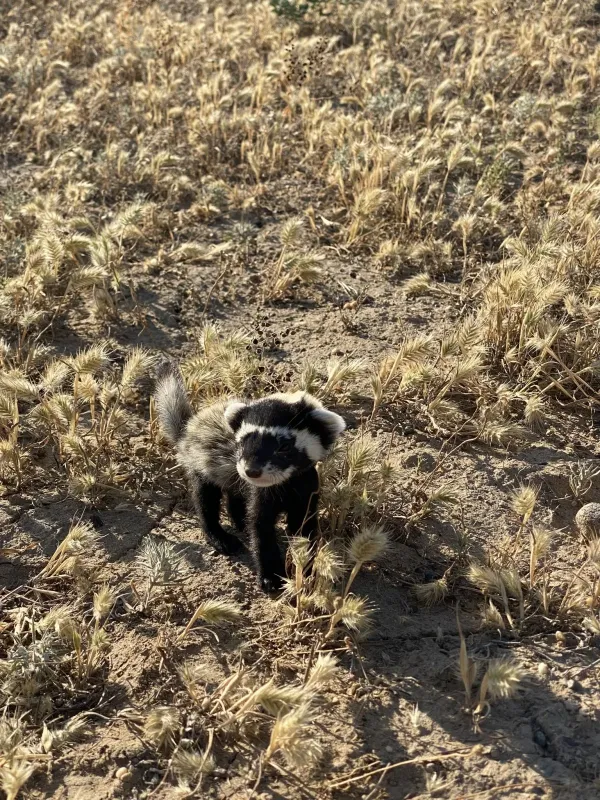
The marbled polecat (Vormela peregusna) is a small mammal belonging to the Mustelidae family, order Carnivora. It is recognized by its distinctive marbled pattern of dark brown and white fur on its back and a white-striped face.
This species primarily inhabits arid, steppe, and semi-desert environments, frequently appearing in agricultural fields where prey is abundant.
Despite being occasionally confused with agricultural pests, the marbled polecat is a strictly carnivorous predator that feeds on small mammals and insects, not crops.
It possesses a slim body and sharp claws, which are ideal for maneuvering through rodent burrows and capturing prey in confined spaces.
In the context of agronomy, it is considered a beneficial species that helps maintain ecological balance by controlling the population of grain-consuming rodents.
What it damages
The marbled polecat causes no direct damage to crops. It does not feed on seeds, fruits, leaves, or roots, making it harmless to the vegetative growth of any agricultural plant.
While it digs burrows, these are usually repurposed from existing rodent holes and do not pose a structural threat to soil or root systems of commercial crops.
There are no reports of this species carrying plant diseases, nor does it affect the quality or yield of harvested produce in any negative way.
Potential conflicts may arise only if the animal enters poultry farms, but this is a management issue for livestock, not a crop-related problem.
Therefore, the marbled polecat should be treated as an ally in agricultural ecosystems, as it performs natural pest control services by preying on rodents.
When it appears
The activity of the marbled polecat is largely influenced by the seasonal fluctuations of its prey populations. It is most active during the spring and summer months.
During the peak of the growing season, these animals are highly active as they forage for food for their young, often moving through wheat and grain fields.
In colder months, the marbled polecat may reduce its activity levels and utilize deeper burrows to stay protected from extreme weather conditions.
The breeding cycle follows an annual pattern, with juveniles reaching independence and dispersing across agricultural territories by late summer.
Agronomists should note that observing the polecat during the early stages of crop development is a positive sign of a healthy, naturally balanced ecosystem.
Signs of infestation
The presence of the marbled polecat is often indicated by the use of burrows, which it frequently occupies after hunting the previous rodent inhabitants.
Tracks left in soft soil, characterized by distinct claw marks, provide evidence of the animal's nocturnal hunting paths across open fields.
The release of a potent, skunk-like odor during moments of threat is a defensive mechanism that may reveal the animal's presence near hedgerows or storage facilities.
Remains of prey found near burrow entrances serve as a clear biological indicator that the predator is effectively clearing the area of rodents.
Visual identification is possible during the night or twilight hours when the polecat actively stalks its prey along the edges of agricultural plots.
Control measures
No control measures are necessary against the marbled polecat, as it does not constitute a threat to agricultural crops.
Farmers are advised against using rodenticides that can cause secondary poisoning, as this negatively impacts the marbled polecat and other natural predators.
Infrastructure security, such as reinforced enclosures, is the recommended approach to protect livestock from the polecat without harming the animal.
Maintaining biological corridors and field margins provides habitat for these predators, ensuring they remain present to regulate rodent populations.
Modern sustainable agriculture relies on such natural pest control methods, making the protection of the marbled polecat a matter of ecological best practice.
Taxonomy
- Latin name
- Vormela
- Family
- Mustelidae
- EPPO code
- VORMSP
Discussion
No discussions yet — be the first.