
Wolverine
Gulo gulo
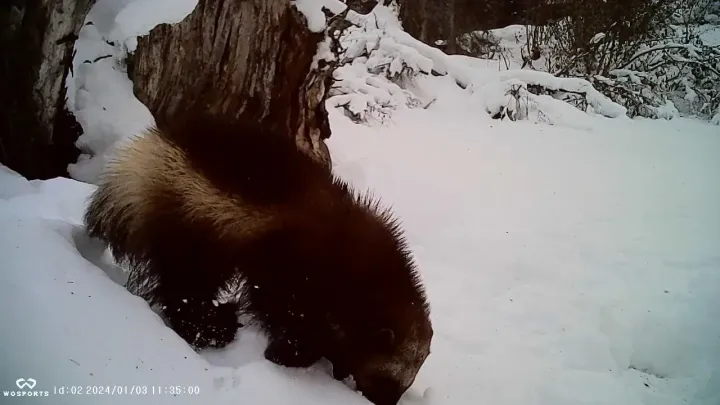
Description
How to identify
The wolverine (Gulo gulo) is the largest land-dwelling member of the Mustelidae family, belonging to the order Carnivora.
It is characterized by a stocky, muscular build, short legs, and dense, dark fur that provides excellent insulation in cold, alpine or arctic climates.
The paws are exceptionally large relative to its body size, functioning like natural snowshoes to navigate deep snow cover efficiently.
Wolverines have powerful jaws and teeth, allowing them to crush bones and consume scavenged frozen carcasses of large animals.
These animals are known for their solitary, territorial nature and can cover vast distances in a single day, making them difficult to track.
What it damages
Wolverines do not cause direct damage to agricultural crops, as their biological niche is strictly carnivorous and opportunistic.
The economic impact on agriculture is primarily linked to livestock predation, targeting sheep, goats, and calves in remote grazing areas.
Reindeer herders often face the most significant losses, particularly when wolverines hunt vulnerable calves during the spring season.
Damage can also occur in storage areas if the predator manages to break into barns or food caches, often resulting in significant property destruction.
Conflicts typically arise in areas where human settlement overlaps with natural wolverine habitat or migration corridors.
Control measures
Physical barriers such as high-quality fencing around livestock pens are effective at preventing unwanted access by these strong predators.
Electric fencing is a highly recommended tool for farmers in wolverine-prone areas, as it provides a reliable deterrent to the animal.
Employing guardian dogs, such as Great Pyrenees or Anatolian Shepherds, has proven effective in actively deterring large predators from approaching herds.
Strict sanitation practices, including the prompt removal of carcasses and proper sealing of food storage, are essential to avoid attracting the animal.
Consult local wildlife management agencies to understand legal protections for the species and to receive advice on non-lethal conflict resolution.
Taxonomy
- Latin name
- Gulo gulo
- Family
- Mustelidae
- EPPO code
- GULOGU
Discussion
No discussions yet — be the first.