
North American river otter
Lontra canadensis
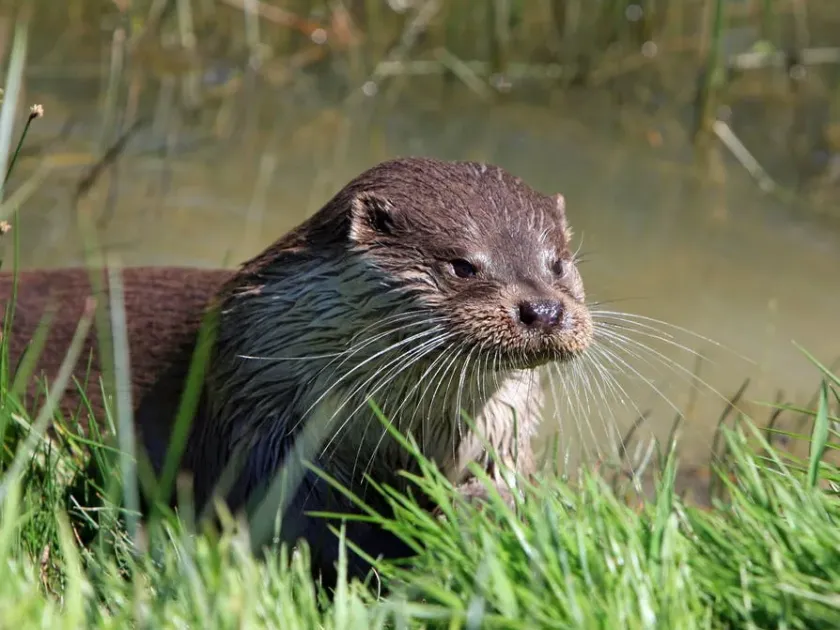
Description
How to identify
The North American river otter (Lontra canadensis) is a semi-aquatic mammal belonging to the Carnivora order and Mustelidae family. It is highly adapted for an aquatic lifestyle.
With an elongated, streamlined body and a powerful, thick tail, the otter is an exceptional swimmer. Adults can weigh between 5 and 14 kilograms.
Their fur is dense and waterproof, which is essential for thermal regulation when hunting in cold, stagnant, or moving waters.
The species exhibits a complex social structure and creates dens along riverbanks, often utilizing abandoned burrows of other animals or digging their own.
River otters are highly intelligent and opportunistic predators, capable of covering large distances both in water and across land to reach food sources.
What it damages
In the context of agriculture, the river otter is considered a pest in the aquaculture industry due to its diet, which consists mainly of fish, crustaceans, and amphibians.
Commercial fish farms, particularly those specializing in trout, catfish, or ornamental fish, often suffer significant economic losses due to the otter's predation.
Beyond direct consumption, otters cause secondary damage by injuring fish that they fail to capture, making the remaining population susceptible to pathogens and mortality.
The species causes structural damage to fish farming infrastructure, such as earth dams and pond levees, by excavating dens and creating tunnels that lead to seepage and erosion.
The cumulative impact includes lost revenue from fish stock, expenditures on perimeter security, and the costs associated with repairing damaged hydraulic systems.
Signs of infestation
Evidence of otter presence includes distinct "slides" on muddy or snowy banks, which are trails used by the animals to transition between water and land.
Distinctive webbed footprints are frequently found on soft substrates along the pond margins, serving as a reliable indicator of their activity.
Scats, or droppings, are often deposited at specific "latrine sites" near the water and contain undigested fish scales, bones, and remnants of aquatic prey.
Physical damage to the pond banks, such as holes and collapsed soil areas near the water line, often indicates the presence of a den or resting site.
Sudden changes in fish behavior, such as schooling near the bottom or visible panic, are common reactions to the presence of an active predator in the vicinity.
Control measures
The most effective strategy for pond protection is the installation of robust fencing, specifically woven wire mesh, buried at least 20-30 cm deep to prevent burrowing.
Electric fencing, positioned at low heights above the ground, acts as an excellent deterrent and is widely recognized as a standard practice for commercial aquaculture protection.
Clearing vegetation from the immediate perimeter of the pond reduces the cover that otters use for stalking, making the environment less hospitable to them.
In regions where legal frameworks allow, nuisance individuals can be managed through live-trapping and relocation to remote areas far from aquaculture sites.
Installing motion-activated lighting or water sprinklers can provide temporary relief by startling the animals, although otters may habituate to these non-lethal methods over time.
Taxonomy
- Latin name
- Lontra canadensis
- Family
- Mustelidae
- EPPO code
- LONTCA
Discussion
No discussions yet — be the first.