
Otter
Lutra
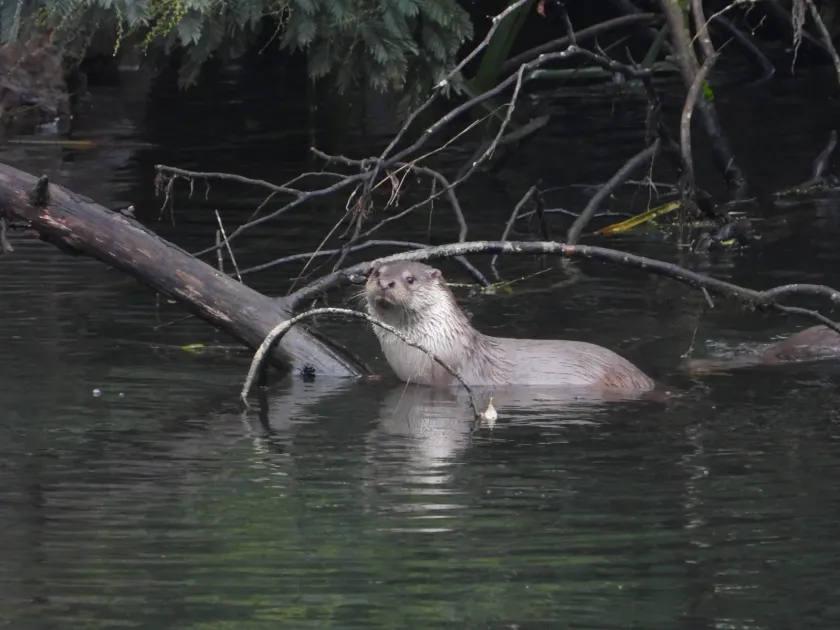
Description
How to identify
The Eurasian otter (Lutra lutra) is a large semi-aquatic predator belonging to the Mustelidae family within the Carnivora order. It features a streamlined, elongated body, a powerful muscular tail, and webbed feet, making it an extremely proficient swimmer.
The animal is equipped with dense, waterproof fur that provides insulation against cold water. Adults can weigh up to 10 kilograms, and their total body length, including the tail, often exceeds one meter, allowing them to exert significant physical force when hunting.
Otters are primarily nocturnal and crepuscular, preferring to reside along riverbanks, lakes, and streams with clear, oxygen-rich water. They construct complex den systems, often with underwater entrances, which makes them highly elusive and difficult for farm owners to monitor.
The species exhibits strong territorial behavior, with individuals patrolling stretches of water up to 20 kilometers long. This high mobility allows them to easily discover and exploit protected fish farming sites as a reliable food source throughout the seasons.
Otter reproduction cycles are irregular, typically producing litters of 2–3 cubs. These offspring remain with their mothers for up to a year, learning hunting techniques, which significantly increases the predatory pressure on local fish populations during this period.
What it damages
The primary economic damage caused by otters occurs in aquaculture facilities, specifically those raising high-value species like trout, carp, and pike. The confined nature of these ponds makes them an easy target for otter foraging.
Otters impact production not only by consuming significant quantities of fish but also by injuring large numbers of survivors. Damaged fish are susceptible to bacterial and fungal infections, often leading to secondary mass mortality in stocks.
Persistent predatory activity creates a high-stress environment within the pond. Stressed fish exhibit reduced feeding activity, slower growth rates, and weakened immune responses, all of which directly undermine the farm's total annual output and profitability.
Furthermore, otters engage in burrowing activities near water bodies. These dens can compromise the structural integrity of dikes, levees, and filtration systems, leading to severe flooding risks or expensive maintenance requirements for the farm infrastructure.
The presence of otters can also lead to the loss of expensive breeding stock that is difficult and costly to replace. Their ability to circumvent minor obstacles allows them to repeatedly return to the most productive areas of the farm until they are fully excluded.
Control measures
Managing otter interference requires an integrated approach that emphasizes exclusion rather than lethal control. Installing physical barriers is widely considered the most effective strategy for long-term protection of commercial aquaculture ponds.
Heavy-duty wire mesh fencing should be installed around the perimeter of the pond. It is critical to bury the base of the fence at least 30–50 centimeters deep to prevent the otter from digging underneath the barrier to gain access to the water.
Electric fencing, commonly referred to as an electric fence system for predators, is highly successful. Placing electrified wires at specific heights (usually 10–25 cm above ground) provides a humane deterrent that keeps otters away from the water's edge.
Deterrent devices, such as motion-activated lighting or acoustic alarms, may provide temporary relief. However, otters are intelligent animals that quickly habituate to static stimuli, so these methods are best used as supplementary measures.
Finally, habitat modification plays a key role in pond security. Clearing dense vegetation, such as reeds, tall grass, and shrubs, from the pond banks limits the otter's cover, making the area less attractive for stealthy hunting maneuvers.
Taxonomy
- Latin name
- Lutra
- Family
- Mustelidae
- EPPO code
- LUTRSP
Discussion
No discussions yet — be the first.