
Villa hottentotta
Villa hottentotta
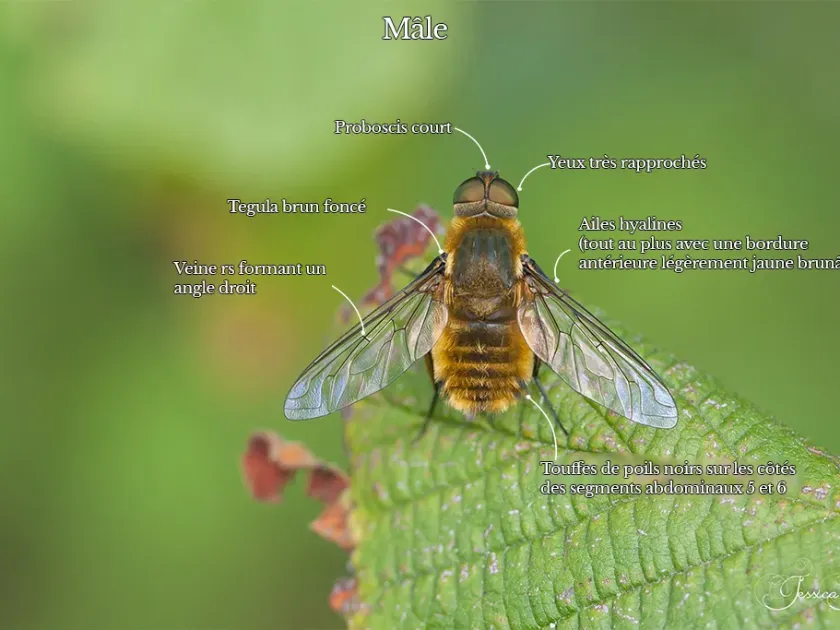
Description
How to identify
Villa hottentotta is a species of bee fly belonging to the family Bombyliidae. Adults are characterized by their dense hair coverage, often resembling small bumblebees, which is a common mimicry trait in this family.
The body is covered with yellowish-brown hairs, providing a golden appearance. The wings typically show distinct dark patterns at the base, which serve as a primary feature for distinguishing this species from similar-looking flies.
The head features a long, straight proboscis used exclusively for nectar feeding. This organ does not allow the insect to damage plant tissues, meaning adult flies are strictly nectarivores.
The lifecycle involves complete metamorphosis: egg, larva, pupa, and adult stages. Adults are highly active during sunny, warm weather and are often found in gardens or meadows.
Taxonomically, this species is classified under the order Diptera. While many bombyliids are beneficial, specific species like V. hottentotta act as parasitoids, influencing the local insect community structure.
What it damages
Villa hottentotta does not cause direct mechanical damage to plant stems, leaves, or fruits. Its impact on agriculture is indirect and stems from its larval development habits.
The larvae are known to be parasitoids of ground-nesting solitary bees. By infesting the nests of these insects, they contribute to the decline of local populations of effective crop pollinators.
Reduced pollinator density in agricultural fields can lead to decreased yields for crops that depend heavily on cross-pollination, making this insect an indirect economic factor.
In some contexts, larvae may feed on detritus, but their primary role in the ecosystem is predatory or parasitic on other insect larvae, which adds complexity to their role in the agrosystem.
The level of harm is directly proportional to the presence of ground-nesting bees and the overall diversity of the local pollinator community.
When it appears
Adult activity peaks during the summer months when most crops and wild plants are in full bloom, providing ample nectar sources.
These flies prefer hot, sunny days and exhibit high mobility, often seen hovering over flowers with precision, similar to hummingbirds.
Oviposition occurs in the soil or near the nest entrances of the host species. The overwintering phase takes place in the soil as a pupa or a late-stage larva, which ensures survival throughout the winter.
The emergence of adults in spring typically correlates with the beginning of the flowering season, making it a critical period for assessing potential impacts on host populations.
Environmental temperatures play a significant role in determining the speed of larval development and the timing of each generation's emergence.
Control measures
Specific chemical control measures for Villa hottentotta are generally not recommended, as the species is rarely considered a major agricultural pest.
The best practice is to avoid broad-spectrum insecticide applications during the flowering period to preserve beneficial pollinator populations and natural enemies.
Maintaining undisturbed soil patches and grassy margins around fields helps sustain native bee populations, which creates a more resilient ecosystem.
Integrated Pest Management (IPM) strategies focus on biodiversity, allowing natural predators and environmental factors to regulate the fly population.
Monitoring the activity of adult flies using visual attractants can help farmers determine if their pollinator populations are under pressure from parasitoid species.
Taxonomy
- Latin name
- Villa hottentotta
- Order
- Diptera (flies)
- Family
- Bombyliidae
- EPPO code
- VILLHO
Discussion
No discussions yet — be the first.