
Bee flies
Bombylius
Description
How to identify
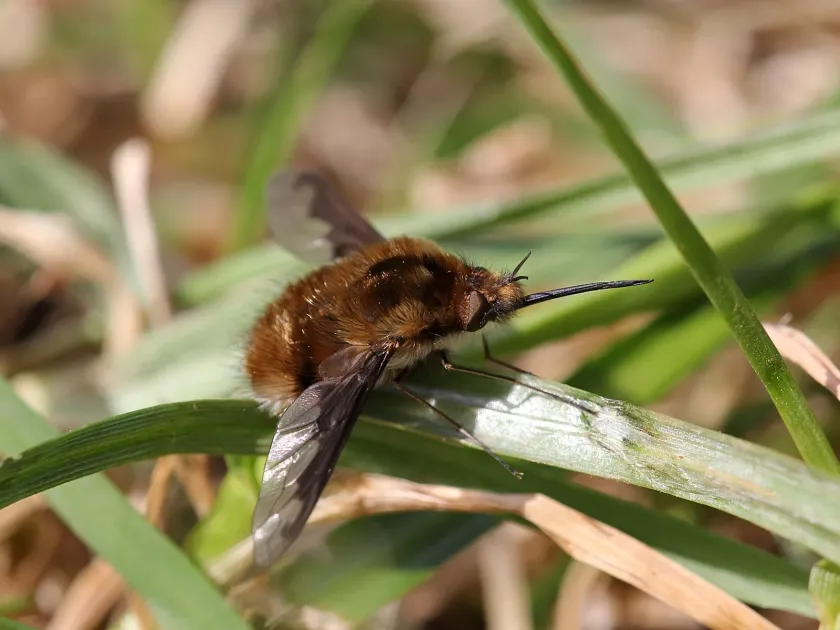
Bee flies (genus Bombylius) are members of the order Diptera and the family Bombyliidae. They are easily recognized by their fuzzy, bee-like appearance and a long, rigid proboscis.
These insects are expert hoverers, often observed suspended in mid-air over flowers, which distinguishes them from many other garden flies.
The body is typically round and covered in dense, often golden or brownish hairs, providing them with a distinct resemblance to bumblebees.
While they mimic bees, they lack the stinging apparatus and are generally harmless to humans, often serving as beneficial pollinators in agroecosystems.
Proper identification of specific Bombylius species often requires examining the wing venation patterns and the length of the proboscis under magnification.
When it appears
Bee flies are typically seen during the spring and early summer months when the weather is warm and flowers are abundant for nectar feeding.
They are strictly diurnal and highly dependent on sunny conditions, showing little to no activity during overcast or cool, rainy weather.
The larval stage is often spent in the soil or within the nests of solitary bees, where they may act as parasitoids, depending on the specific species involved.
The duration of the pupal stage varies depending on soil temperature, with adult emergence perfectly synchronized with the flowering phenology of the host plants.
By mid-summer, most adult bee flies have completed their life cycle, leaving the next generation to develop as pupae beneath the soil surface.
Control measures
Management of bee flies is rarely required in commercial agriculture, as they are primarily considered beneficial pollinators rather than direct plant pests.
To maintain healthy populations of these pollinators, farmers should avoid using broad-spectrum insecticides, especially during the bloom period of crops.
If population reduction is necessary in specific ecological contexts, cultural practices such as soil cultivation are the most effective non-chemical approach.
Disturbing the soil through tillage helps to expose larvae and pupae to predators and environmental stressors, thereby naturally regulating their numbers.
Integrated Pest Management (IPM) strategies emphasize the importance of identifying whether the presence of Bombylius is beneficial or detrimental before taking any intervention steps.
Taxonomy
- Latin name
- Bombylius
- Order
- Diptera (flies)
- Family
- Bombyliidae
- EPPO code
- BOMISP
Discussion
No discussions yet — be the first.