
Exoprosopa
Exoprosopa
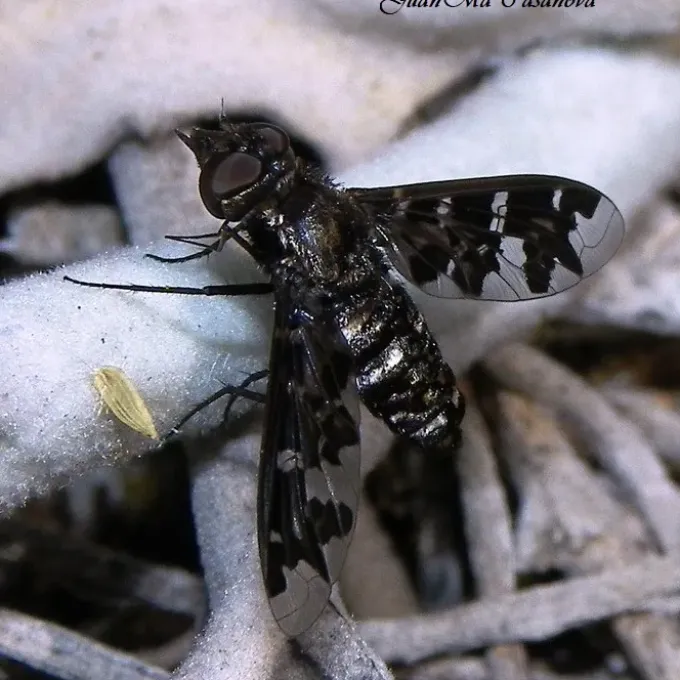
Description
How to identify
Exoprosopa is a diverse genus of flies belonging to the family Bombyliidae, commonly known as bee flies due to their bumblebee-like appearance and fuzzy bodies.
Adults are distinguished by their long, rigid proboscis, which they use to feed on floral nectar while hovering over blooms with remarkable precision.
The wings of these insects often feature distinct, mottled patterns that serve as vital taxonomic characters for identifying various species within the genus.
As larvae, they are specialized parasitoids, often developing within the nests of solitary bees and wasps, where they consume the provisions or the host larvae.
These flies are highly thermophilic and are most frequently observed on bright, sunny days, actively patrolling fields and meadows in search of flowers or host nesting sites.
What it damages
The primary agricultural impact of Exoprosopa is not direct crop consumption but the predation of solitary bees, which are essential pollinators for many horticultural crops.
By invading the nests of pollinators like Osmia species, the larvae of these flies cause a significant reduction in the population of beneficial insects.
This loss of pollinators results in decreased yields for insect-dependent crops, as the natural pollination services are severely disrupted by high parasite density.
In regions where solitary bees are managed for orchard pollination, the presence of Exoprosopa poses a genuine threat to the stability and productivity of these colonies.
The cumulative effect of parasitism can lead to local declines in biodiversity, negatively impacting the ecological balance of the agricultural ecosystem.
When it appears
The adult activity period typically spans the summer months, aligning with the peak flowering times of nectar-rich host plants and the nesting season of solitary bees.
Emergence of adult flies from the soil is often synchronized with the life cycle of their hosts, ensuring that eggs are deposited at the most favorable time.
Warm and sunny weather significantly accelerates their development, leading to increased activity and higher parasitism rates during hot, dry summer seasons.
As the season progresses toward autumn, adults die off, while the next generation remains in the soil as pupae or prepupae, protected from environmental stresses.
The overwintering stage is crucial, as the pupae must survive the winter months underground within the remnants of the host nests to ensure a successful next generation.
Control measures
Managing Exoprosopa requires an ecological approach, as standard insecticides are often harmful to the very pollinators that the flies target.
Physical barriers, such as fine-mesh netting placed over artificial nesting sites (bee hotels), are highly effective at preventing female flies from accessing the nests.
Habitat management, including the rotation of nesting locations for managed solitary bees, can help minimize the build-up of parasite populations in a single area.
Maintaining diverse wildflower borders can help support natural predators of these flies, potentially providing a degree of biological regulation.
Regular monitoring of host bee populations is essential; if high levels of parasitism are detected, preventative nesting site protection should be increased for the following season.
Taxonomy
- Latin name
- Exoprosopa
- Order
- Diptera (flies)
- Family
- Bombyliidae
- EPPO code
- EXPRSP
Discussion
No discussions yet — be the first.