
Pineapple beetle
Urophorus humeralis
Description
How to identify
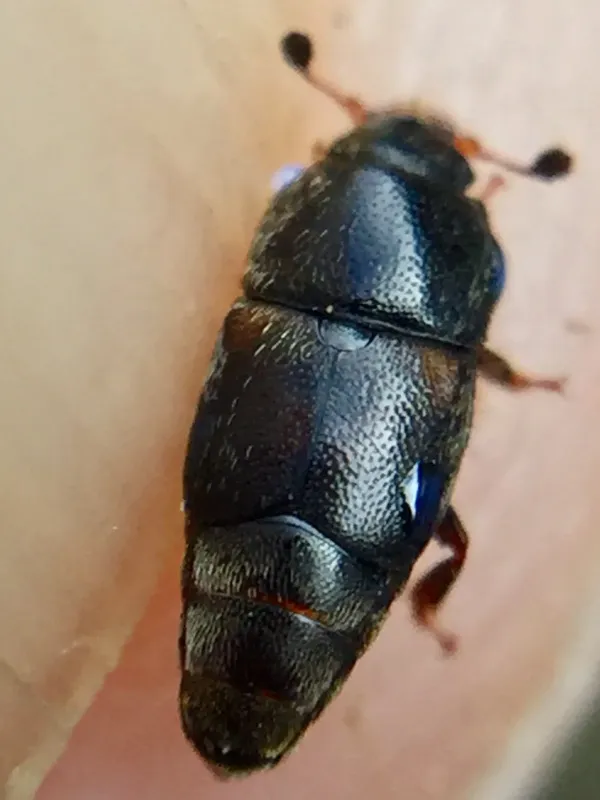
The pineapple beetle (Urophorus humeralis) is a member of the Coleoptera order and the Nitidulidae family. It is a small insect, usually ranging between 3 and 5 millimeters in length.
The body is oval-shaped and typically black or dark brown. A distinctive feature is the presence of light yellow or reddish-brown spots on the elytra (wing covers).
Larvae are creamy-white with a darker head and strong mandibles. They are highly mobile during the early stages of development and are well-adapted to living within decaying fruit tissues.
The life cycle encompasses several stages: egg, larva, pupa, and adult. These insects are highly efficient at colonization, and in tropical conditions, they reproduce continuously.
Adult beetles possess wings, enabling them to travel across large areas to find ripening fruit, making them difficult to contain within a single field or warehouse.
What it damages
While the pineapple is the primary target, the beetle is a polyphagous pest that also infests figs, grapes, citrus, and various other succulent fruits.
They feed on the flesh of the fruit. By entering through existing cracks, wounds, or pest bites, they destroy the fruit's integrity from the inside out.
These beetles are major vectors for secondary infections. They carry fungal spores and bacteria that accelerate the decomposition of the fruit tissue.
Severe infestations turn healthy crops into rotting material, leading to massive post-harvest losses and significant economic downturns for producers.
Continuous feeding by beetle larvae disrupts the growth and quality of the fruit, making it unmarketable and unsuitable for processing or fresh consumption.
Signs of infestation
The first signs of infestation are small entry holes on the skin of the fruit, often surrounded by soft, discolored, and sunken tissue patches.
A noticeable fermentation odor emanating from the fruit often indicates that the interior has been breached and is actively being consumed by larvae.
Cutting open an infested fruit reveals internal galleries and feeding tunnels, often accompanied by the presence of small, pale beetle larvae.
White, gray, or blue mold growth on the exterior is a secondary sign, showing that the beetle has introduced pathogens that are now colonizing the fruit.
Seeing adult beetles gathered near fruit stems or in existing mechanical injuries during night-time inspections is a primary confirmation of their presence.
Control measures
Field sanitation is the most critical control measure. Removing fallen and decaying fruit prevents the buildup of beetle populations and breaks the life cycle.
Monitoring using pheromone traps or fermented fruit bait stations is highly effective for determining population density and timing intervention strategies.
Chemical control should be used with extreme caution, focusing on insecticides that meet strict harvest interval requirements to ensure food safety.
Biological control methods, including the application of beneficial fungi or predatory insects, can help suppress larval populations in the field.
- Regular inspection of crops.
- Proper disposal of damaged fruit.
- Protection of fruit from physical injury.
Taxonomy
- Latin name
- Urophorus humeralis
- Order
- Coleoptera (beetles)
- Family
- Nitidulidae
- EPPO code
- CARHHU
Discussion
No discussions yet — be the first.