
Dried fruit beetles
Carpophilus
Description
How to identify
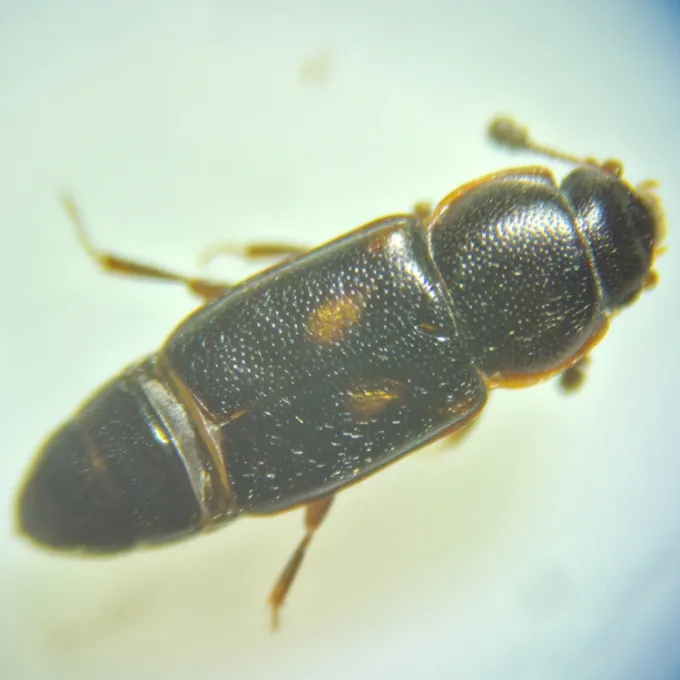
Dried fruit beetles, belonging to the genus Carpophilus (family Nitidulidae), are small insects typically measuring 2 to 4 mm in length. They are characterized by their compact, oval-shaped bodies that are usually brown or black in color.
The most distinctive feature of these beetles is their shortened elytra, which leave the posterior abdominal segments exposed. The larvae are cream-colored with brown heads and are primarily found inside decaying or ripe plant tissues.
What it damages
These beetles are opportunistic pests that primarily attack stone fruits, pome fruits, and various berries. Their host range includes peaches, nectarines, apples, strawberries, and raspberries.
They are especially attracted to fruits that have already been damaged by birds, insects, or environmental factors. Furthermore, they can cause significant post-harvest losses in stored commodities like dried fruits and grains.
When it appears
Carpophilus species are active during warm weather, with multiple generations occurring throughout the growing season. In warmer climates, breeding can continue as long as suitable host material is available.
The beetles overwinter as adults, hiding in soil, leaf litter, or protected areas near orchards. As temperatures rise in spring, they emerge to seek out early ripening fruits or fermenting organic matter.
Signs of infestation
Damage is typically characterized by tunneling into the fruit flesh, which quickly leads to secondary rotting. The fruit often emits a pungent odor of fermentation or decay, attracting more beetles to the site.
The presence of small, round entry holes and larval frass within the fruit cavity are diagnostic signs of an infestation. Infested fruits usually drop prematurely and are unsuitable for market use.
Control measures
Integrated Pest Management (IPM) is essential for controlling these beetles, focusing on sanitation and monitoring to keep populations below economic thresholds.
- Strict orchard sanitation by removing all fallen and decaying fruit from the field.
- Deployment of pheromone traps to monitor adult flight activity and density.
- Deep cultivation of soil to disrupt the larval development and pupation cycles.
- Applying insecticides specifically timed to peak flight periods, while maintaining strict harvest intervals.
Taxonomy
- Latin name
- Carpophilus
- Order
- Coleoptera (beetles)
- Family
- Nitidulidae
- EPPO code
- CARHSP
Discussion
No discussions yet — be the first.