
Small hive beetle
Aethina tumida
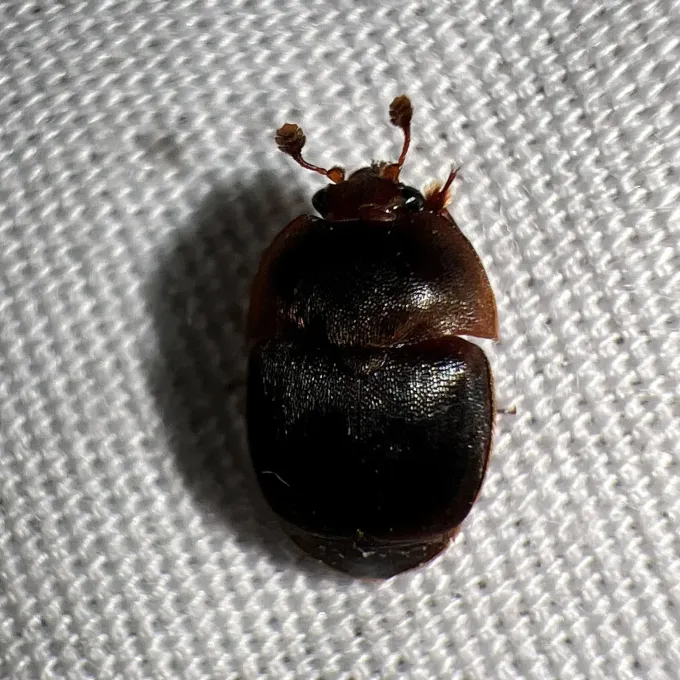
Description
How to identify
The small hive beetle (Aethina tumida) is a member of the Nitidulidae family within the order Coleoptera. Adult beetles are small, measuring approximately 5–7 mm in length, with a dark brown or black, shiny appearance.
These beetles are highly mobile and possess a strong sense of smell, allowing them to track the volatile organic compounds released by honey bee colonies, such as pollen and bee brood odors.
Larvae are creamy white, reaching up to 12 mm in length. They are characterized by three pairs of thoracic legs and rows of small spines along their back, distinguishing them from the larvae of the greater wax moth.
The life cycle involves an egg stage, a larval stage inside the hive, and a pupal stage in the soil. Adults are long-lived and can survive for several months, making them a persistent threat to apiaries.
As an invasive species, Aethina tumida can proliferate rapidly under favorable conditions, putting entire apiaries at high risk of infestation and potential colony collapse.
What it damages
The primary damage is caused by the larvae, which feed on honey, pollen, and bee brood. As they tunnel through the combs, they destroy the structure and consume the colony's food stores.
The larvae produce a specialized yeast that causes the fermentation of honey. This fermenting honey often drips from the cells, creating a sticky, foul-smelling mess at the bottom of the hive.
In cases of heavy infestation, the entire hive can become unusable. The fermented honey is discarded by the bees and becomes entirely unsuitable for consumption, leading to severe economic losses.
Weakened colonies are especially susceptible to beetle takeover. If the bees cannot maintain a strong defense, the beetles can overwhelm the colony, forcing the bees to abandon the hive (absconding).
Beyond direct destruction of supplies, the beetles act as vectors for various pathogens that affect bee health, contributing to an overall decline in colony immunity and resilience.
When it appears
Small hive beetle activity is heavily influenced by climate. They thrive in warm and humid conditions, with temperatures above 20°C (68°F) providing optimal breeding environments.
The peak season for infestation usually occurs during spring and summer months, coinciding with active foraging. During this time, adult beetles actively seek out healthy hives to colonize.
In cooler climates, adult beetles can survive winter by clustering with the bees. They utilize the warmth generated by the honey bee cluster to remain active enough to survive until the next season.
The generation time is relatively short, often taking less than a month from egg to adult. This allows the pest to produce multiple generations within a single active beekeeping season.
Increased migration activity typically occurs during the main nectar flow, when hives are frequently opened or when bees are otherwise occupied, providing openings for the beetles to enter.
Signs of infestation
The most immediate sign is the observation of adult beetles within the hive. They are most commonly found hiding in corners, under the inner cover, or in frame gaps where they avoid bee contact.
Evidence of larval activity includes slime trails at the bottom of the hive and fermented honey dripping from the combs, which creates a distinctively sour or rotting odor.
A lack of honey bee brood or an unusually aggressive or agitated bee colony can also suggest that the beetles have breached the colony's defenses.
Beekeepers may notice the bees attempting to trap the beetles in crevices using propolis or wax, a clear defensive reaction to the presence of the invasive intruders.
- Sticky residue on hive floorboards
- Fermented, frothy honey in storage cells
- Rotting odor emanating from the hive
- Larvae crawling at the hive entrance
- Sudden decrease in colony population
Control measures
The best defense against small hive beetles is to maintain strong, populous colonies. A well-managed hive is far more capable of guarding the entrance and removing beetle invaders.
Good apiary hygiene is essential. Regularly cleaning hive debris, removing old comb, and ensuring frames are tightly spaced can minimize suitable egg-laying sites for the beetles.
Various specialized traps, including oil-based traps and chemical-free mechanical devices, can be placed inside the hive to significantly reduce the adult beetle population.
Treating the soil around hives with authorized insecticides or using landscape fabrics can interrupt the life cycle by preventing larvae from successfully pupating in the ground.
Strict quarantine practices for purchasing nucs, queens, or used beekeeping equipment are crucial to preventing the accidental introduction of beetles into previously uninfested areas.
Taxonomy
- Latin name
- Aethina tumida
- Order
- Coleoptera (beetles)
- Family
- Nitidulidae
- EPPO code
- AETNTU
Discussion
No discussions yet — be the first.