
Small hive beetle
Aethina
Description
How to identify
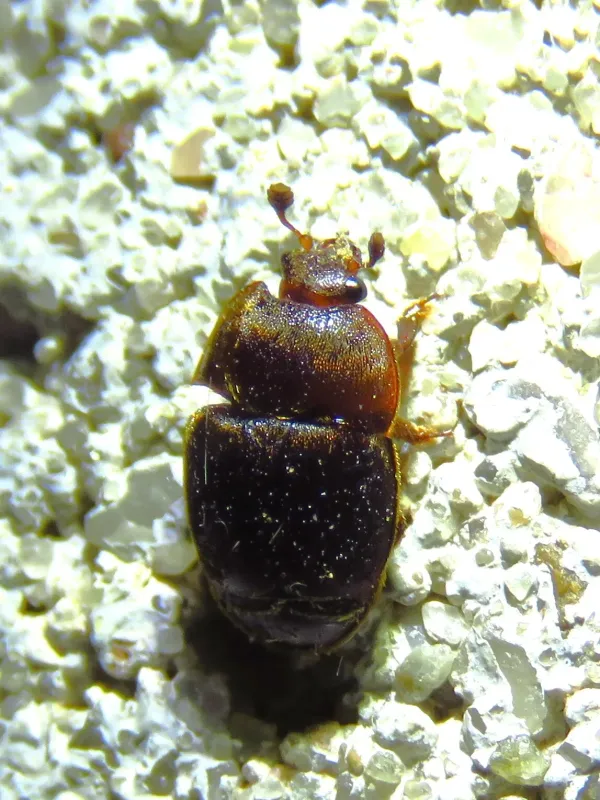
The Small Hive Beetle (Aethina tumida) is a member of the Nitidulidae family (sap beetles) within the order Coleoptera. Adult beetles are small, about 5–7 mm long, and have a dark brown or black, slightly shiny appearance.
The larvae are approximately 10–12 mm in length, creamy white with three rows of dorsal spines. These physical features allow them to crawl efficiently through honeycomb cells and wax.
Eggs are small, pearl-white, and are typically laid in clusters within crevices of the hive to protect them from the defensive behavior of worker bees.
The pupal stage occurs primarily in the soil around the hive. The beetles undergo complete metamorphosis, with the duration of the pupal stage depending heavily on soil moisture and temperature.
Adult beetles are strong fliers and can travel several miles to locate new colonies, making them a highly mobile and dangerous threat to apiaries worldwide.
What it damages
The primary damage is caused by larvae, which feed on pollen, honey, and bee brood. As they tunnel through the combs, they consume and destroy the honeycomb structure.
Infestation leads to fermentation of honey, caused by the yeast associated with the beetle. This results in a frothy, fermented mess that ruins the honey and makes it unsalable.
Heavy infestation causes significant stress to the honeybee colony. In many cases, the bees will abandon the hive (absconding), leading to total colony collapse.
Beyond the loss of honey, the infestation results in economic losses due to the contamination of equipment, which often requires intensive sanitation or complete destruction.
Beekeepers dealing with this pest face the additional burden of increased labor costs associated with monitoring, cleaning, and replacing damaged hive components.
When it appears
Small hive beetle activity is highly dependent on climate. They thrive in warm, humid conditions with temperatures ranging from 25°C to 30°C.
In warmer regions, the beetle can complete its life cycle in as little as 3–4 weeks, allowing for multiple generations to occur during a single beekeeping season.
During colder months, adult beetles may overwinter within the bee cluster inside the hive, where the bees maintain heat, ensuring their survival until spring.
Soil moisture plays a critical role in the development of pupae; prolonged droughts can reduce the success rate of the next generation of beetles emerging from the ground.
Beekeepers must remain most vigilant during the summer months when bee colonies are active but might struggle to guard the entire entrance if the population is weakened.
Signs of infestation
One of the earliest signs is the presence of adult beetles scurrying across the top bars of frames during hive inspections, often seeking dark places to hide.
A distinct smell of fermenting honey, often compared to the scent of decaying oranges, is a classic indication of an established infestation within the hive.
Visual confirmation of larvae on the combs or the presence of slime trails on the wooden hive parts confirms that the beetle has successfully established a breeding colony.
Bee behavior changes significantly; bees may attempt to trap the beetles using propolis, creating "jails" in cracks and crevices to restrict their movement.
In severe cases, beekeepers may observe larvae falling from the bottom board or crawling out of the entrance, which signals an extremely advanced stage of infestation.
Control measures
- Maintaining strong, populous colonies that are capable of effectively patrolling the entire hive and removing intruders.
- Implementing regular hive sanitation, including the removal of debris and wax scraps from the bottom board.
- Using in-hive traps equipped with oil or chemical attractants to target adult beetles without harming the bees.
- Applying soil treatments or biological agents (like beneficial nematodes) around the apiary to kill pupating beetles in the ground.
- Storing harvested supers and combs in cold storage or areas with low humidity to prevent beetle and larval development.
Taxonomy
- Latin name
- Aethina
- Order
- Coleoptera (beetles)
- Family
- Nitidulidae
- EPPO code
- AETNSP
Discussion
No discussions yet — be the first.