
Dried fruit beetle
Urophorus
Description
How to identify
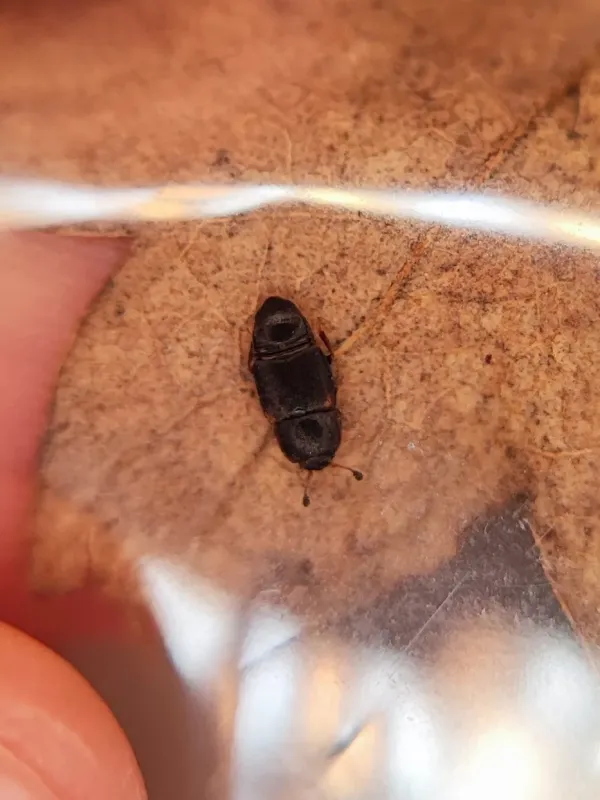
The dried fruit beetle (Urophorus humeralis) is a member of the Nitidulidae family. Adult beetles are small, usually measuring between 3 and 5 millimeters in length.
Their bodies are oval-shaped and dark brown or black in color. Often, they exhibit light reddish-brown markings on their wing covers (elytra).
These beetles are characterized by club-shaped antennae, which is a diagnostic feature used to distinguish them from other similar sap-feeding beetle species.
The larvae are typically creamy-white or yellow with a distinct head capsule. They lack legs and are adapted to living within the decaying tissues of fruits.
Because of their small size and cryptic behavior, they are often difficult to detect until significant damage has already occurred on the fruit surface.
What it damages
The pest primarily targets stone fruits, such as peaches, plums, and apricots, as well as pome fruits and various vegetable crops like tomatoes and strawberries.
The damage starts when beetles enter fruits that have been previously compromised by other factors like mechanical injuries, bird pecking, or fungal infections.
Once inside, both adults and larvae feed extensively on the flesh, creating deep cavities and tunnels that make the fruit completely unsuitable for market.
In addition to direct feeding, these beetles act as vectors for various pathogens, including brown rot and other fungal diseases, accelerating fruit decay.
Stored agricultural products are also at high risk, as the beetles can quickly multiply in warehouses if sanitation standards are not strictly maintained.
When it appears
Beetle activity generally begins as soon as spring temperatures rise, with adults emerging from their overwintering sites to search for early food sources.
The population reaches its peak during the fruit ripening period. High sugar content in mature fruits makes them highly attractive to the adult beetles.
The life cycle involves a complete metamorphosis, with multiple generations possible during a single season in warmer agricultural regions.
Overwintering occurs primarily in the adult stage within protected environments, such as debris, soil cracks, or old fruit remnants left in the field.
As the harvest season ends, the beetles move to sheltered areas to survive the winter, making off-season sanitation crucial for reducing the next generation.
Signs of infestation
The first signs of infestation include small, deep holes in the skin of ripe fruits, often accompanied by the weeping of juice from the wound site.
Secondary infections commonly occur around these holes, manifesting as fuzzy grey or black fungal mats that spread across the fruit surface.
Upon inspecting the damaged fruit, one can usually find the cream-colored larvae residing deep within the softened, fermenting tissue of the fruit.
A distinctive, sour smell often emanates from infested trees or piles of fallen fruit, indicating that fermenting processes are well underway.
- Circular holes on the fruit surface.
- Soft, darkened areas surrounding the entry points.
- Presence of small larvae inside the fruit flesh.
- Presence of secondary mold growth on fruit.
Control measures
Sanitation is the most effective control strategy. Removing all fallen fruit (cull fruit) from the orchard prevents the pest from completing its life cycle.
Reducing mechanical damage during the harvesting and handling process is essential to maintain the integrity of the fruit skin and prevent entry.
Pheromone traps are highly effective for monitoring beetle populations and can provide an early warning to time chemical control measures appropriately.
When insecticide application is necessary, it must be timed correctly to target adult beetles before they gain entry into the ripening fruit tissues.
For stored goods, maintaining low temperatures and proper aeration reduces the suitability of the environment for larval development and beetle reproduction.
Taxonomy
- Latin name
- Urophorus
- Order
- Coleoptera (beetles)
- Family
- Nitidulidae
- EPPO code
- UROHSP
Discussion
No discussions yet — be the first.