
Uraba lugens
Uraba lugens
Description
How to identify
Uraba lugens, commonly known as the gum leaf skeletonizer, is a moth species belonging to the family Nolidae. The adult moth is cryptic, with grey and brown patterning designed to blend in with eucalyptus bark.
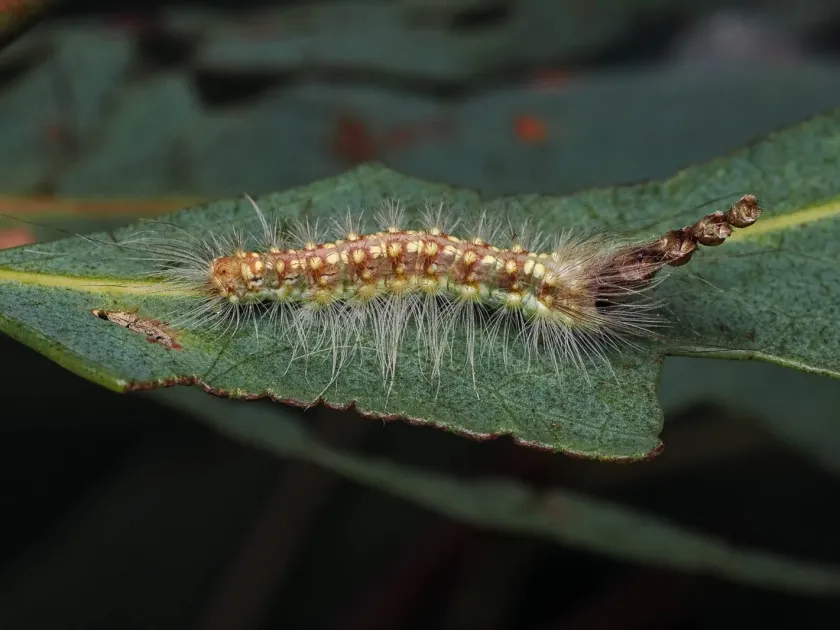
The larval stage is highly distinctive due to the habit of retaining old head capsules after molting. These capsules form a stack on top of the caterpillar's head, which is why it is often called the pyramid caterpillar.
The caterpillars are covered in fine, irritating hairs that serve as a defense mechanism against predators. These hairs can also cause severe skin irritation, known as caterpillar dermatitis, in humans who handle the larvae.
The life cycle encompasses several stages, with the pupae being encased in robust, boat-shaped silk cocoons. These cocoons are frequently found in large, overlapping clusters on the trunks and branches of host trees.
Development rates are heavily influenced by temperature and host plant quality. In favorable climates, Uraba lugens can complete multiple generations within a single year, leading to rapid population explosions.
What it damages
The primary hosts of Uraba lugens are trees within the genus Eucalyptus, though it can occasionally affect other related Myrtaceae species. It is a notorious defoliator capable of stripping entire forests.
Young larvae initially skeletonize the leaf surface, leaving behind only the veins and the cuticle. Older larvae consume the entire leaf lamina, leading to severe defoliation of the canopy.
Repeated defoliation by this pest causes significant stress to the host tree, often resulting in reduced growth rates, branch dieback, and in extreme cases, the mortality of younger trees.
The pest poses a major economic threat to timber plantations and eucalyptus orchards grown for essential oil production. The loss of foliage directly impacts the tree's photosynthetic capacity and overall health.
Stressed trees subjected to heavy infestations are also far more susceptible to secondary attacks from wood-boring insects and opportunistic fungal pathogens that enter through damaged tissues.
Signs of infestation
The most prominent sign of an Uraba lugens infestation is the skeletonized appearance of the leaves, which turn brown and brittle after the green tissue has been consumed by the larvae.
Visible clusters of boat-shaped, silken cocoons on the bark are a definitive diagnostic feature of an established colony, especially noticeable during the dormant or pupal stages.
Large quantities of dark, granular frass (insect excrement) accumulating on the forest floor or on lower branches indicate high larval activity in the canopy above.
The caterpillars themselves are often observed in gregarious groups, particularly during their earlier development stages. They may also be seen suspended from branches on silken threads when disturbed.
A thinning canopy and a lack of healthy foliage in an eucalyptus stand are late-stage signs of infestation, necessitating immediate inspection to determine the severity of the outbreak.
Control measures
Biological control remains the most sustainable management strategy. Natural predators and parasitoid wasps play a crucial role in maintaining populations below damaging thresholds in undisturbed habitats.
For high-value plantations or ornamental trees, microbial insecticides containing Bacillus thuringiensis (Bt) are highly effective against larvae while minimizing impacts on non-target beneficial insects.
Mechanical removal of pupal clusters from tree trunks can be effective on a small scale, provided that protective gear is worn to avoid contact with the toxic hairs of the larvae.
Broad-spectrum chemical insecticides should be used as a last resort, as they can disrupt natural biological control agents and lead to secondary pest outbreaks.
Integrated Pest Management (IPM) practices, including regular monitoring and the use of pheromone traps where available, are recommended to detect infestations early and manage outbreaks efficiently.
Taxonomy
- Latin name
- Uraba lugens
- Order
- Lepidoptera (butterflies)
- Family
- Nolidae
- EPPO code
- ROESLU
Discussion
No discussions yet — be the first.