
Carea varipes
Carea varipes
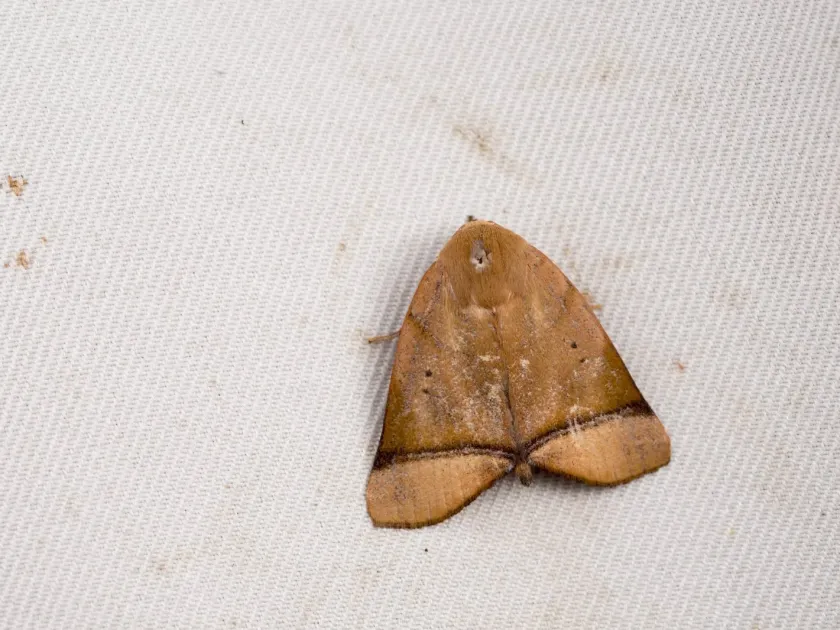
Description
How to identify
The pest Carea varipes belongs to the order Lepidoptera, family Noctuidae. It is a nocturnal moth that exhibits a secretive lifestyle.
The insect possesses protective coloration, allowing it to camouflage effectively on leaves and stems. Caterpillars often display mimetic features adapted to their local environment.
The species undergoes a complete metamorphosis: egg, caterpillar, pupa, and imago. Each stage requires specific humidity and temperature conditions to thrive.
Adult moths are active at dusk, feeding on nectar, whereas the primary damage to crops is caused by the larval (caterpillar) stage.
Agronomists use pheromone traps and light installations to accurately identify the species and monitor population density within the field.
What it damages
The main host plants for the caterpillars are members of the Myrtaceae family, particularly species of the genus Syzygium (such as clove trees).
The pest attacks both young seedlings in nurseries and mature fruit-bearing trees, significantly reducing their overall vegetative biomass.
During mass outbreaks, the insect can strip the plant of its foliage, leading to critical weakening of the crop.
Of particular concern is the damage to generative organs, such as flower buds and young fruits, which directly impacts commercial yield.
Trophic specialization limits the pest's distribution to regions where its host plants are cultivated and where climatic conditions favor its life cycle.
When it appears
The seasonal activity of Carea varipes is directly dependent on regional climatic conditions and the phenological phases of the host plant.
The first generation usually appears during the period of active sap flow and the development of new leaves, providing larvae with essential nutrients.
The optimal temperature for development ranges from 22–28 degrees Celsius, combined with high relative humidity.
Multiple generations can develop throughout the year, with population peaks often occurring in the second half of the growing season.
Overwintering typically occurs in the pupal stage, buried in the soil or protected under leaf litter, allowing the species to survive dormant periods.
Signs of infestation
The primary visual sign of infestation is the presence of characteristic irregular leaf margins, caused by the caterpillars feeding on foliage.
Excrement from the larvae appears as small, dark pellets often found accumulating in the leaf axils of the plant.
Severe infestation leads to visible branch defoliation, often accompanied by the deformation of young shoots due to mechanical damage.
The presence of silken webbing, used by caterpillars to bind leaves together for shelter, is another key diagnostic indicator.
Damaged plant tissues are frequently susceptible to secondary infections caused by fungi or bacteria, which further degrade the plant's health.
Control measures
Protection strategies include regular plantation monitoring and the application of insecticides when the economic threshold of damage is exceeded.
The use of biological control methods, such as entomopathogenic fungi or bacterial agents, helps reduce the reliance on chemical pesticides.
Agronomic practices, including timely pruning and the destruction of plant debris where pupae may overwinter, are crucial for management.
Maintaining crop rotation and creating spatial isolation for new plantings can prevent the spread of the infestation from existing hotspots.
- Application of systemic insecticides during the caterpillar emergence period.
- Installation of pheromone traps to monitor adult moth populations.
- Encouraging natural predators and parasitoids to maintain population balance.
Taxonomy
- Latin name
- Carea varipes
- Order
- Lepidoptera (butterflies)
- Family
- Nolidae
- EPPO code
- CARXVA
Discussion
No discussions yet — be the first.