
Earias
Earias
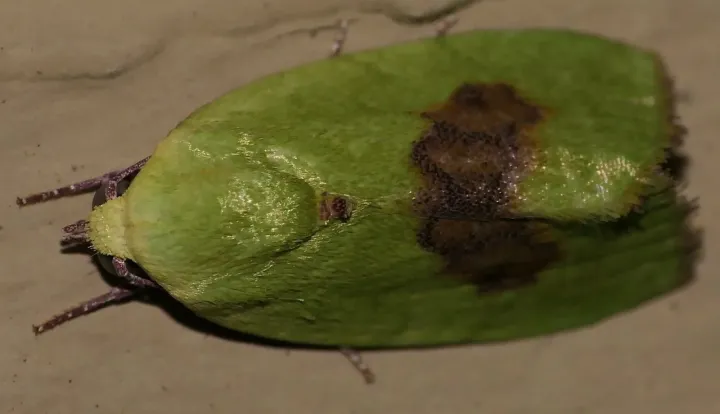
Description
How to identify
Earias, commonly known as the spiny bollworm, belongs to the family Noctuidae within the order Lepidoptera. Adult moths typically have a wingspan of 18 to 25 mm, featuring variable coloration ranging from yellowish-green to ochre.
The larvae are spindle-shaped and can grow up to 20 mm in length. Their appearance includes distinct dark tubercles and longitudinal lines, making them identifiable upon close inspection of host plants.
The pest overwinters primarily as a pupa, enclosed within tough, boat-shaped silken cocoons found in plant debris or the upper layer of the soil.
Adult moths emerge in spring when temperatures become favorable, after which females lay eggs individually on the leaves, buds, and flowers of host plants.
The life cycle duration depends heavily on environmental conditions, typically ranging from 20 to 40 days, allowing for several overlapping generations per growing season.
What it damages
Earias is primarily a pest of cotton, okra, kenaf, and other plants belonging to the Malvaceae family, causing significant economic losses.
The larvae damage crops by feeding on the soft tissues of terminal shoots, flower buds, and young developing fruit.
Younger larvae initially skeletonize leaves, while later instars bore directly into the fruit or cotton bolls to feed on internal tissues.
Feeding often results in the shedding of flower buds and immature bolls, directly reducing the yield and affecting the quality of the harvested produce.
These feeding sites also facilitate the entry of secondary pathogens, such as fungi and bacteria, leading to rot and further crop deterioration.
Signs of infestation
The most prominent sign of an infestation is the flagging or drooping of terminal shoots, which eventually wither and die back.
The presence of boreholes in flower buds, squares, or bolls is a clear indication that larvae have invaded the reproductive structures.
Larval frass (excrement) is often visible near the entry points of damaged fruit, which serves as a reliable marker for field scouts.
In the early stages, larval damage on leaves appears as small windows or irregular holes, causing visible stress to the plant.
Premature shedding of squares and bolls is a common diagnostic symptom that often correlates with a high infestation level in the field.
Control measures
Cultural control measures, such as deep plowing after harvest, are essential to destroy pupae overwintering in the soil and crop residues.
Sanitation practices, including the removal of alternative host weeds from the Malvaceae family, are critical in reducing the carry-over population.
Biological control involves the strategic release of natural enemies, such as Trichogramma egg parasitoids, which can significantly suppress populations.
Chemical control should be implemented based on scouting data and economic thresholds, targeting the larvae before they bore into the fruit.
- Rotate crops to break the life cycle of the pest.
- Use pheromone traps to monitor adult moth activity and population spikes.
- Select soft, selective insecticides to minimize impact on beneficial predator populations.
Taxonomy
- Latin name
- Earias
- Order
- Lepidoptera (butterflies)
- Family
- Nolidae
- EPPO code
- EARISP
Discussion
No discussions yet — be the first.